Every eyewear forum has the same thread
Spend ten minutes in any glasses community and you will find it: someone posting a photo of a frame that sits halfway down their nose, asking whether anything can be done. One wearer recently described a frame whose bridge was simply narrower than their nose and wondered aloud if that could ever be adjusted. Another came home from picking up a new pair, studied the mirror, and fixated on how the bridge sat across their face. Slipping frames are the single most common fit complaint in eyewear — and almost always, the fix is about understanding which parts of the frame are doing the holding.
Here is the good news: glasses that slide are rarely a defect. They are a match problem between three contact points and one frame design. Once you know how the system works, you can pick frames that grip — or adjust the ones you already own.
Where the weight actually sits
A pair of glasses looks like it hangs from your ears, but that is an illusion. The nose carries the majority of the frame's weight; the temples mainly steer and stabilise. That is why a frame can feel fine in the shop and start migrating south an hour later — if the bridge is slightly too wide for your nose shape, every downward tilt of your head lets gravity win a little more.
This is also why frame weight matters more than frame size. A lighter frame exerts less downward pull at every contact point. Titanium construction, which is corrosion-resistant and roughly 40% lighter than acetate, is the usual answer here. The Bastian round titanium glasses are a good example: a thin wire profile that almost disappears in the mirror, which means far less mass for your nose to hold up.
Nose pads: two very different systems
Frames hold onto the nose in one of two ways, and the difference decides how adjustable your fit can be.
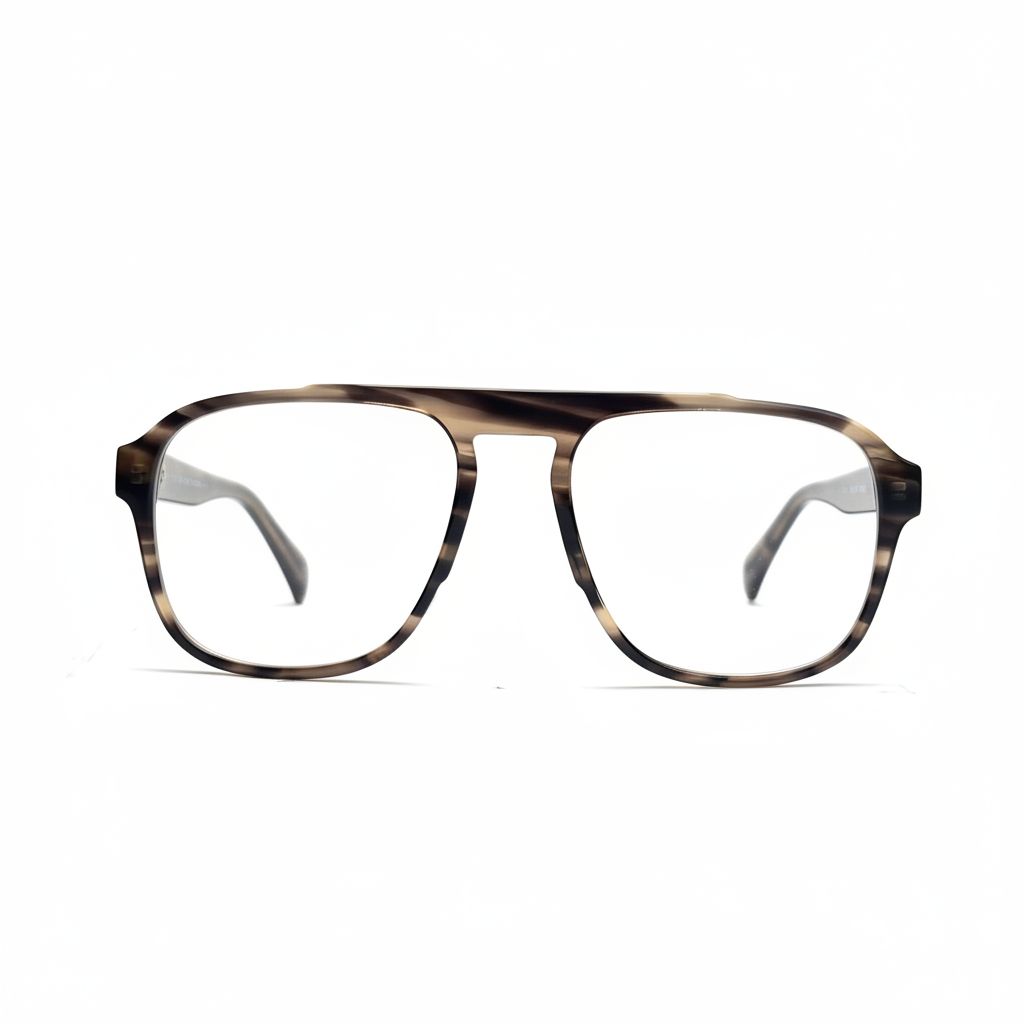
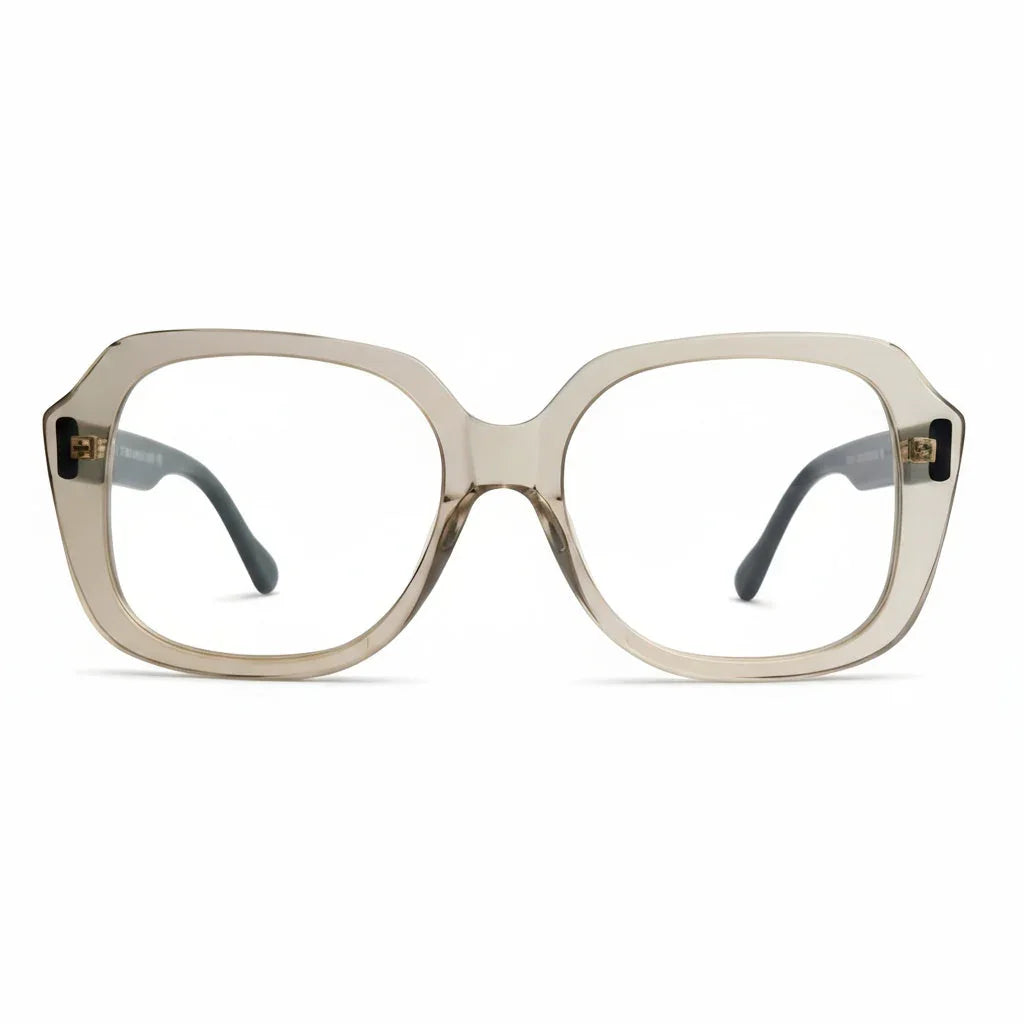
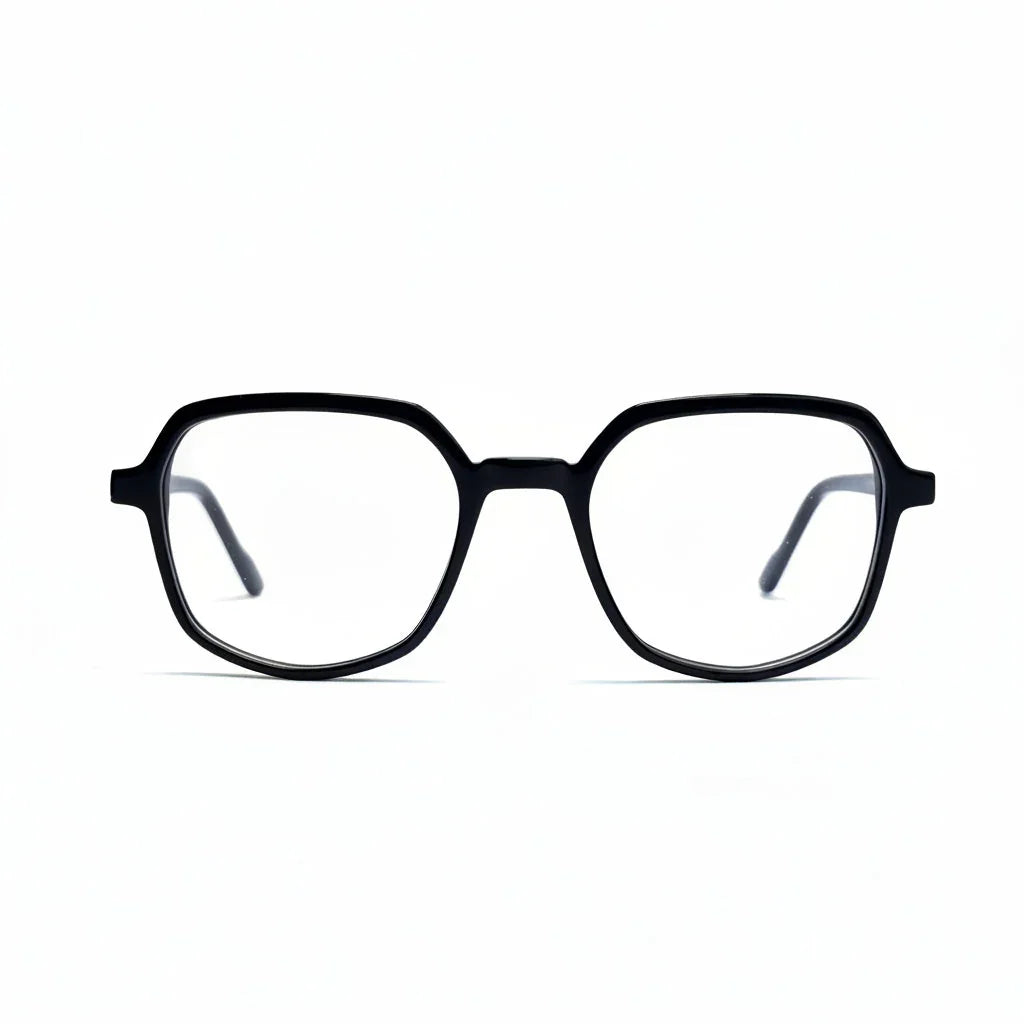
Fixed bridges. Most acetate frames have a bridge that is moulded as part of the frame front. The surface that touches your nose is shaped at the factory — often as a keyhole curve, which is wider at the top and narrows as it goes down. This design suits a broader nose beautifully and never needs adjusting, but it also cannot be narrowed if it is too wide. If you wear acetate, matching the bridge shape to your nose at the start is everything. The Ditlev geometric acetate carries a sculpted one-piece bridge with a smooth landing surface, while the Eamon square acetate uses a classic curved saddle that distributes contact across a wider area.
Adjustable pad arms. Metal and titanium frames typically mount two small clear pads on short arms. This is the most under-appreciated feature in eyewear: those arms can be gently bent in or out, and the pads widened or narrowed, to match almost any nose. Wider nose than the frame bridge? Pad arms can be splayed outward. Frame sitting too low? Pads brought closer together raise the whole frame. The Ben titanium aviator runs on exactly this system — it is the classic adjustability platform, and one of the reasons aviators have survived a century of fashion cycles.
Pad material matters too. Silicone pads grip better than hard plastic ones, especially as they age and conform to their owner.
Your ears are doing more than you think
The second stabiliser is the temple — the arm that runs back over your ear. A frame stays level and put when the temple presses lightly against the side of your head and then curves down behind the ear. If temples are too straight, the frame pivots forward on the nose; if they curve too tightly, the front is pushed down and outward, which ironically also causes slipping.
On acetate frames this curve is set by heating and bending during adjustment. On titanium wire frames it can be shaped with remarkable precision because the material holds a bend permanently. Either way, a good bench adjustment targets the bend point — the spot where the temple drops behind the ear — not just the nose.
Frame material vs lens material: the weight mix-up
Search data tells us people often confuse two different choices: acetate vs titanium glasses as frame materials, and polycarbonate vs acetate frames — a phrase that actually mixes categories, since polycarbonate is a lens material while acetate is a frame material. Both affect how heavy your glasses feel, but in different ways. The frame front and temples account for most of the mass; the lens material then adds on top. So a light titanium frame keeps the base weight low, which leaves more room for whatever lenses you choose — if all-day balance is your priority, start with the frame, not the lenses.
Acetate plays a different game. It is heavier, yes, but its weight sits across a broad, sculpted bridge contact — which many wearers find grips better than it has any right to. The Astrid cat-eye sunglasses show this off: a bolder acetate front that stays anchored precisely because the bridge carries the load over a wider surface.
Three 30-second tests before you commit
- The look-down test. Put the frame on, relax your face, and slowly look at the floor. One centimetre of slide is normal. Anything more means the bridge or temples need attention.
- The push test. Nudge the frame up with one fingertip on the bridge. It should stay where you put it without clamping. If it slides straight back down, the contact points are too smooth or too wide for you.
- The smile test. Smile broadly in front of a mirror. If the frame lifts noticeably on both sides, the frame is slightly wide — cosmetic, but worth knowing before you buy.
What an adjustment can — and can't — fix
If your frames slide, the order of operations is: pad arms first, temple bend second, bridge never. Pad arms and temple curves are deliberately made adjustable; a competent fitting counter reshapes both in minutes, usually free. What cannot be meaningfully changed is a fixed acetate bridge that is simply too wide for your nose — that is a factory-set geometry. In that case the honest answer is a different frame, not endless re-adjustments.
That Reddit wearer mentioned above was told their wider nose and narrower bridge were beyond adjustment — and for that particular frame design, the answer was probably true. With pad-arm frames it would have been a ten-minute fix. Knowing which system you are buying is the difference between a frame you adjust once and a frame you push up a hundred times a day.
Pick a frame that stays where you put it
If you are done nudging your glasses back into place, choose deliberately: adjustable pad arms if you want a fit that can be tuned to your exact nose, a well-matched acetate bridge if you prefer a solid, no-fuss landing, and lightweight titanium if you simply want less pull on every contact point. Slipping is not a life sentence — it is a spec sheet you have not read yet.