Every trend report tells you what is in. The harder question — and the one that actually costs money when you get it wrong — is whether a frame will still look right in two years. Scroll any eyewear forum and the same worry surfaces in different words: is this shape going to date, or is it going to settle in?
So instead of another list of what is "in", here is a trend watch built around staying power. Five frame directions worth acting on in eyewear trends 2026, each run through the same three tests, and each with a note on what to check when you try one on.
The Three-Question Staying-Power Test
Before a trend earns a place in your rotation, run it through this:
- Does it survive a change of material? A shape that only works in thick acetate is a styling trick. A shape that also reads well in titanium wire is a design idea.
- Does it work at more than one scale? If it only looks right oversized, it is pinned to a single moment.
- Does it read at arm's length? Trends that need a close-up to explain themselves tend to fade quietly.
Everything below passes at least two of the three. That is the bar.
1. The Softened Square
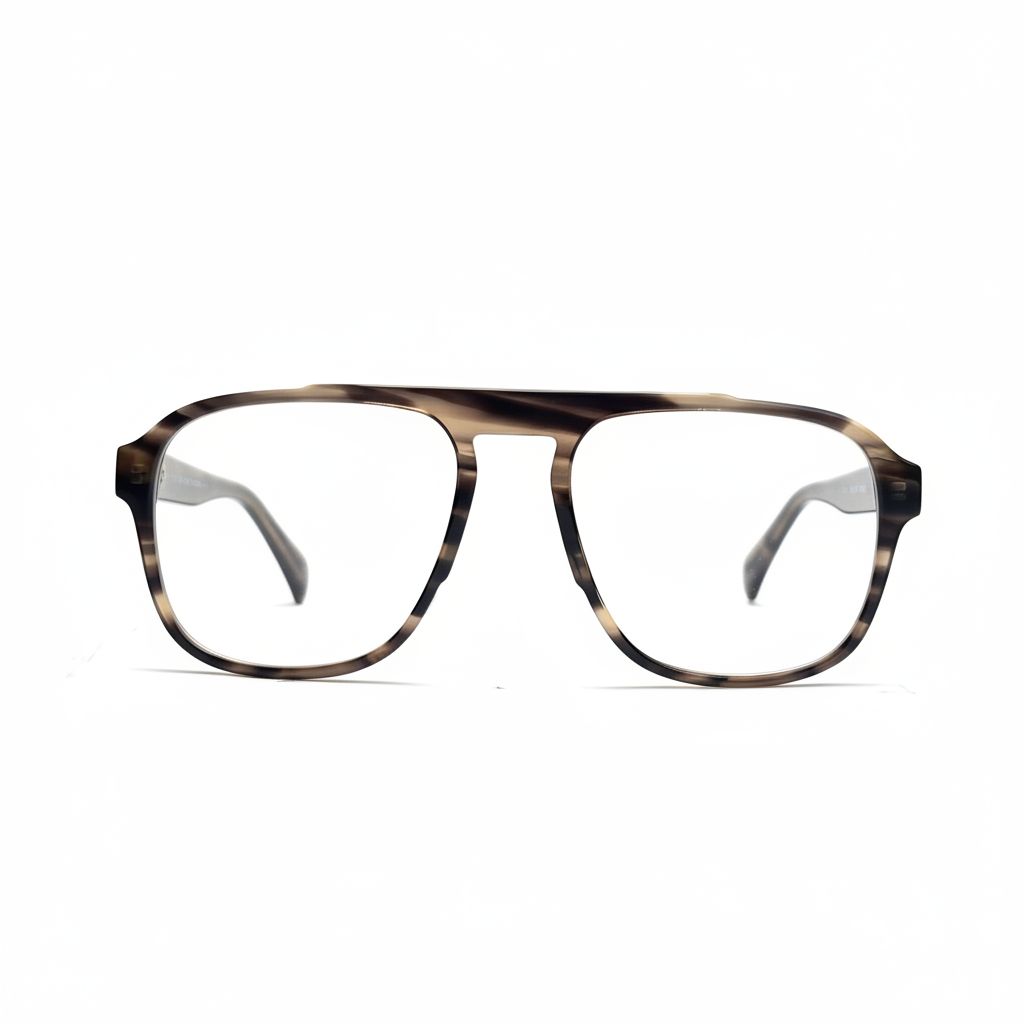
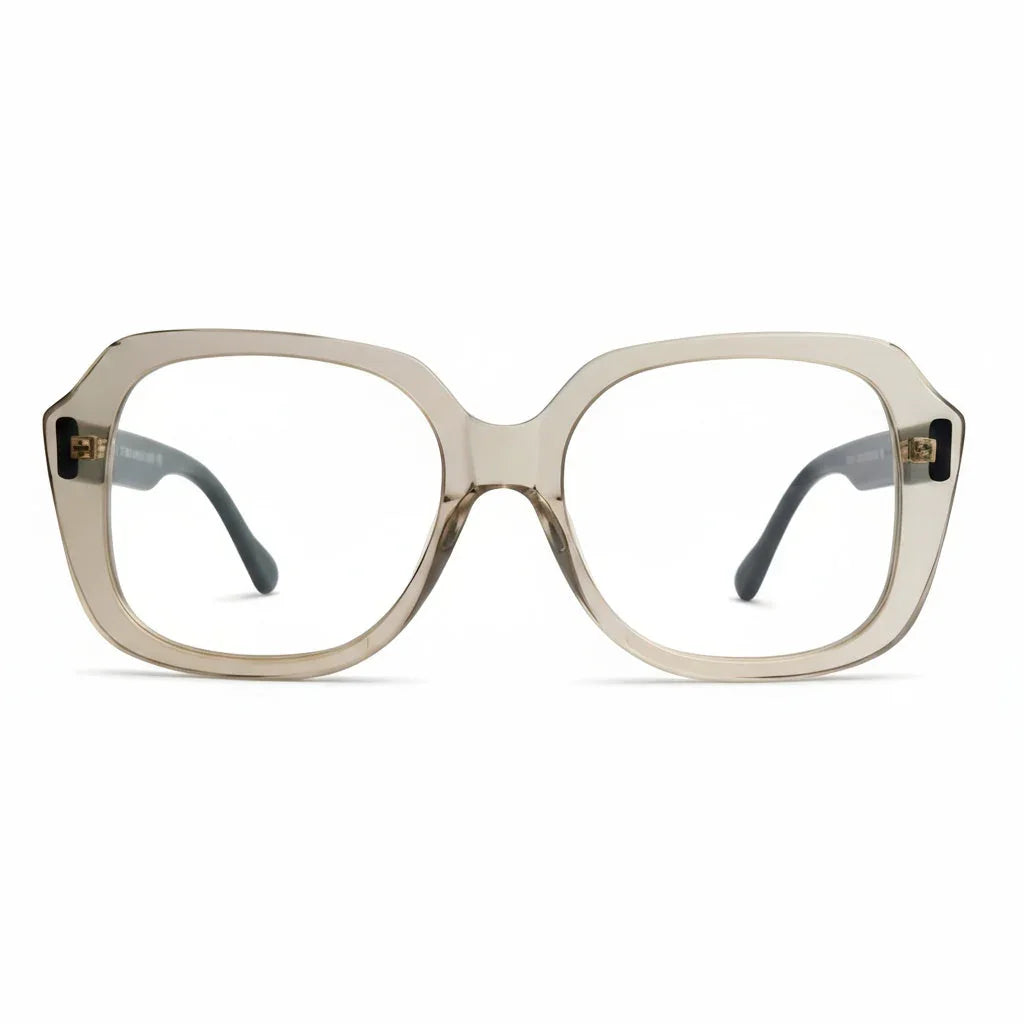
The square has not gone anywhere; its corners have. The 2026 version is a square with a generous radius — still structured across the brow, still graphic in photographs, but with no hard right angles at the lower rim. It is the most forgiving direction in the 2026 eyeglass trends conversation because it keeps the authority of a rectangle while dropping the severity.
Consider the Caspar acetate square — the material's depth keeps the brow line crisp while the rounded lower corners stop it reading as corporate. Acetate is the right carrier for this shape: it holds a thick top line without stacking weight onto the temples.
2. Wire Frames With More Presence
Thin metal spent years as the quiet option. What changed is the profile: wires are slightly thicker now, often flattened rather than round, so the frame registers at a distance instead of disappearing. In titanium this is a different object from the minimal wire of a decade ago — the same lightness, considerably more draw.
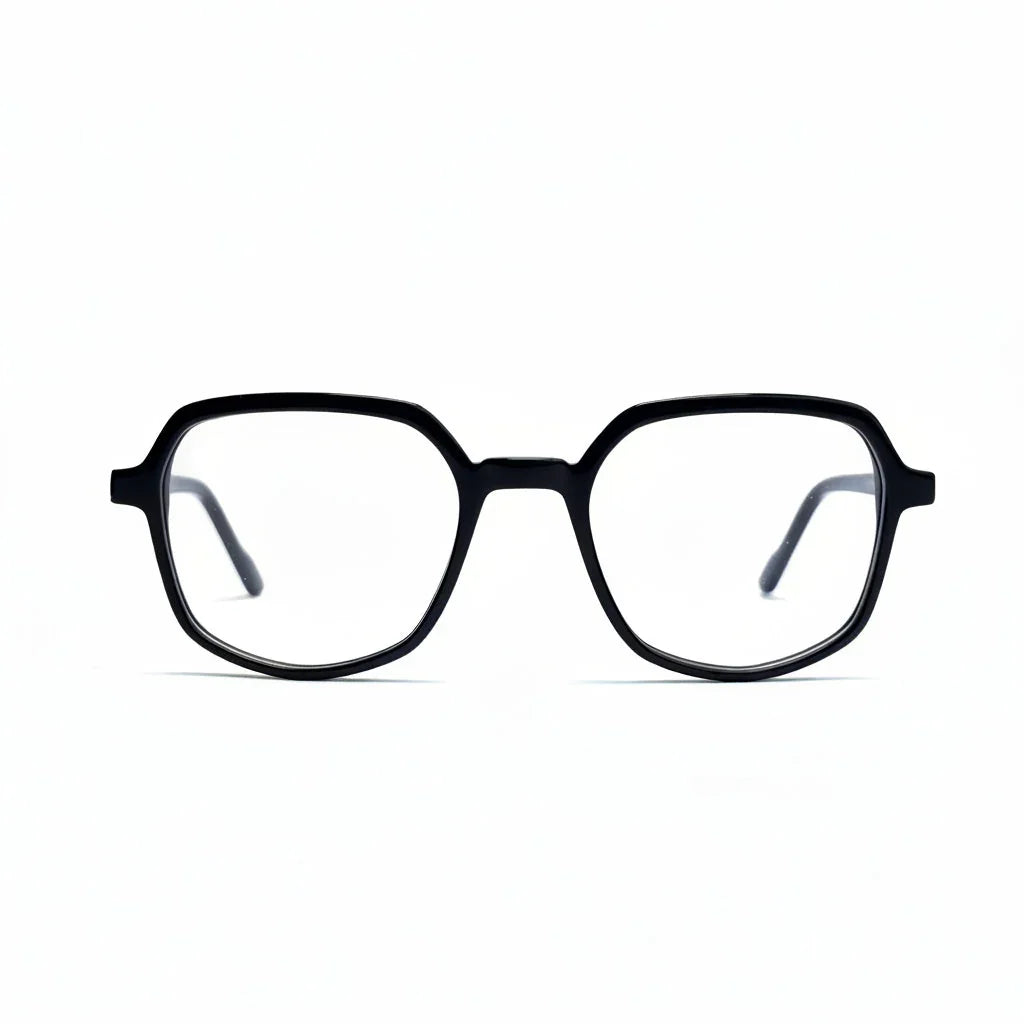
The Cecilia square titanium wire shows the direction clearly: a firm horizontal top line, a clean lower rim, and enough presence to hold an outfit without a single heavy element. Titanium is corrosion-resistant and roughly 40% lighter than acetate at comparable volume, so extra metal in the profile does not translate into a heavier frame at the end of a long day.
This is where "titanium vs acetate glasses" stops being a spec-sheet question and becomes a styling one. Acetate gives you mass and colour. Titanium gives you line and lightness. A trend that can be executed convincingly in both is a trend with legs.
3. Mixed Construction as the Design Story
Two-tone is no longer the point on its own. What reads as current is construction you can actually see: an acetate front with titanium temples, or a semi-rimless brow where the lens edge becomes part of the design. The material change does the decorating.
The Carsten round acetate-titanium hybrid is a good example — a round acetate front with titanium detailing that carries the eye from the lens across the temple. The "acetate vs titanium glasses" comparison usually gets flattened into a winner; in a hybrid, the real question is placement rather than preference, because the two materials sit on different parts of the frame and do different jobs.
4. Finish Does the Work Colour Used To
Rather than a new colour every season, the interesting work is happening in finish: tone-on-tone tortoiseshell, matte against polished surfaces on the same silhouette, warm metal next to cool. Eyewear designers on Reddit have described colourway development as one of the most demanding parts of the job, and it shows — a good acetate pattern shifts across the front and down the temple instead of repeating like a print.
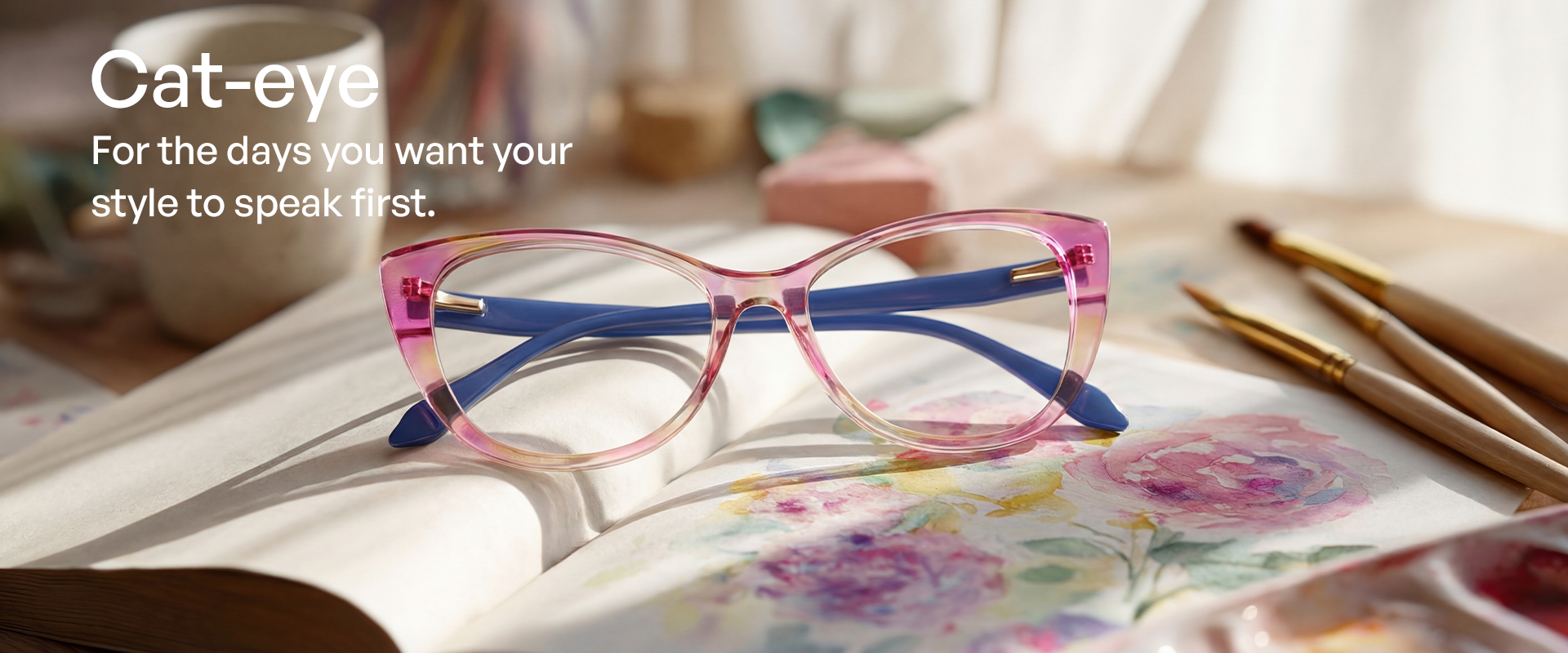
The Acker tortoiseshell cat-eye is built on exactly that idea: depth in the material rather than decoration on top of it. It is also the easier way to wear a strong frame, because the pattern gives the eye somewhere to travel.
5. Scale Is Settling at Medium
Oversized had a long run. The direction now is medium — frames that sit inside the width of the face rather than past it, and cat-eyes with a lifted outer corner rather than a wing. It is the least dramatic shift in glasses fashion 2026 and probably the most useful, because a medium frame pairs with more of what is already in your wardrobe.
The Ebba cat-eye sunglasses keep the lift at the outer corner without pushing width past the cheekbone, which is what makes a cat-eye wearable on a Tuesday rather than only at an event.
What Is Resting, Not Dead
- Oversized everything. Still excellent as a deliberate second pair, less so as the frame you reach for daily.
- All-black chunky acetate. The shape is fine; the flat colour is what dates it. Tortoiseshell and transparent do the same job with more range.
- Logo-heavy temples. Hardware as decoration rather than function reads as a season, not a decade.
Putting a Trend Into a Rotation
The common mistake is buying a trend frame as your only pair. The pattern that holds up is one anchor plus one trend piece: an anchor in a silhouette and material you already trust, and a trend frame you wear two or three days a week. The anchor absorbs the days when the trend does not suit the outfit; the trend piece stops the anchor from going invisible.
Budget follows the same logic. Wearers regularly ask whether to buy a frame and have lenses fitted elsewhere — the useful version of that question is to spend on the frame you will keep, then let the lens specification follow the frame's size and how you actually use it. Keep frame material and lens material separate in your head, too: "acetate vs polycarbonate frames" is usually a mix-up between an acetate frame and a polycarbonate lens. Two different components, not two competitors.
A Five-Minute Check Before You Commit
- Look at the frame from two metres away in a mirror — does the shape still read?
- Squint. If all you register is colour, the shape is not doing the work.
- Check that the temple tips sit behind the ear without pressing.
- Try it with the two outfits you wear most, not the one you wore to the store.
- Ask whether you would still choose it if it were not trending.
Trends are useful when they give you a reason to try a shape you would otherwise skip. They get expensive when they become the only reason you bought it. The five directions above all have a second act — and that is the only test that matters once the season is over.