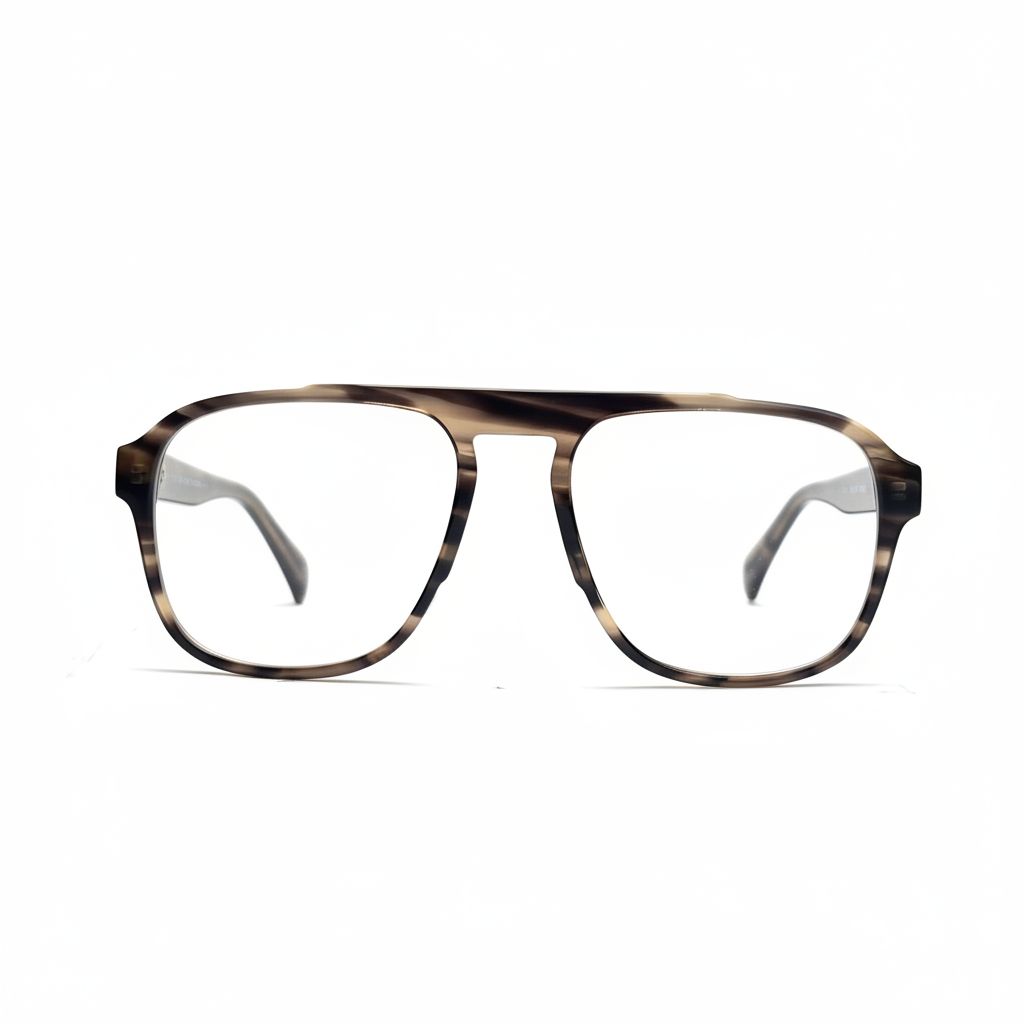
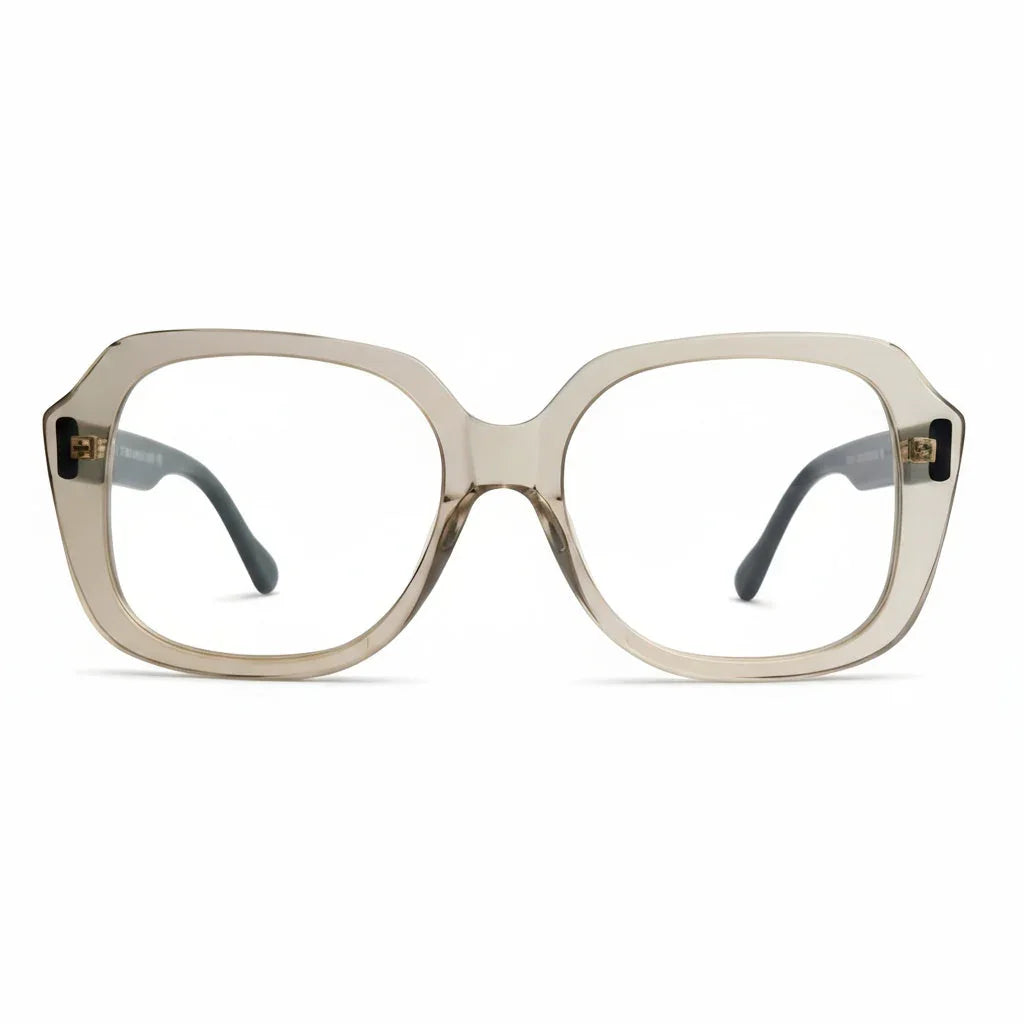
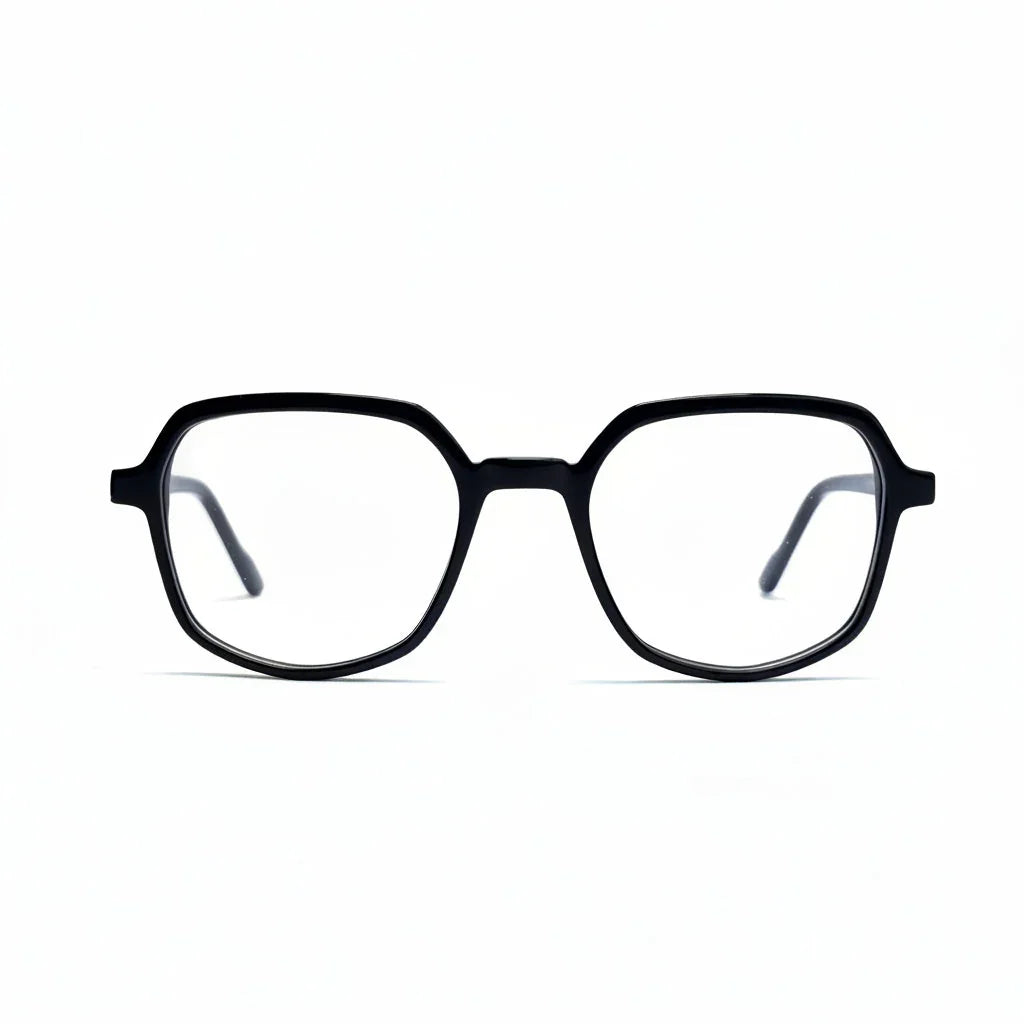
A few weeks ago, a wearer on r/eyewear posted photos of a designer frame he loved — about $900 all-in, five years of heavy daily use, and now the hinges were cracking so badly that his local shop was afraid to touch them. Their advice? Start shopping for a new pair. He didn't want new glasses. He wanted those glasses, repaired, because he had chosen them carefully and worn them happily for five years.
That post is the clearest argument we know of for everything WEISS OPTIX does at the drawing board. The most sustainable pair of glasses is not the one with the greenest packaging. It's the one you never have to replace. Sustainability in eyewear is not a certificate — it's a series of design decisions, made before the frame ever exists, that determine whether it will still be on your face in 2032 or in a drawer in 2027.
This is a story about those decisions — the ones we make on every frame we design.
Decision one: the hinge is a service point, not a failure point
Look at the r/eyewear story again. Five years of wear, and the failure wasn't the lenses, the finish, or the shape — it was the hinges. Hinges are the hardest-working joint on any pair of glasses: thousands of open-and-close cycles, bag drops, one-handed pushes back up the nose. Yet on many mass-produced frames, hinges are glued or pinned in ways that make repair impossible. Once they go, the whole frame goes.
We design the opposite way. A proper barrel hinge with a real screw — the kind you'll find on the Anton titanium-mix square — can be opened, cleaned, tightened, and replaced. A loose screw is a thirty-second fix with an included tool, not a verdict on the frame. When a hinge is a service point, the frame's lifespan is measured by your attachment to it, not by its weakest joint.
Decision two: the material has to age well
The acetate vs titanium glasses debate usually stops at weight and price. But from a sustainability standpoint, the more interesting question is: how does each material behave after three or four years of daily use?
Quality acetate is a layered sheet of cellulose-based material, and its great virtue is that it can be re-worked. Scratches on its surface can be polished out, the finish stays deep rather than flaking off a coating, and the material keeps its colour all the way through. The Dagfinn acetate square is a good example — a full-rim acetate frame whose finish can look close to new after a professional polish, which is exactly why older acetate frames are so often the ones people try to hunt down second-hand.
Titanium answers the same question differently. It is corrosion-resistant and about 40% lighter than acetate, and when it's stressed it tends to bend rather than snap — a bend that can usually be adjusted back. Frames like the Baptiste titanium square, with an acetate front and titanium hardware, take both properties at once: the expressive front of acetate, the resilience of titanium where the frame flexes. Neither material is "better" — what matters is that both were chosen because they can be maintained, not just consumed.
Decision three: the fit has to be adjustable
Here's a less obvious sustainability factor: fit. Frames rarely leave circulation because the material failed — they leave because they stopped being comfortable, sat crooked, or pinched after an adjustment was never made. A frame that fits is a frame that gets worn; a frame that doesn't becomes the spare pair, then the lost pair, then landfill.
That's why we build in adjustment wherever the construction allows: bridges that can be shaped, temples that can be bent to a better angle behind the ear, nose pads that can be repositioned. An acetate frame that's slightly off can be warmed and corrected; a titanium frame can be bent cold, precisely. The single most sustainable thing you can do after buying any well-made frame is get it properly adjusted — it costs almost nothing and it's the difference between a frame worn daily and one worn apologetically.
Decision four: the silhouette has to outlive the trend cycle
The least durable thing about most eyewear is not the frame — it's the fashion. Trend-chasing designs are, almost by definition, disposable: they look dated before the material has finished breaking in. A frame meant to be kept needs a silhouette with a longer half-life.
That's why our catalogue leans on shapes with decades of history rather than novelty silhouettes: the square, the round, the aviator, the cat-eye. The Arvid cat-eye sunglasses take a shape that has cycled in and out of fashion since the 1950s and always come back; the Alpine round acetate sunglasses are cut from the same logic. Colour plays a role too — tortoiseshell, crystal, black, and warm metals simply age more gracefully than this season's micro-trend colourway. A timeless frame doesn't just last longer physically; it stays wearable longer, which is the part that actually keeps it out of the bin.
The other way frames disappear: the case, not the crack
There's a second, quieter sustainability problem that eyewear enthusiasts on Reddit keep circling: people don't only replace broken glasses — they replace lost ones. One recent survey thread asking "do you ever lose your glasses?" was really a study in how frames end their lives early: left on a café table, buried in a bag unguarded, knocked off a nightstand.
The countermeasures are unglamorous but real. A hard case lives where the glasses live — bag, desk, nightstand. Two pairs in rotation halve the wear on each and give you a fallback, which removes the panic-purchase when something goes wrong. And a microfibre cloth, used instead of a shirt hem, keeps lens coatings intact for years longer. None of this is design — but designing a frame to be kept only works if the owner is keeping it, and we'd rather tell you that plainly than pretend longevity is the manufacturer's job alone.
What "sustainable" means at WEISS OPTIX
We are a small brand, and we don't claim certifications we can't verify. What we can claim is a philosophy, and it fits in one sentence: design frames that can be repaired, adjusted, and worn long enough to become yours. Screwed hinges instead of glued ones. Materials that polish, bend, and age well. Silhouettes chosen for staying power. A fit that can be corrected rather than endured.
The r/eyewear poster with the cracked $900 frame understood something the industry often forgets: the value of a frame isn't in its price — it's in the years it spends on your face. Build for that, and sustainability stops being a marketing page and becomes a by-product of doing the design work properly. That's the standard we hold every WEISS OPTIX frame to, and the one we'd suggest you hold any frame — ours included — before you buy it.