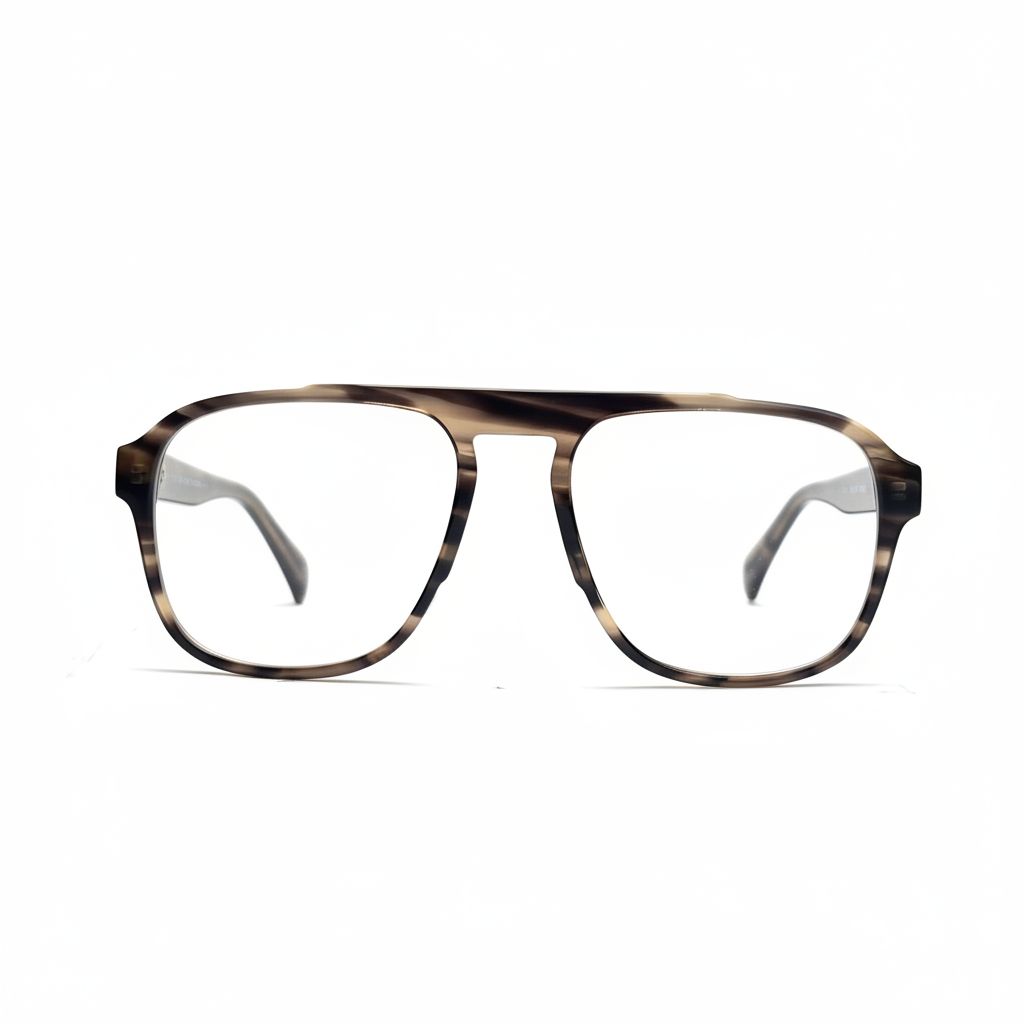
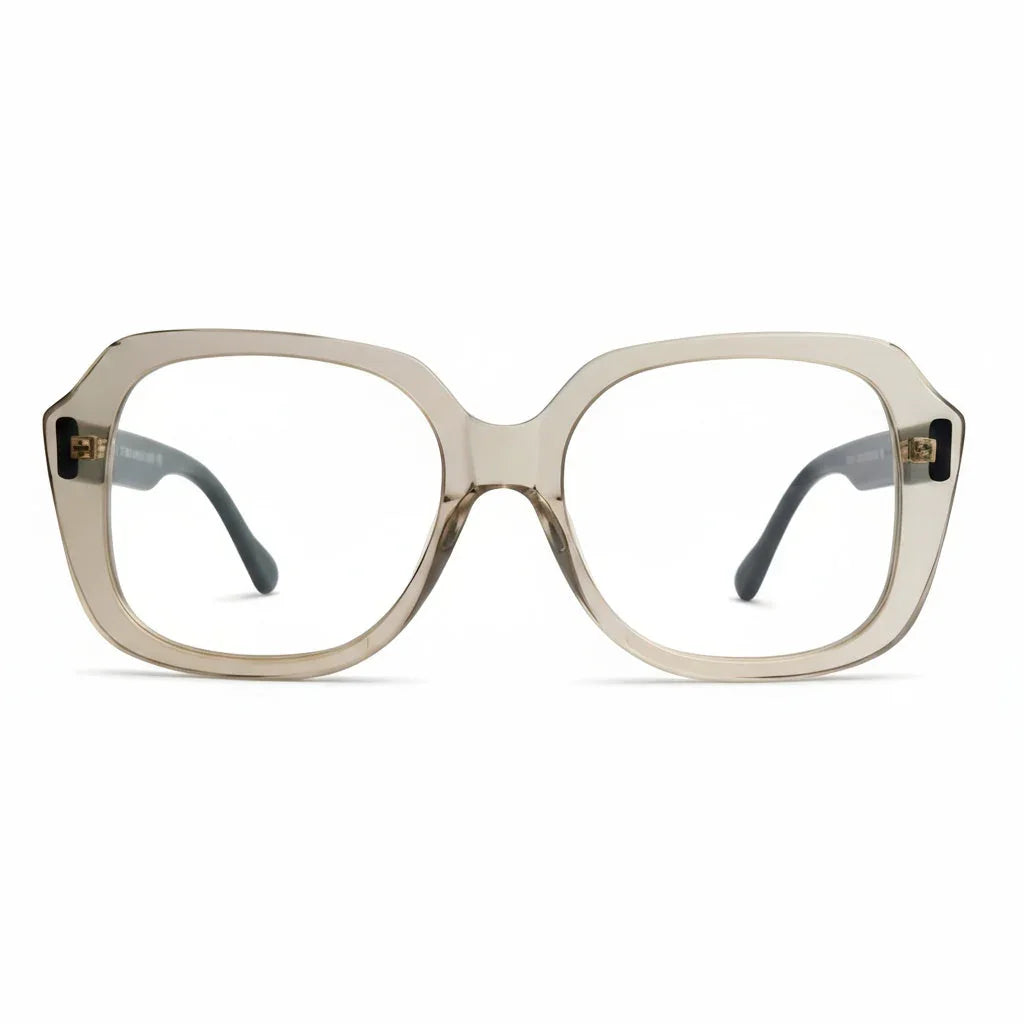
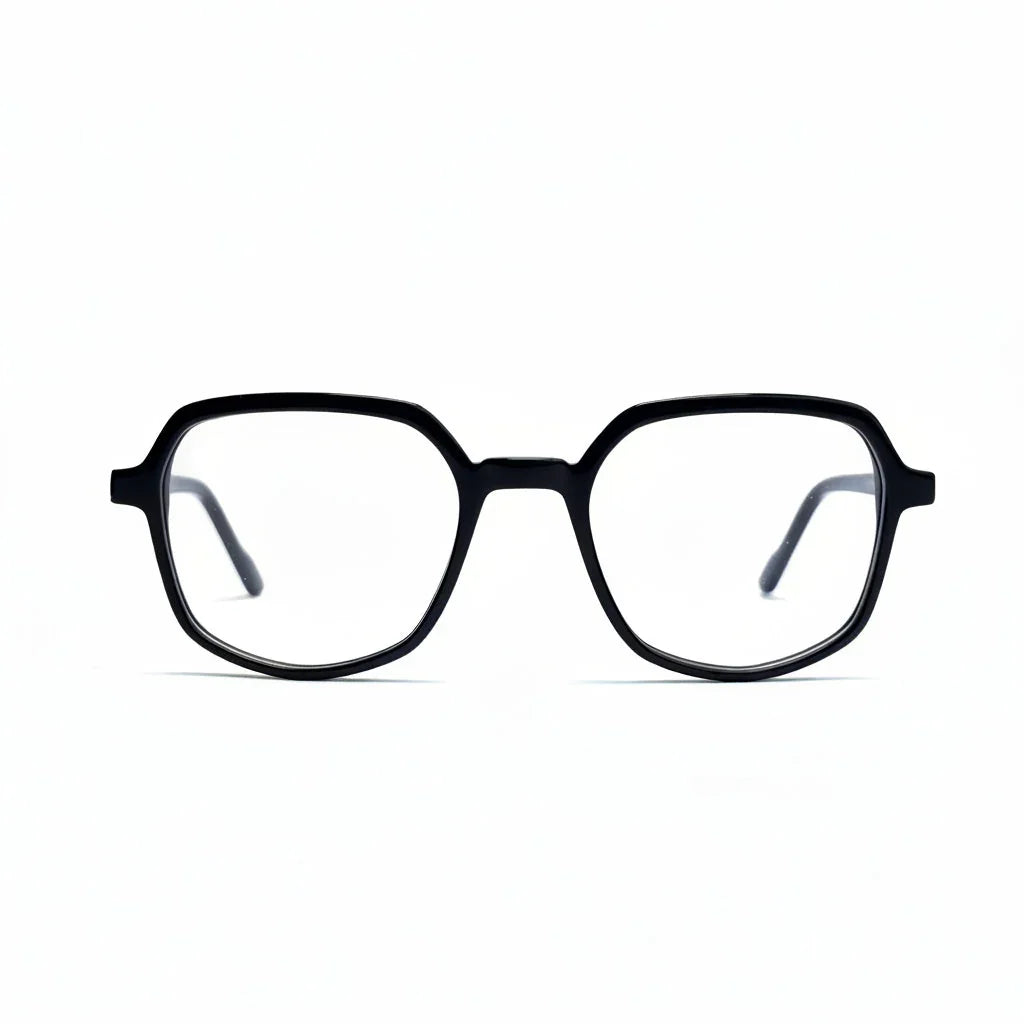
A frame can be the right shape and still look wrong. Scroll through the “which frame suits me best?” threads on r/glasses and the same three problems show up before anyone even mentions the shape: the front is a few millimetres too narrow for the face, the bridge sits too high or too low, or the finish is glossier than everything else the person is wearing. None of that is a taste problem. It is a measurement problem — and measurement is the part you can control when you order online.
This is a buying guide for men who want one pair of glasses that works in a meeting, at a bar and on a Sunday. Width first, silhouette second, material and finish third.
The three numbers printed inside the temple
Every frame carries a size string on the inside of the left temple arm, usually something like 52□18-145. Those are three separate decisions, and most people only ever think about the first.
- Lens width (52). The widest point of a single lens in millimetres. This sets the total front width, and total front width is what makes a frame look oversized or undersized on a face.
- Bridge (18). The gap between the lenses. Too wide and the frame slides forward onto the cheeks; too narrow and the front sits high with the temples pressing outward.
- Temple length (145). The arm length, and the number almost everyone ignores — which is why a frame that looks right in the mirror can sit forward of the ears by evening.
Before you order, take a pair you already wear and like and read its size string. Buy within about 2mm of that lens width and bridge and you have removed most of the risk. Between sizes, round down: a frame 2mm narrow reads as intentional, one 4mm wide reads as borrowed.
Four silhouettes cover almost every occasion
Shape is where most buying guides start, which is why so many people end up with a frame that photographs well and wears badly. Treat these four as tools with different jobs.
Square — the default
The square is the most reliable shape in menswear: a flat brow line and enough vertical depth to balance a longer face. It is the frame you can wear to a client meeting and to dinner without changing anything else.
Consider the Anders — a square titanium frame with a thin profile, which keeps the shape formal without the weight of a thick acetate front.
Rectangle — the short-face option
A rectangle is a square compressed vertically. It suits a face that is already fairly short or wide, because it adds no height, and it pairs unusually well with tailoring.
Consider the Earl — a titanium rectangle with a slim rim that stays quiet next to a suit.
Aviator — the off-duty frame
The aviator reads casual in any material, which makes it a poor single pair and an excellent second. In titanium it becomes lighter and less theatrical than the classic wire version.
Consider the Ben — a titanium aviator with adjustable nose pads, the detail that makes this shape wearable for a full day rather than an hour.
Geometric — the deliberate choice
Geometric frames replace the soft corner of a square with an angled one, so the frame looks designed rather than default. It works best when the rest of the outfit is plain.
Consider the Eivind — a geometric acetate with a flat top line and a wider temple, which is the version of this shape that still looks at home in an office.
Acetate vs titanium glasses: what the material changes
Of all the queries people use to find us, titanium vs acetate glasses is the most common, and the honest answer is that they solve different problems rather than one being better.
Acetate is a plant-based plastic cut from layered sheet, then tumbled and polished. It holds colour in depth — a tortoise acetate is not painted, the pattern runs through the material — and it can be shaped into thicker, more sculptural fronts. The trade-off is weight: an acetate front is typically 25–30g against roughly 15–18g for the same silhouette in titanium.
Consider the Conrad — a premium acetate square where the thickness of the front is the point, not an accident.
Titanium is machined and welded rather than cut, so it can be built much thinner while staying stiff, and it does not corrode. It takes a brushed finish beautifully and holds a bend at the temple. What it cannot do is carry colour in layers — titanium is either coated or left bare metal.
One clarification, because it comes up constantly: acetate vs polycarbonate frames is not a like-for-like comparison. Acetate is a frame material. Polycarbonate is a lens material. Most people asking actually want to know whether the frame or the lens is driving the price.
Finish and colour: the light-or-dark question
A polished acetate catches light along the rim and reads dressier; a matte finish absorbs it and reads more casual, which is why the same square silhouette can look like two different products. On metal, brushed titanium reads modern and slightly technical, while polished gold or silver reads traditional.
On colour, the useful rule is contrast against skin and hair rather than against the outfit. Dark frames — black, deep tortoise, gunmetal — give a defined brow line and suit lighter colouring. Crystal, sand and warm translucent acetates soften the frame and work on darker colouring, where black can read as a hard outline. If you cannot decide, take the darker option: it wears with more of a wardrobe.
Where the money goes: frame or lens
Two frames at the same price are rarely the same product: one may have a machined hinge and a thicker front, the other a lighter frame and a better lens. Decide which half you are upgrading. If the frame has gone loose at the hinge or lost its shape, no lens upgrade will fix that.
A five-minute check before you commit
- Width. The front should end roughly in line with the widest part of your face — not noticeably inside it, not past it.
- Bridge. The frame should rest on the bridge of the nose without the front touching your cheeks when you smile.
- Temples. The arms should reach the ears and bend down behind them, with the frame sitting level.
- Brow line. The top rim should follow the line of your eyebrows or sit just below it, not cut across them.
- Weight. If you notice the frame in the first thirty seconds, you will notice it more at hour eight.
One frame is a compromise, two frames are a wardrobe
A single pair so often feels slightly off because it is being asked to do contradictory jobs: look formal at 9am and relaxed at 9pm. The cheapest fix is not a more versatile frame, it is a second one. Keep a square or rectangle in titanium as the working pair, add a geometric or aviator in acetate for everything else, and the pair you are not wearing lasts longer.
Start with the measurements, pick the silhouette for the job you do most, then choose the material and finish for how you dress. Shape is the last decision, not the first.