A few weeks ago, someone posted a small question on r/glasses: what glue could hold the arm of a pair of glasses back on? They weren't asking about trends or brands. They just wanted their frame to be usable again. That single thread says more about sustainable eyewear than most marketing pages do — people don't want to replace their glasses. They want to keep them.
Sustainable glasses aren't really a label you print on a box. They're a decision: buy fewer, better frames, and keep them for years. Here's what actually drives the footprint of a pair of glasses, how acetate vs polycarbonate and titanium vs acetate compare, and how to get more life out of any pair you own.
Why "buy less, keep longer" beats any eco-label
Every frame carries the same hidden costs before it reaches you: raw material extraction, manufacturing energy, shipping, and packaging. Those costs are paid once per pair — which means the more often you replace your glasses, the more often you pay them.
Run the math on two paths:
- Trend cycle: a $30 frame replaced every eight months works out to roughly $45 a year — and around 1.5 discarded frames annually.
- Buy once: a well-made frame worn for four years costs closer to $24 a year, with a quarter of the waste.
The second option wins on money and on materials. It's also the conclusion most eyewear enthusiasts on Reddit keep arriving at: the thread about repairing a broken arm wasn't a complaint about price, it was a refusal to throw away something that still worked.
Acetate frames: a material that grows
Most high-quality plastic frames aren't made from petroleum plastic at all — they're made from cellulose acetate.
What cellulose acetate actually is
Cellulose acetate is derived from plant material, typically cotton linters and wood pulp. It's processed and layered into sheets, then cut into frame shapes and tumbled and polished for days. That's why acetate has a depth of colour that ordinary injected plastic can't imitate, and why tortoiseshell and crystal finishes look like they have dimension rather than a printed pattern.
It's also a material you can maintain. Acetate can be reheated, adjusted, and repolished, so a scratched or slightly loose frame can be brought back rather than retired.
Acetate vs polycarbonate: the durability question
Polycarbonate is the other material you'll see described loosely as "plastic." It's petroleum-derived, extremely impact-resistant, and common in sport and safety eyewear where toughness matters most. Acetate is chosen for everyday frames: it's comfortable, holds adjustments well, and accepts colour in a way polycarbonate cannot.
When people weigh up acetate frames pros and cons, the honest list is short. Acetate is a little heavier and can soften if left in a hot car, so it shouldn't be left to bake on a sunny dashboard. In exchange, you get a frame that can be refinished, re-tensioned, and worn for years instead of one that quietly ends up in a drawer.
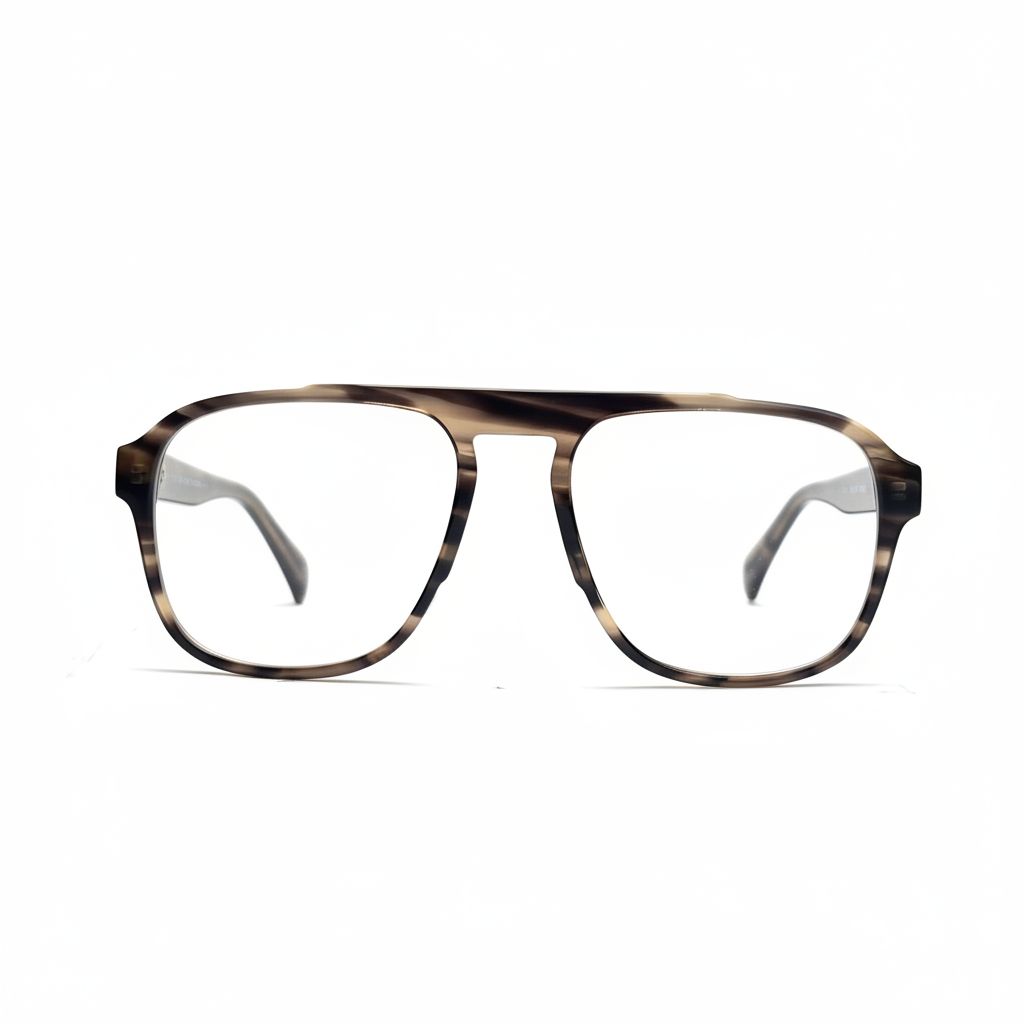
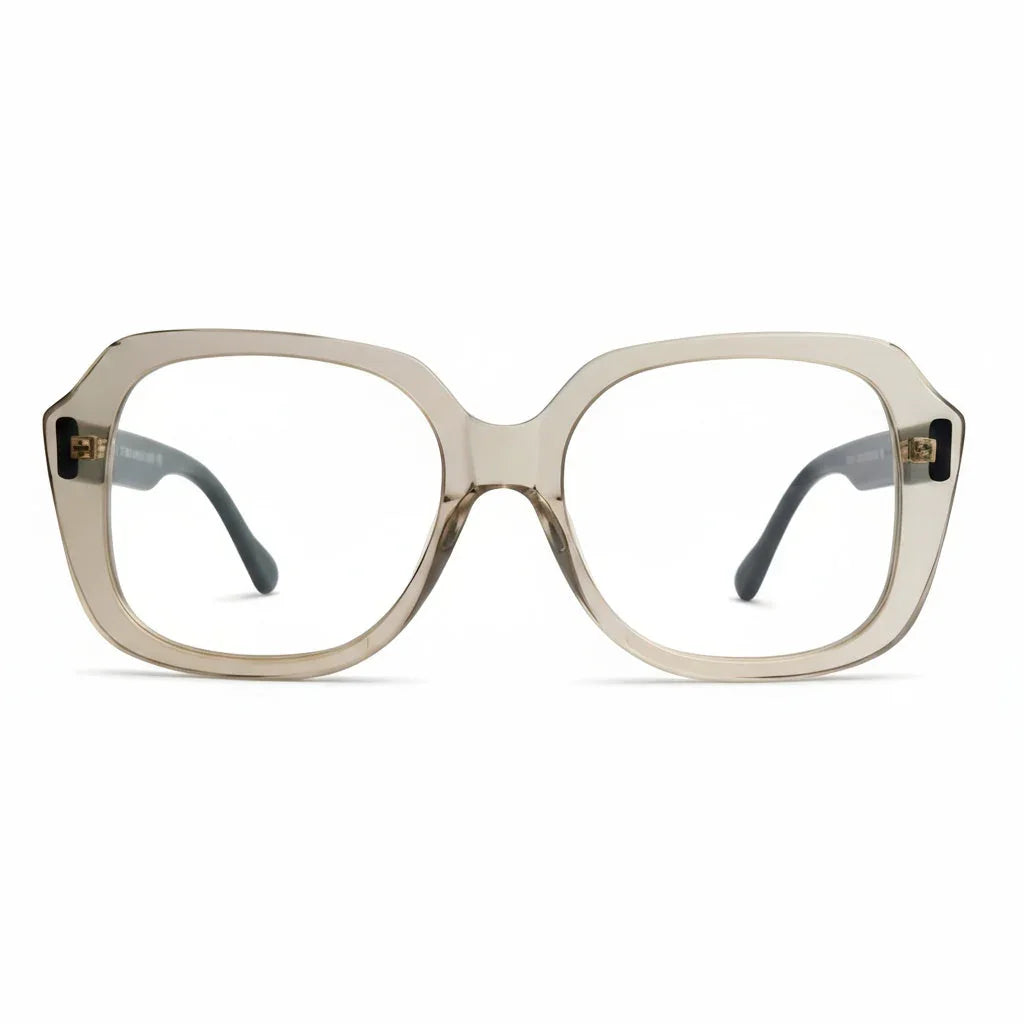
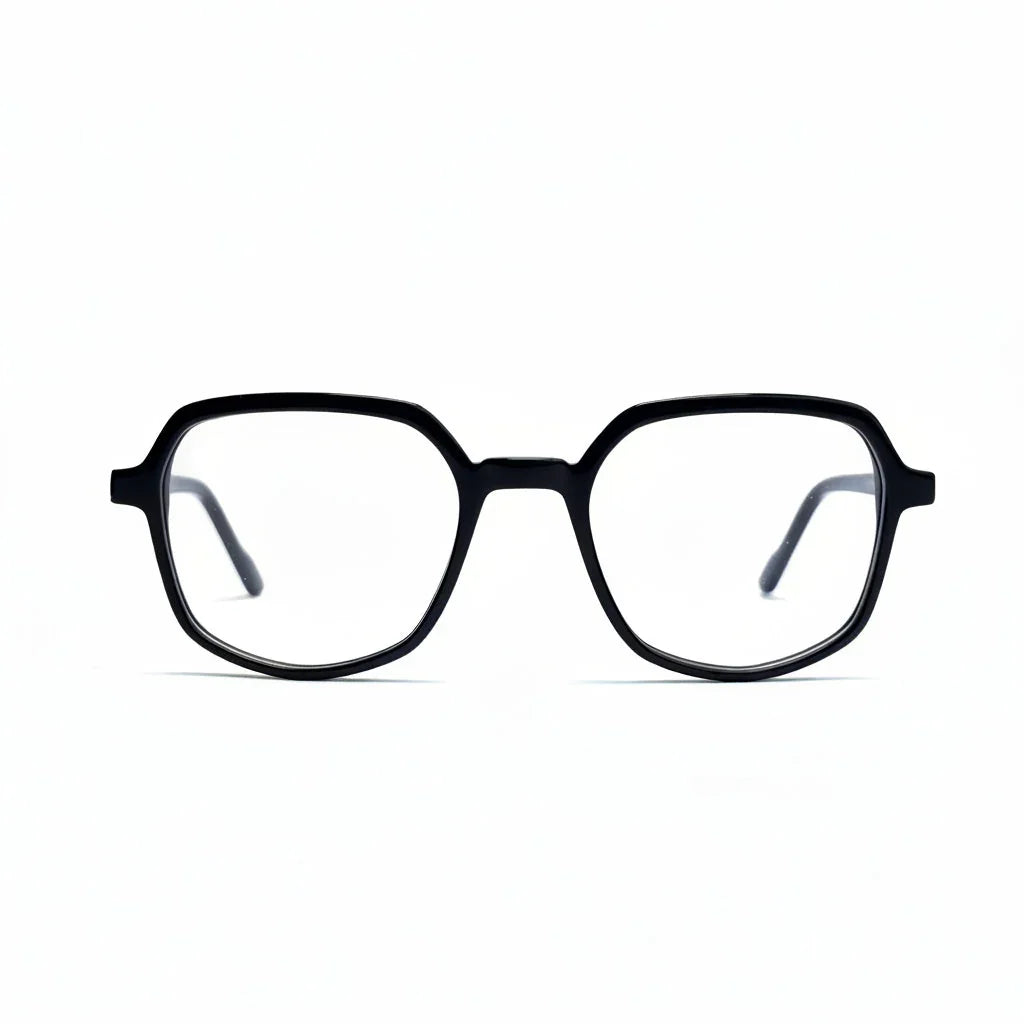
Consider the Caspar square acetate frame — a shape plain enough that it never feels dated, which is exactly what makes a frame worth keeping. For a rounder silhouette, the Egon premium acetate round frame does the same job in a softer key, and the Ditlev acetate frame sits between the two with a slightly lifted brow line.
Titanium frames: light, strong, and recyclable
If acetate is the material that grows, titanium is the one that refuses to quit.
Titanium vs acetate glasses: different jobs
Comparing titanium vs acetate glasses isn't really a contest — they solve different problems. Titanium is one of the most abundant metals in the earth's crust, and it's prized in eyewear for three reasons: it's exceptionally strong for its weight, it resists corrosion, and it's hypoallergenic, which matters if your skin reacts to the nickel in cheaper metal frames.
The practical benefit is durability. Titanium frames resist bending and spring back into shape, they don't rust or pit from sweat, and they tolerate daily wear that would loosen softer metals. Titanium is also widely recycled, so even at the end of a very long life the material still has value instead of becoming waste.
Consider the Cecilia square titanium wire frame — light enough to forget you're wearing it, which is the whole point of titanium. Or the Cody titanium-mix square frame, which pairs a titanium structure with a bolder front for people who want presence without weight.
Five habits that double a frame's lifespan
Material gets you a durable frame. Habits get you a durable relationship with it.
- Use both hands. Taking glasses off one-handed is the most common cause of a stretched or misaligned temple.
- Store them in a case, not on your face. Resting lenses against a table is the fastest route to scratches — and to a replacement you didn't need.
- Rinse the nose pads. Oil and sunscreen break down pads and plating; a rinse and a dry extends both.
- Fix small fit problems early. A loose nose bridge or a temple that digs in is usually an adjustment, not a replacement. As one Reddit member discovered when their nose bridge felt too narrow, frames can often be tuned — and it's worth asking before assuming a pair is finished.
- Keep the old pair as a backup. Most people replace glasses because they lost or broke a single pair. A backup turns an emergency purchase into a considered one.
What we do differently at WEISS OPTIX
Sustainability in eyewear gets complicated fast, and we'd rather be specific than impressive. So here's what we actually commit to: we build around timeless silhouettes instead of seasonal drops, because a frame designed to look right in five years is a frame that never needs replacing to stay current. We work in cellulose acetate and titanium — two materials chosen because they can be maintained, adjusted, and worn for years. And we sell direct, so more of what you pay goes into the frame itself rather than into a layer of retail markup.
We're not going to claim we've solved eyewear's environmental footprint. We will say that the most sustainable pair of glasses is the one you stop shopping for because you already love it.
The bottom line
Sustainable glasses come down to two choices: what your frame is made of, and how long you keep it. Choose a material that can be repaired and refinished, pick a shape you'll still like in three years, and treat small fit issues as maintenance rather than a reason to shop again. Buy fewer. Keep longer. That's the whole strategy — and it looks better on your face and in your budget.