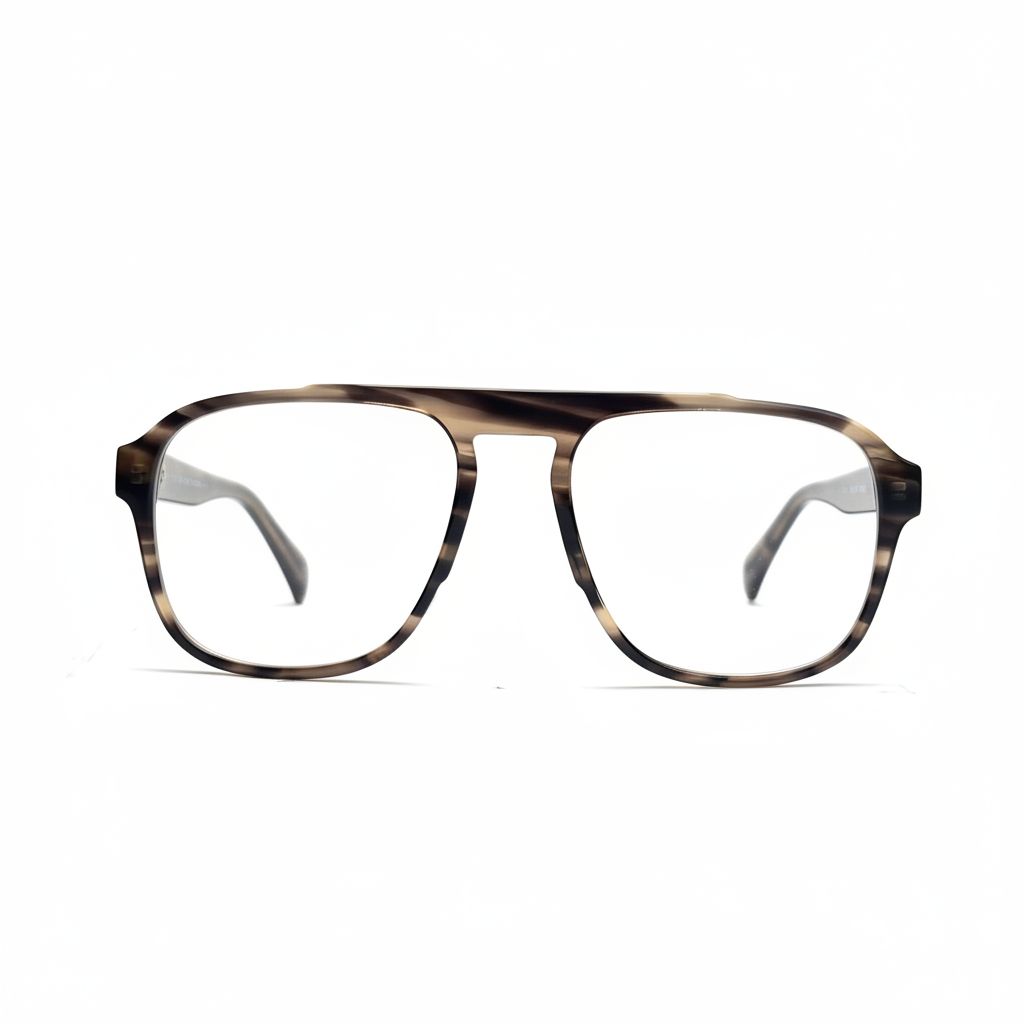
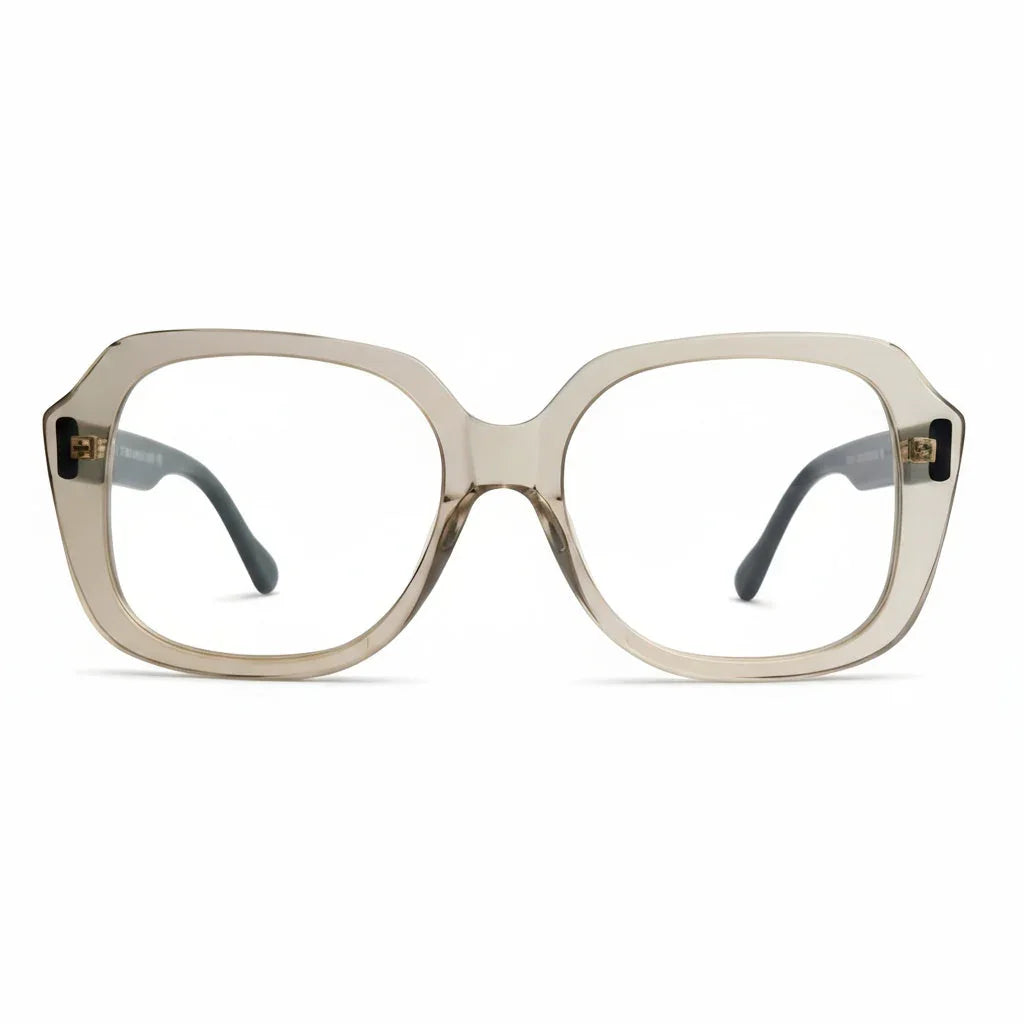
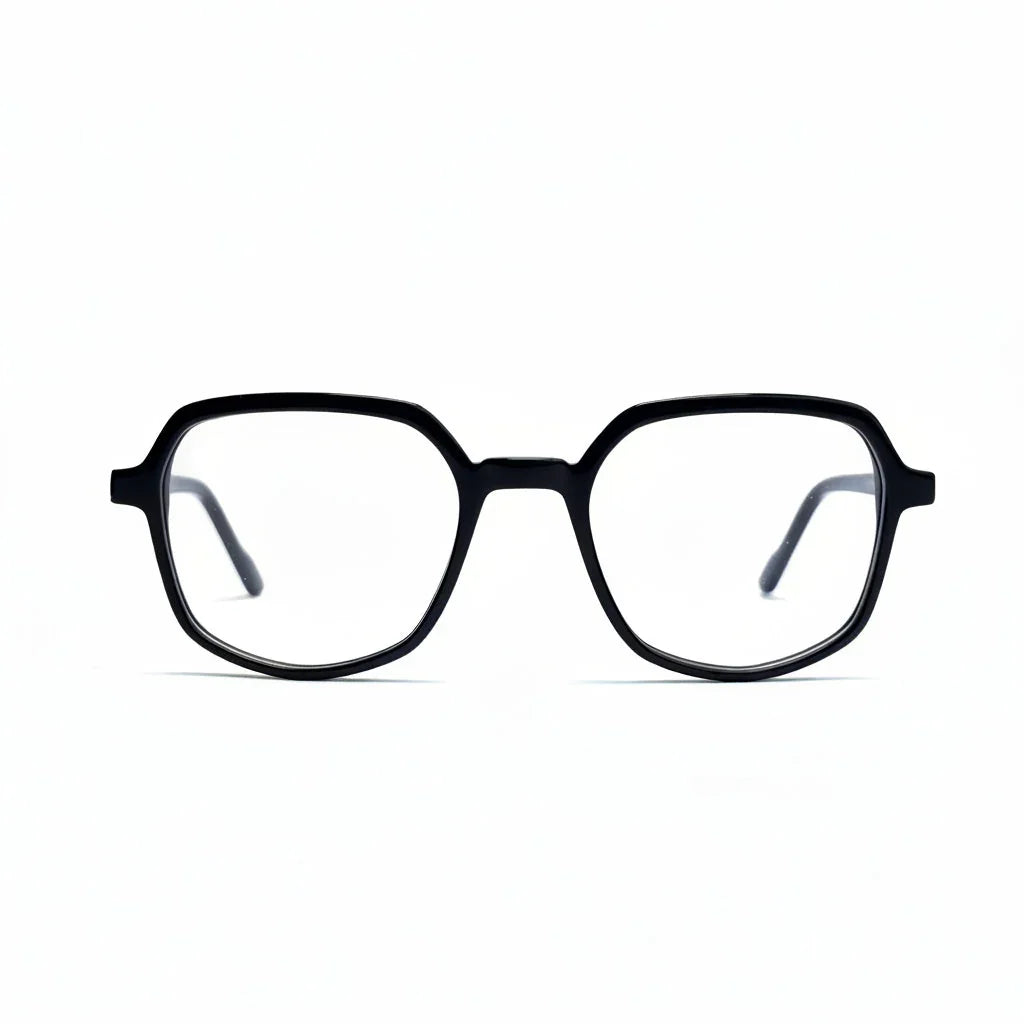
Spend an hour on r/glasses and the same three posts keep appearing: three pairs held up with "which frame suits me best?", a blurry photo of a frame someone loved seven years ago, and a quiet panic that the burgundy pair just ordered was a mistake. Different photos, same problem — most people choose frames by feel, with no numbers to anchor the decision.
Choosing glasses that work is not about having the "right" face. It comes down to three checkable things: fit (the measurements), shape (how the frame's lines balance your face), and material (how it feels and holds up). Get those right and most of the "does this suit me?" anxiety disappears. Here is how to buy 2026 eyeglass frames with confidence — in a store or online.
Start With Your Numbers, Not Your Face Shape
Every pair of glasses carries three measurements, usually printed inside the temple arm as something like 52 ☐ 18 - 145. They are not decoration. When you shop online, they are the whole game:
- Lens width (52) — the horizontal width of one lens, in millimetres.
- Bridge (18) — the distance between the two lenses, where your nose sits.
- Temple length (145) — the arm length from hinge to tip, behind your ear.
There is a fourth number that never appears on the frame itself: your pupillary distance (PD), the gap between your pupils. It is usually printed on a recent prescription; if not, an in-store measurement takes about thirty seconds.
The easiest measurement trick: measure the pair you already love
If a frame you own feels comfortable, write down its three temple numbers before you shop — that is your baseline. When you look at something new, compare like for like: keep the bridge within roughly 2 mm and the temple length within roughly 5 mm, and you will almost always land on a frame that sits the same way on your nose and ears. That single habit prevents the classic online letdown, where a frame looks perfect in the photo and then slides off your face.
Frame width vs face width
Add lens width + bridge + the two rim edges to get a frame's total width. Ideally it lands close to the widest part of your face, roughly temple to temple. Noticeably narrower and the frame will pinch; noticeably wider and it will feel like it is floating. A couple of millimetres either way is invisible — more than that, and you will feel it every day.
Match Frame Shape to Your Face Shape
The honest answer to "which frame suits me best?" is contrast. Frames should add lines your face does not already have. If your face is round, look for angular frames; if it is angular, rounded frames soften it:
- Round face — square, rectangular and geometric frames add definition and length.
- Square or angular face — round and oval frames soften a strong jaw and brow.
- Oval face — most shapes work; trust your measurements more than the shape chart.
- Heart-shaped face — delicate rims or frames that widen toward the bottom keep the balance.
- Long face — a deeper lens height shortens the face visually.
For a shape that flatters almost everyone, a titanium round like the Carsten — an acetate front with titanium detailing — adds softness without disappearing, and it works as hard on a video call as it does on the street.
Titanium vs Acetate Glasses: Which Material Fits Your Life
Titanium vs acetate glasses is one of the most-searched eyewear comparisons, and the answer is not a quality contest — it is a lifestyle question.
Titanium is strong, corrosion-resistant and remarkably light. A well-made titanium pair can be adjusted to sit almost invisibly through a twelve-hour day — which is why titanium dominates the lightest prescription glasses for long work days. The trade-off is colour: metal stays in the metal palette — silver, gold, gunmetal, bronze.
Cellulose-based acetate offers the opposite strengths: colour, depth and pattern — tortoiseshell, crystal, deep burgundy — and it can be polished back to new after years of wear. Slightly heavier, far more expressive.
Consider the Anton square titanium-mix frame if you want that barely-there metal feel with modern geometry — light enough to forget you are wearing it. If you would rather lead with warmth and colour, the premium acetate Conrad delivers a similar square silhouette in a material with much more depth.
Acetate vs polycarbonate frames — don't mix up frame and lens
One more comparison worth clearing up, because "acetate vs polycarbonate" comes up constantly: acetate is a frame material, while polycarbonate is almost always a lens material. So the phrase "acetate vs polycarbonate frames" is really about pairing a classic acetate front with lighter, thinner, impact-resistant polycarbonate lenses. Frame and lens are chosen separately when you order prescription glasses — so you can have the acetate look you want with the lens material that suits your prescription. You should never have to trade style for the optics you need.
Colour: How to Choose Without Regret
The safest rule is to match frame colour to your natural contrast level and your wardrobe, not to whatever is trending this month:
- Low contrast (hair and skin close in tone) — soft colours: crystal, champagne, light tortoise.
- High contrast (dark hair with light skin, or the reverse) — black, deep tortoise, strong metal.
- Warm undertones — gold, honey tortoise, warm burgundy.
- Cool undertones — silver, gunmetal, black, blue-toned acetate.
Trying a new colour for the first time? Choose the version you would still happily wear in two years rather than the one that photographs best today — and check the return window before you order.
What to Check Before You Click "Order"
- Measurements match your baseline — bridge within about 2 mm, temple within about 5 mm.
- Total frame width is close to your temple-to-temple width.
- Return and exchange policy is clear.
- Lens choice is settled: single vision, blue light, or progressive.
- Your prescription and PD are ready to enter.
The Fit Checklist (Two Minutes, Any Frame)
- Your pupils sit roughly in the centre of each lens, or slightly above.
- Frame width matches your face; the temples touch lightly at the sides.
- The bridge rests without pressure and without a gap.
- Lenses do not touch your cheeks or lashes when you smile.
- Temples reach behind your ear without pinching or pushing the frame forward.
If a frame passes this checklist in a store, it will pass online too — measurements do not change in the post.
A Second Pair Makes the First One Last
Once you know your numbers, a second pair stops being a luxury. Keep the Carsten as your warm everyday pair, let a cat-eye like the Birk carry the days you want a stronger statement, and add a round acetate sunglass such as the Breezy for bright afternoons — same dialled-in fit, nothing shifts when you switch.
Write down three numbers, decide which lines your face needs, pick the material that matches your days, and run the five-point fit check before you buy. If you are not sure where to begin, the titanium-mix Anton is one of the most forgiving first pairs you can buy — light, quiet, and easy to live in.