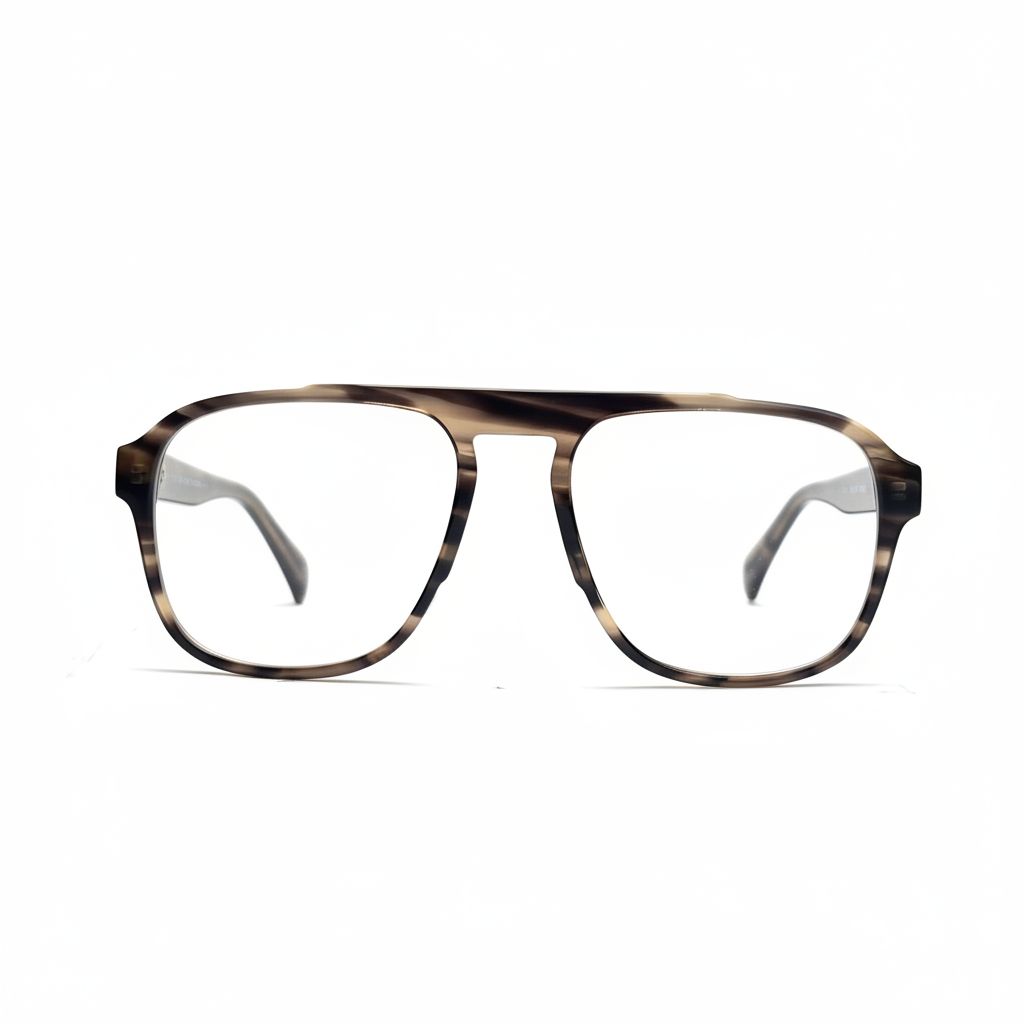
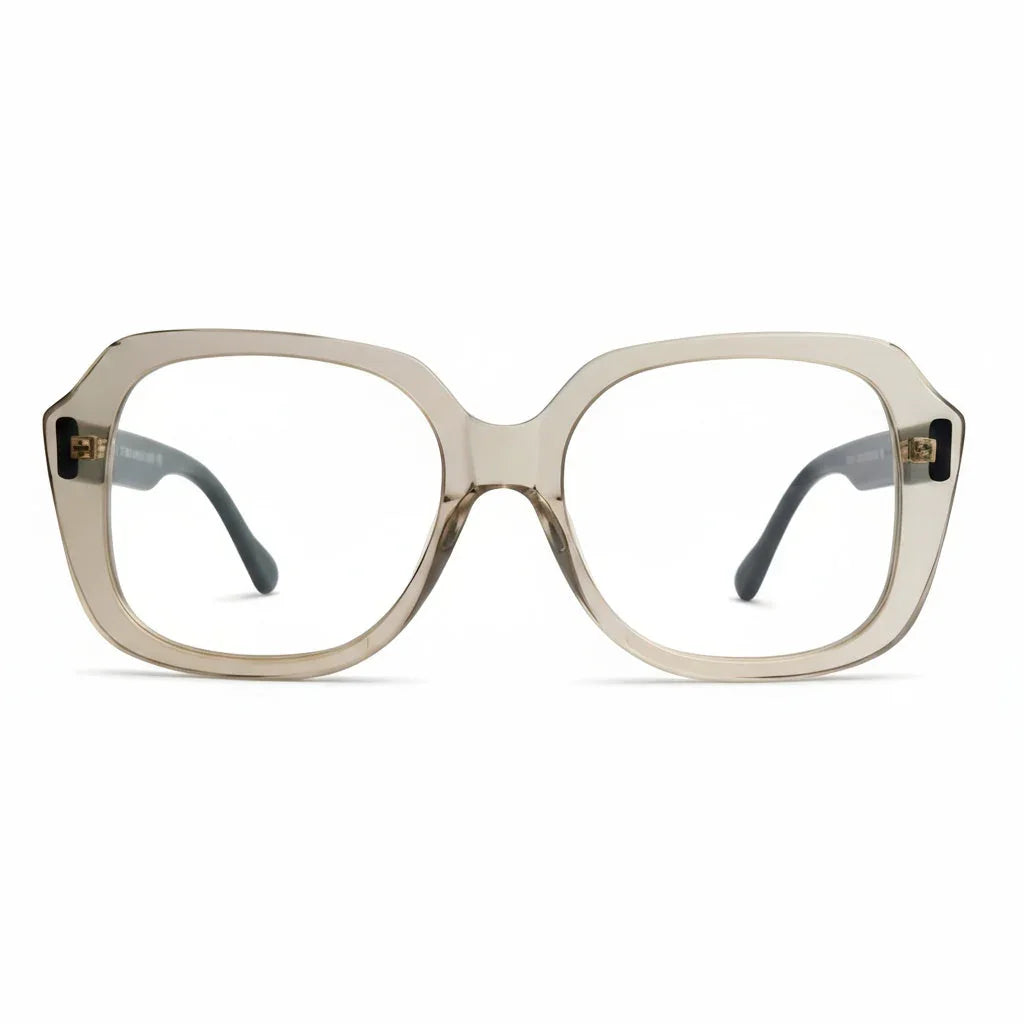
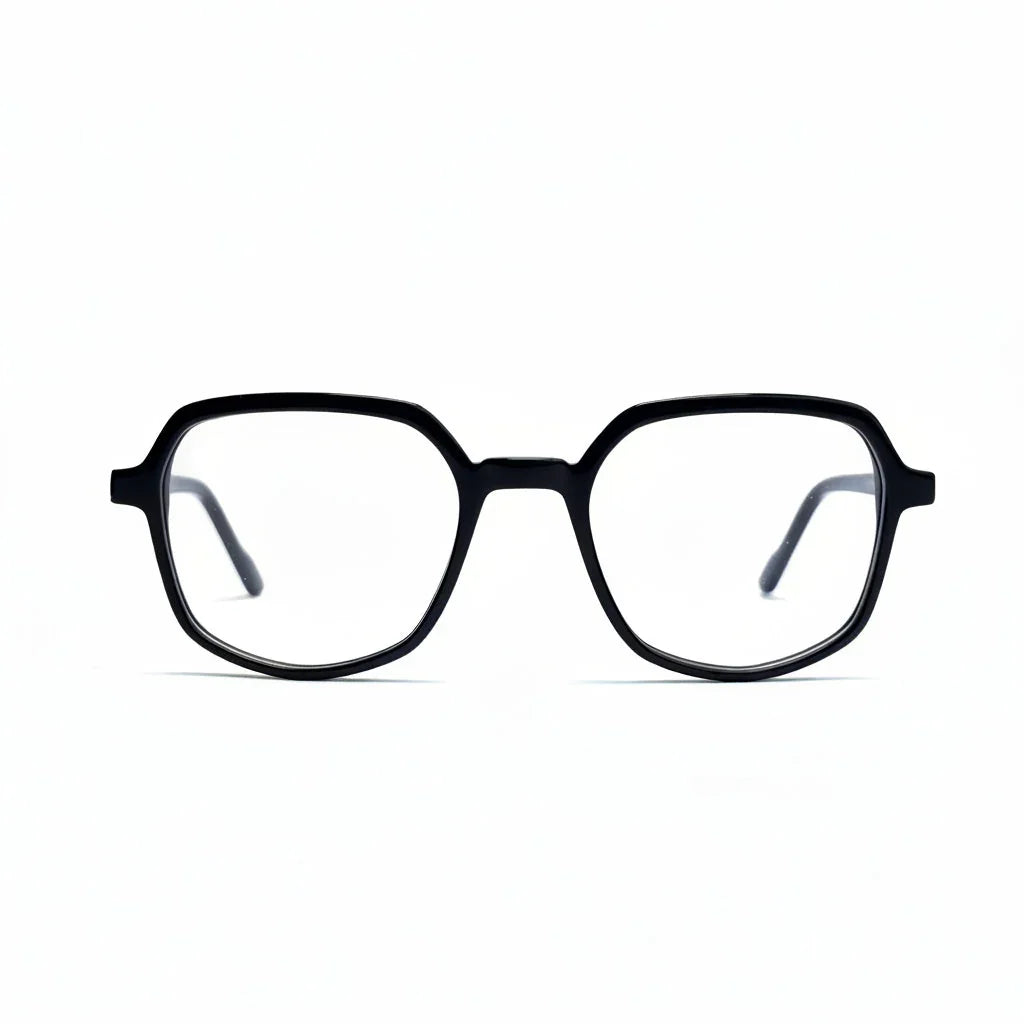
Why a frame can feel perfect in the shop and wrong by evening
You try a pair on in the mirror, the shape works, the colour works, and you take them home. Then, somewhere around hour six, something quietly changes. The frame creeps down your nose, one side sits higher than the other, or an arm presses into the spot behind your ear. None of that means you chose badly — it means fit is geometry, decided by five contact points measured in millimetres.
Online eyewear communities ask the same question in different words: "Is the bridge crooked or am I nitpicking?", "my nose seems wider than the nose bridge of the frame." Every one is a fit question — and almost all have an answer that does not involve returning the frame.
The five contact points that decide how a frame feels
- The bridge — a solid moulded arch, or two adjustable pads on arms; the two behave very differently.
- The nose pads — when your frame has them, they carry most of the weight of the front.
- The temple bend — where the arm starts to curve toward your ear, and the most under-checked dimension on any pair.
- The temple tip — should finish near the top of your ear, not hook behind it.
- The overall width — the distance between the hinge points, against the widest part of your face.
Get three of those right and a frame feels fine for an hour. Get all five right and it disappears.
Temple length: the measurement almost nobody checks
Temple length is printed on the inside of the arm, usually as the third number in a sequence like 52 □ 18 – 145. The last figure is the temple — 135, 140, 145 and 150 mm cover most adult frames — measured from the hinge to the end of the tip.
The bend point should fall roughly where your head begins to narrow behind your temple: too early and the arm lifts off your head, too late and nothing holds the frame back. The temple tip should end at the top of the ear, not curl behind it.
Look straight down at your shoes. If the frame slides forward, the temples run long or loose; if the tips hook behind your ears after twenty minutes, they run short.
Consider the Carsten round acetate-titanium hybrid — the acetate front and titanium arm give the temple a light, slightly flexible feel that settles easily behind the ear.
Hinges: the difference between a frame that flexes and one that cracks
The hinge takes more stress than any other part of a frame, which is why it is where most glasses eventually fail. A barrel hinge — two interlocking pieces held by a screw — is simple and repairable. A spring hinge hides an internal spring that lets the arm flex outward past its resting position, forgiving the habit of pulling glasses off one-handed. Riveted or hingeless construction looks cleaner but tolerates far less if the frame is knocked.
Consider the Earl titanium rectangle — a slim metal front with a neat temple joint that keeps the arm stable without adding bulk at the hinge.
Weight: why the same shape can feel completely different
Two frames can share a silhouette and still feel nothing alike, because the material sets the weight — and weight is what decides whether a frame stays where you put it. This is where titanium vs acetate glasses becomes a practical question: titanium is corrosion-resistant and around 40% lighter than acetate, so a full-titanium frame sits still instead of drifting down your nose through a long day.
The acetate frames pros and cons trade-off runs the other way. Acetate takes colour beautifully and holds a sculpted curve, giving a frame a warmer, more substantial presence; the flip side is that heft. Between two frames you like equally, pick the lighter one in your hand — that is the one you will forget you are wearing.
Consider the Cecilia square titanium wire for a barely-there titanium front, and the Conrad premium acetate square if you would rather have the deeper colour and solid feel of a full acetate build.
Bridge and nose pads: which one you have
Three setups cover most frames. A keyhole bridge is a traditional arch sitting on the sides of the nose with the top left clear — light and stylish, but it stays put best on a nose with a defined bridge. A saddle bridge is moulded and integrated, spreading the frame across a wider area: very stable, very little to adjust. Pad arms are separate pads on adjustable metal arms, common on metal and aviator shapes.
If your nose is wider than the frame's bridge, a metal pad arm can often be opened outward, and a warmed acetate bridge can sometimes be widened a few millimetres. What cannot be rescued is a frame simply too narrow across the front — no adjustment turns a 10 mm gap into a fit. If the bridge is your recurring struggle, see How to Find the Right Bridge Fit for Your Nose.
Consider the Ben titanium aviator — it uses adjustable pad arms, so the fit can be tuned after the frame arrives rather than guessed at.
How a bench adjustment works — and what it cannot fix
Four-point alignment levels both lenses and rests both temples evenly, so the frame sits straight rather than propped on one side of your nose. Pad arm tuning tilts, opens or closes the pads so the weight lands on the sides of the nose instead of one spot. Temple bend and tip sets where the arm curves and how far the tip reaches, which is what stops a frame sliding forward. Hinge width allows a modest widening or narrowing across the front.
No adjustment can fix a frame that is fundamentally the wrong width, repair a joint that has already cracked, or recover a temple that has been over-bent many times. Buying the right size in the first place is worth more than any repair.
And if a new frame looks slightly crooked in the mirror, you are probably not imagining it — and probably not the problem. Very few faces are symmetrical, and one ear often sits lower than the other. That is exactly what a two-minute adjustment at the temple tip is for.
Clearing up one common mix-up
People searching for polycarbonate vs acetate frames are comparing two different things: acetate is a frame material, polycarbonate is a lens material. The frame sets weight, temple flex and contact points; the lens sets thickness and how the pair balances front to back.
Choosing a frame that still fits at hour eight
Next time you try a frame on, do not stop at the mirror. Look down and see whether it stays. Check that the temples curve at the right point and the tips end at the top of your ear. Feel the weight in your hand before it goes on your face. And if one detail is off, ask — pad arms, temple tips and bend points are all adjustable, and the difference between a frame you tolerate and one you forget about is usually two minutes of tuning.