Half-Rim vs Full-Rim Glasses: Why Frame Construction Matters More Than You Think
Here's a scenario that plays out every day on eyewear forums like r/glasses: someone posts a photo of a frame they love and asks, "What frame is this called and where is it from?" They know what they like — they just don't know the vocabulary to search for it. Another common thread is simpler but just as telling: side-by-side photos and a plea for help — "Which suits me best?"
Both questions point to the same gap. Most first-time online glasses buyers learn to compare shapes (round, square, cat-eye) but skip the comparison that actually changes how a frame feels on your face: frame construction. And the biggest fork in that road is half-rim vs full-rim glasses.
This guide breaks down exactly how the two constructions differ — in weight, durability, lens thickness, maintenance, and style — so you can stop guessing and start choosing.
What Is a Full-Rim Frame?
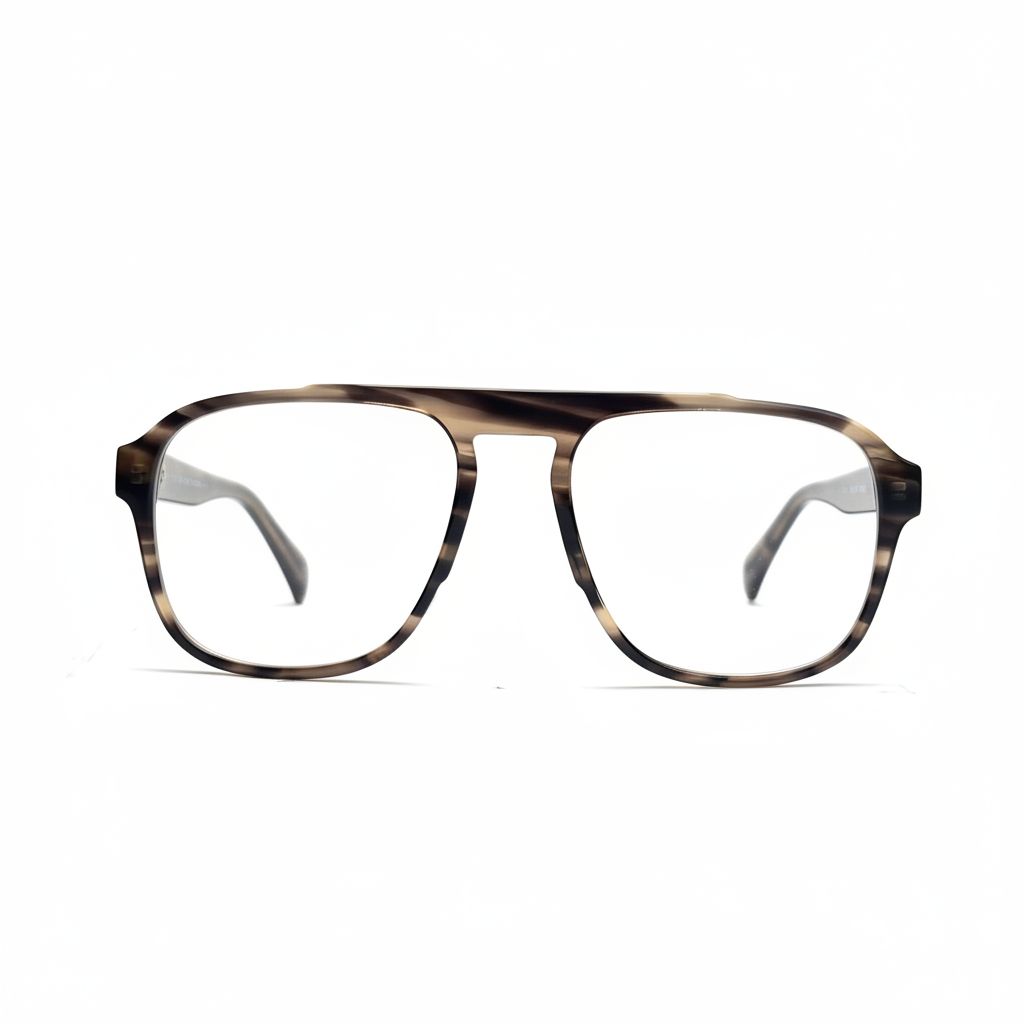
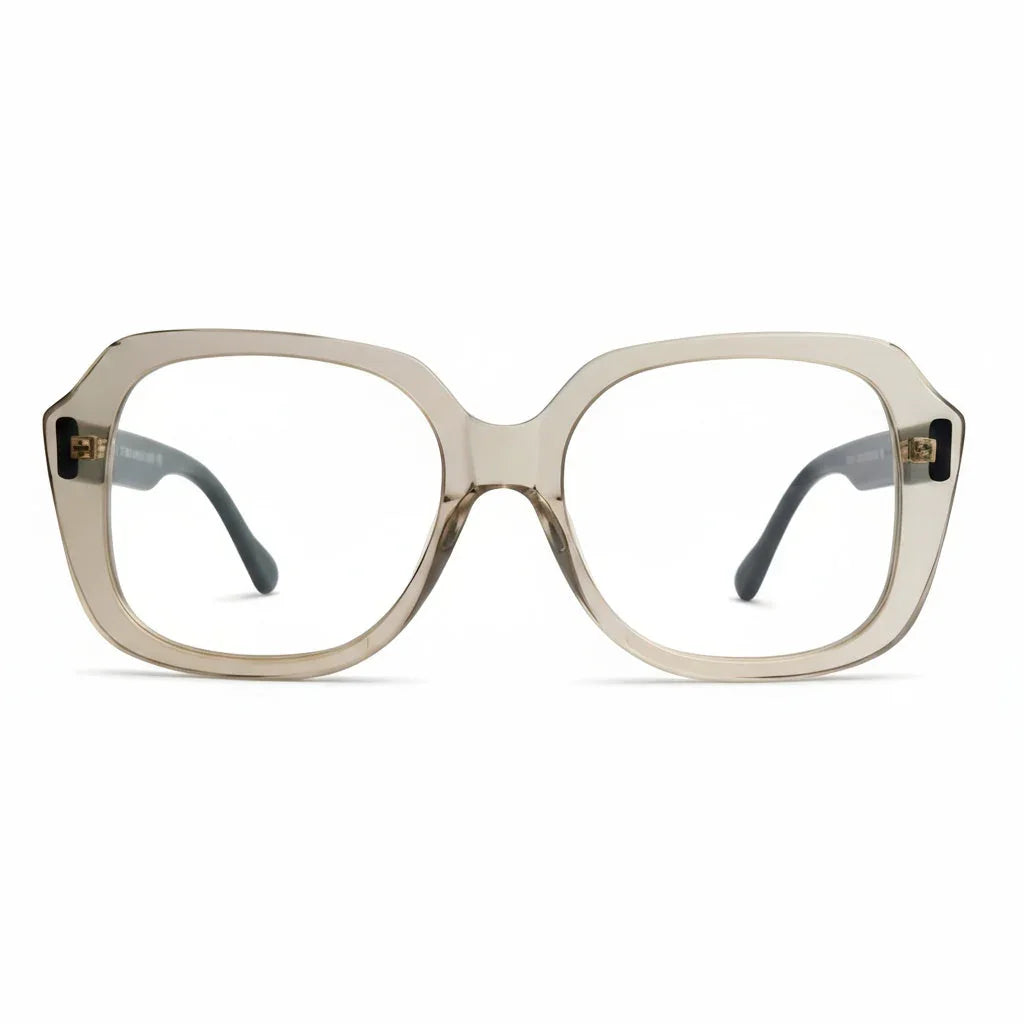
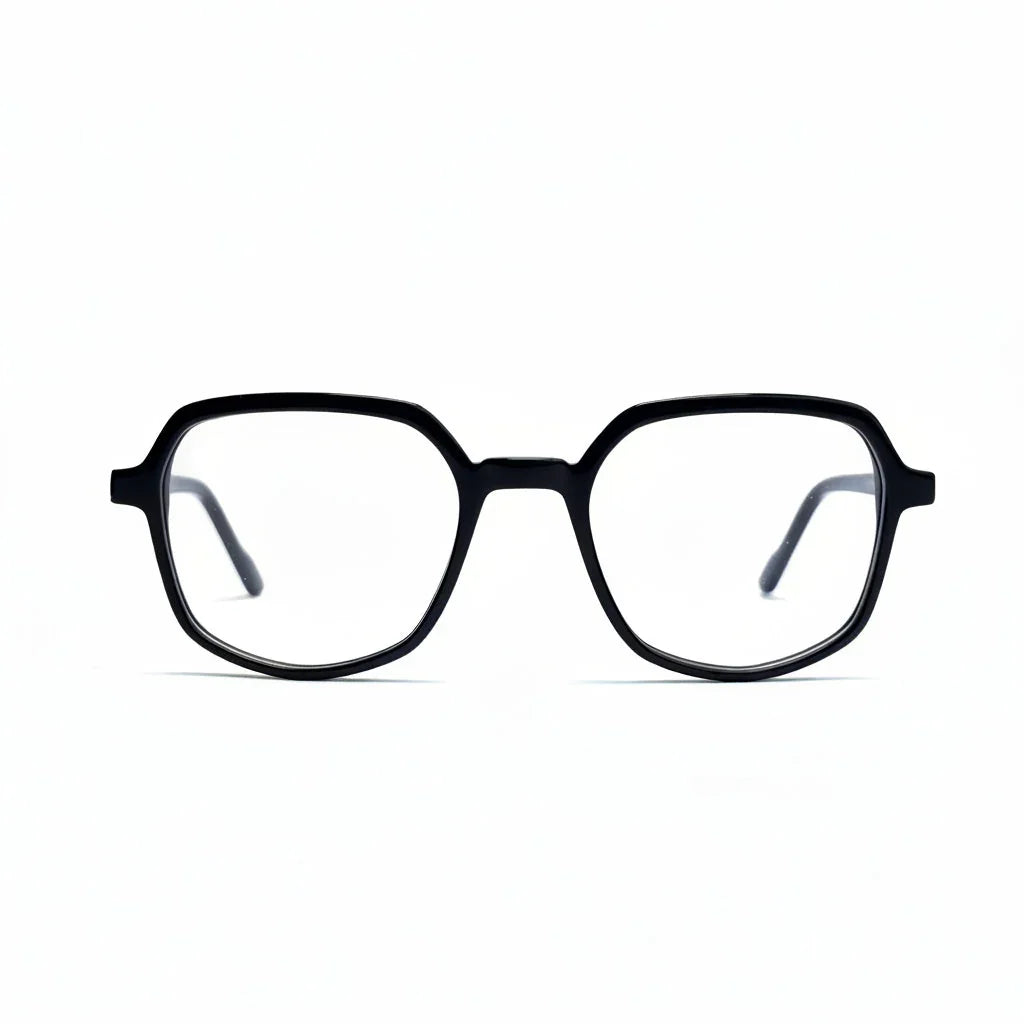
A full-rim frame encircles the entire lens with material — acetate, titanium, or a hybrid of both. It's the classic construction you picture when you think of eyeglasses, and it remains the most popular choice worldwide, especially in the trends in eyeglasses 2026, where bold, visible frames have dominated runways and street style alike.
Strengths of full-rim frames
- Lens protection. The rim shields the lens edge from chips and impact — ideal for kids, active wearers, and anyone who's dropped their glasses once or twice (so, everyone).
- Thin lenses look better. A plastic or metal rim hides the edge thickness of stronger prescriptions. If your prescription runs above ±4.00, a full rim makes high-index lenses look their best.
- Style impact. The rim is the look. Full-rim frames make a statement and read as intentional — think of how a thick acetate frame changes an entire outfit.
- Wider lens choice. Rimless and half-rim constructions restrict which lens shapes work; full-rim accepts nearly everything.
What Is a Half-Rim (Semi-Rimless) Frame?
A half-rim frame — also called semi-rimless — holds the lens along the top half with a rim, while the bottom half is secured by a thin nylon cord or groove. The lower edge of the lens is exposed, which visually "opens up" the face.
Strengths of half-rim frames
- Featherweight feel. Less frame material means less weight. Many wearers report forgetting they have them on during long workdays.
- Minimal, professional look. Semi-rimless frames are a staple in business and professional settings — understated without disappearing.
- Wider field of view. No lower rim means fewer distractions at the bottom edge of your vision, especially when reading or looking down at screens.
- Great for milder prescriptions. Because the lens edge is exposed, half-rim frames shine with lower-power lenses that stay naturally thin.
Head-to-Head: Half-Rim vs Full-Rim at a Glance
- Weight: Half-rim wins for lightness; titanium full-rim narrows the gap considerably.
- Durability: Full-rim protects the lens better; half-rim's nylon cord can stretch over years and may need re-threading.
- Strong prescriptions: Full-rim hides lens thickness; half-rim exposes it.
- Maintenance: Full-rim is basically set-and-forget; half-rim occasionally needs cord adjustment.
- Style statement: Full-rim projects personality; half-rim projects precision.
If you're still torn, a useful tiebreaker: match the construction to your prescription strength first, then your daily routine, then your style. In that order.
Our Picks: WEISS OPTIX Frames in Both Constructions
To make the choice concrete, here are five frames from our collection that show exactly what each construction does best.
The half-rim hero
Consider the Andreau Titanium Semi-Rimless — our clearest expression of what half-rim construction is for. The rectangular silhouette and exposed lower lens edge create that clean, professional openness, while titanium keeps the whole thing remarkably light for all-day office wear.
Full-rim, maximum lightness
Consider the Anders Square Titanium Glasses — proof that full-rim doesn't have to mean heavy. Precision titanium delivers a full frame of protection at a weight that competes with semi-rimless designs, making it the sweet spot if you want coverage and comfort.
Consider the Earl Titanium Rectangle — a slightly more angular take on the same idea, ideal if you want a sharp, structured look that suits square and oval face shapes.
Full-rim with a minimalist twist
Consider the Cecilia Square Titanium Wire — a wire-thin full rim that behaves like a minimalist frame. It keeps the full perimeter of protection while looking nearly invisible from a conversational distance. It's a favorite among Reddit browsers who ask for frames that "don't look like glasses" while still being real glasses.
The hybrid option
Consider the Andre Acetate-Titanium Round — an acetate front with titanium detailing that splits the difference: expressive full-rim style up front, featherweight metal where it counts. If you can't decide between bold acetate and light titanium, this hybrid is your answer.
How to Decide in 30 Seconds
- Prescription above ±4.00? Lean full-rim — it hides lens edge thickness.
- Prescription mild and you want barely-there comfort? Go half-rim, like the Andreau.
- Rough on your glasses? Full-rim. The rim is your lens's bodyguard.
- Client-facing professional who wants polish without weight? Half-rim or titanium wire full-rim — the Cecilia lives here.
- Want the look of acetate without the heft? A hybrid like the Andre.
The Bottom Line
The half-rim vs full-rim debate isn't about which is objectively better — it's about matching construction to your prescription, your habits, and the image you want to project. Full-rim frames protect, express, and flatter strong prescriptions. Half-rim frames vanish on your face and keep your vision line clean. Both are available in modern lightweight titanium, so neither choice means sacrificing comfort.
And if you're the person who screenshots frames you can't name — now you can: that style you keep seeing is likely a semi-rimless or a titanium full-rim, and you'll find both in the WEISS OPTIX collection. Choosing between them just got a lot easier.