Why the temple arm decides everything
You put your glasses on at seven and your headphones on at nine. Somewhere in that second move the frame stops being a frame and becomes an obstacle: the cushion pushes the temple off your ear, or the temple lifts the cushion and takes the low end with it.
Most advice about glasses with headphones starts with the headphones. It should start with the temple — the one part of the frame that shares space with an earcup. It runs from the hinge to the tip and hooks behind the ear, and that last 40 millimetres is exactly where a headband lands.
Three numbers describe it. Length is usually 135–150 mm on adult frames. Thickness spans a wide range — a titanium wire temple is often 1.2–1.5 mm across, a classic acetate temple 5–6 mm. Profile is the shape of that cross-section: a flat outer face meets a cushion very differently from a rounded one.
Reading a temple before you buy
Material sets temple gauge more than price does. A titanium frame can carry a 1.2 mm temple because the metal holds its shape at that gauge; acetate needs around 5 mm to stay rigid, which is why plastic frames feel wider at the ear.
- Titanium — thin, light, corrosion-resistant, and springy enough to flex under a clamp and return to shape.
- Acetate — deeper colour, warmer in the hand, and usually the thickest temple on the shelf. A good frame tapers it slightly behind the ear so it stays put.
- Acetate-titanium hybrid — an acetate front for the look, titanium temples for the gauge: the combination most headphone wearers settle on.
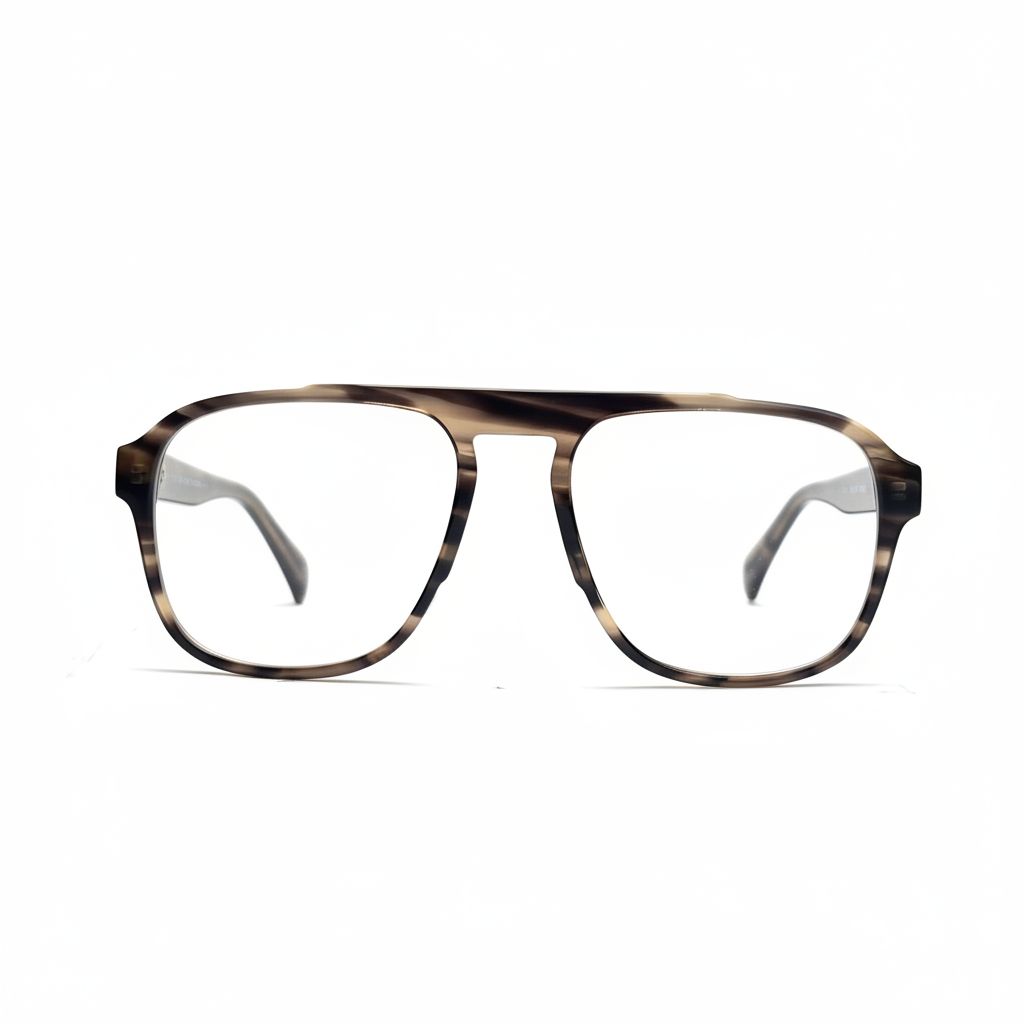
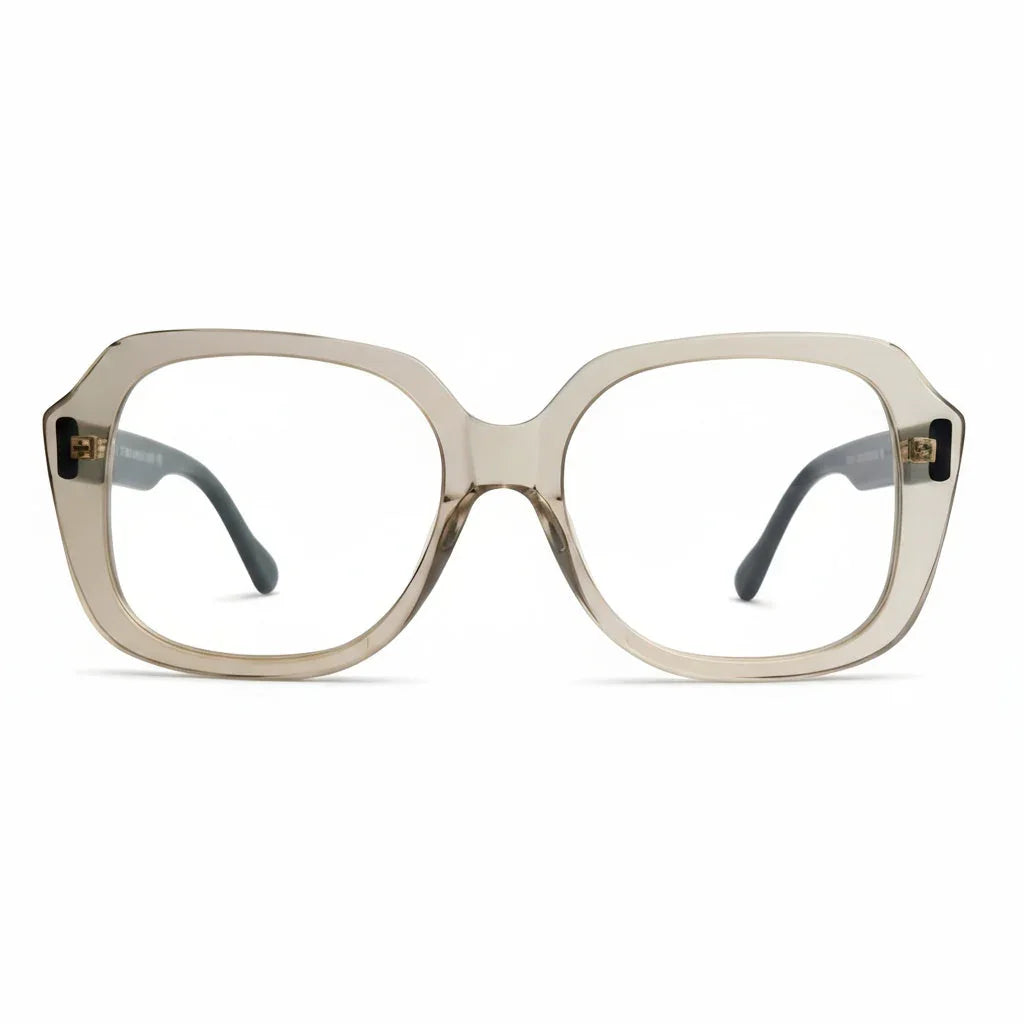
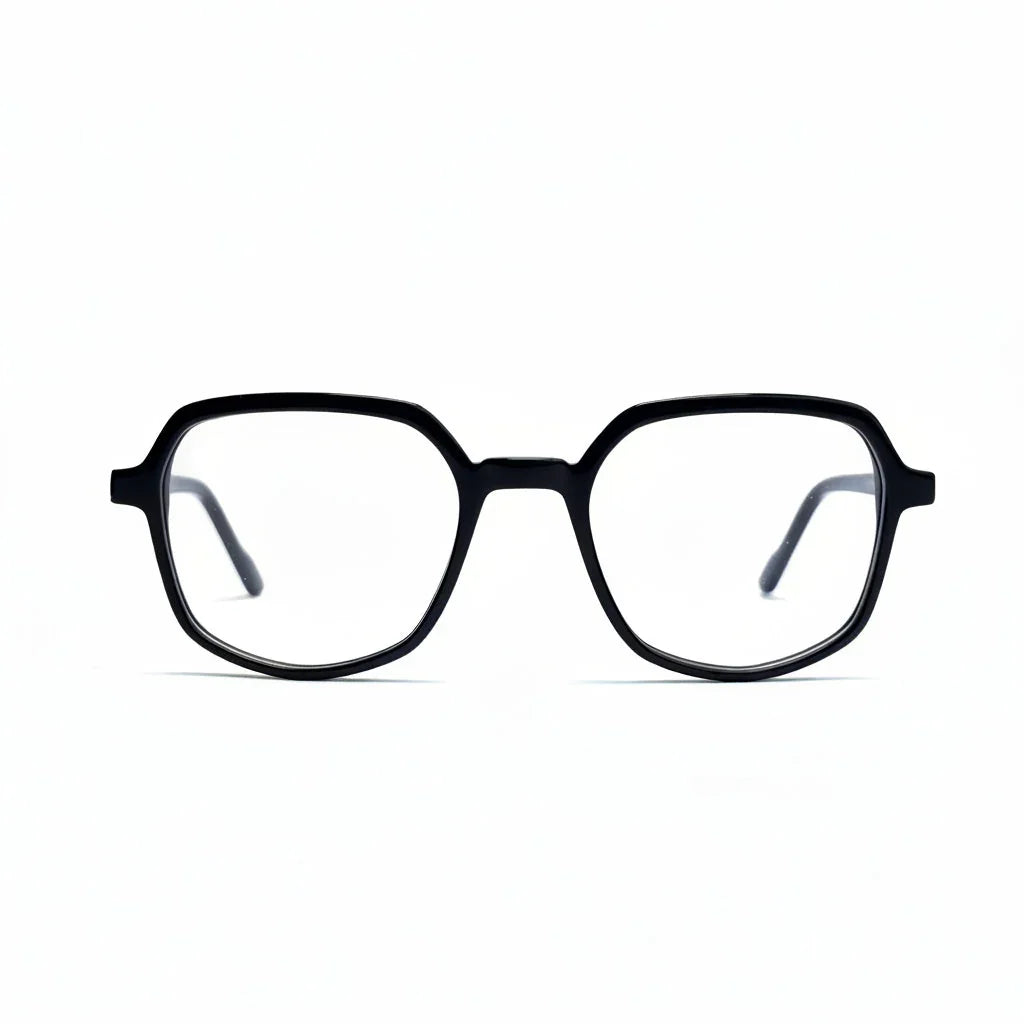
Three frames show the range. The Earl titanium rectangle carries the thinnest temple we make — a flat wire arm that slides under a cushion rather than levering against it. The Elias geometric acetate is wider but keeps its outer face flat, which matters more than the millimetres suggest. The Einar round acetate is the classic round build: more mass, best matched with deep open cups.
Over-ear, on-ear and in-ear ask for different frames
Over-ear cups give a frame the most room: the temple only has to clear the inner cavity, not the rim. Look for 20 mm of cup depth and a soft bevelled edge, so the temple has somewhere to sit instead of somewhere to press.
On-ear models are the tightest brief: the pad lands on the ear, so any temple caught between pad and skull is felt within seconds. Choose the thinnest temple you can and keep the headband slack.
In-ear monitors remove the conflict altogether, which makes them the easy answer for long calls — though a temple still has to hook behind the ear when nothing is clamping it in place.
Hats, caps and helmets: the second front
Hats create a different problem. Instead of pushing the temple inward, a cap pushes it down, and a crown that sits low over the ears rides on the temple and drags the frame down the nose with it. Three things to check:
- Crown depth. The cap should clear the top of the temple where it meets the hinge. If fabric touches the hinge, the frame tilts.
- Temple tip length. Long tips that hook low behind the ear fight an ear flap or a helmet strap; a shorter tip is easier to live with.
- Lens height. Under a brim a shallow lens disappears; a taller lens catches the light and looks deliberate — this is where round and geometric shapes earn their place.
With a helmet, the strap crosses the same 20 mm as the temple tip, so keep the tip slim.
The five measurements that decide it
- Frame width — if the front is wider than your head, the temple bows outward, exactly where a cup clamps.
- Temple length — 135 mm and 145 mm sit very differently under a headband. Between sizes, the shorter option leaves less material in the way.
- Temple thickness at the ear point — under 2 mm is headphone-friendly; over 5 mm needs a deep cup.
- Frame weight — mass multiplies clamp. Two frames with identical temples behave differently at 18 g and 30 g.
- Hinge type — a spring hinge keeps tension through a knock, but adds bulk exactly where a cup edge lands.
Adjustments worth making — and the one that is not
Most optical shops will adjust a frame you already own in minutes, and three changes do most of the work:
- Flatten the temple angle so the arm lies closer to the side of the head. This is the single biggest change for headphone use.
- Move the bend point so the ear point lines up with the top of your ear rather than sitting on it.
- Re-align the nose pads so the frame does not slide when cups push inward. A frame that already drifts will drift faster under a clamp.
What a bench cannot fix: a temple too short, an acetate temple too thick to flatten, or a front wider than the cup opening. Those are buying decisions rather than adjustments.
Acetate vs polycarbonate frames, and the lens question behind it
This phrase comes up constantly, and it usually hides a mix-up: acetate is a frame material, polycarbonate is a lens material. Nobody is choosing between them for the same job.
What is worth comparing is mass. A polycarbonate lens is lighter than a mineral one at the same power, and a higher index makes it thinner again. Less lens mass means less front weight, and a front-light frame is less likely to slide when an earcup pushes the temple inward. So when people search for polycarbonate vs acetate frames, the answer for headphone wearers is: pick the acetate or titanium front you like, then specify the thinner lens.
A ninety-second try-on with your own headphones
Do this at home, with the pair you actually use:
- Put the glasses on first, then the headphones. The reverse order pushes the temple out of position.
- Slide a finger along the cushion edge and confirm the temple sits inside the cup, not under its rim.
- Nod, turn your head and open your jaw. If the frame shifts, the temple length is wrong for you.
- Take the headphones off with both hands. Pulling one side levers a single temple and, over months, bends it.
- Check a mirror: the temple should run roughly parallel to the side of your head, not bowing out to meet the cushion.
Two pairs, one of them thin
The practical answer for most people is not one perfect frame but a rotation. A thin temple is the pair for headphone days, long calls and hats — the titanium wire on the Earl, or the tapered acetate on the Acker tortoiseshell cat-eye. A bolder frame such as the Claes geometric acetate is the pair for everything else, and it holds its shape longer because it is not clamped every day.
Fit is not a single moment at the counter. It is what a frame does at hour six, with a cap on, or under a headset — and that comes down to three things you can read off a spec sheet: temple gauge, temple length and front weight.