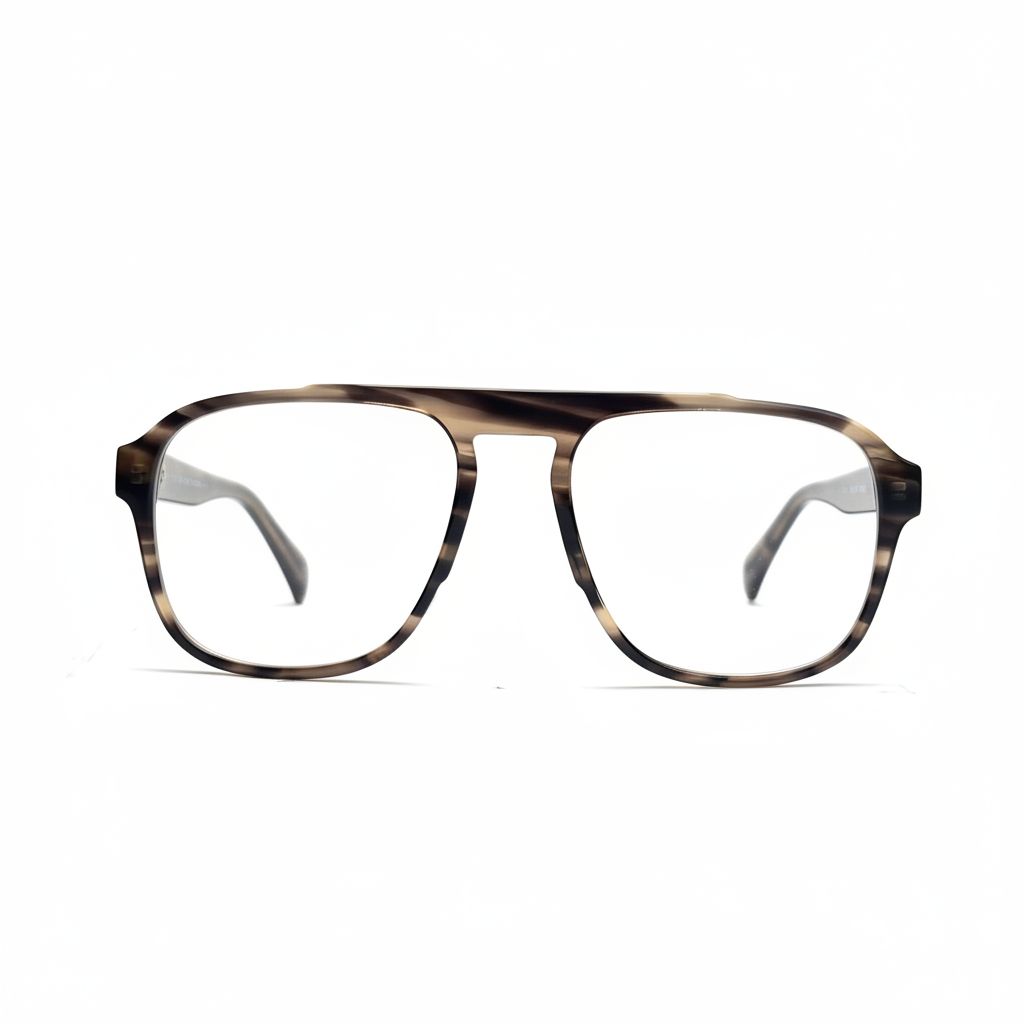
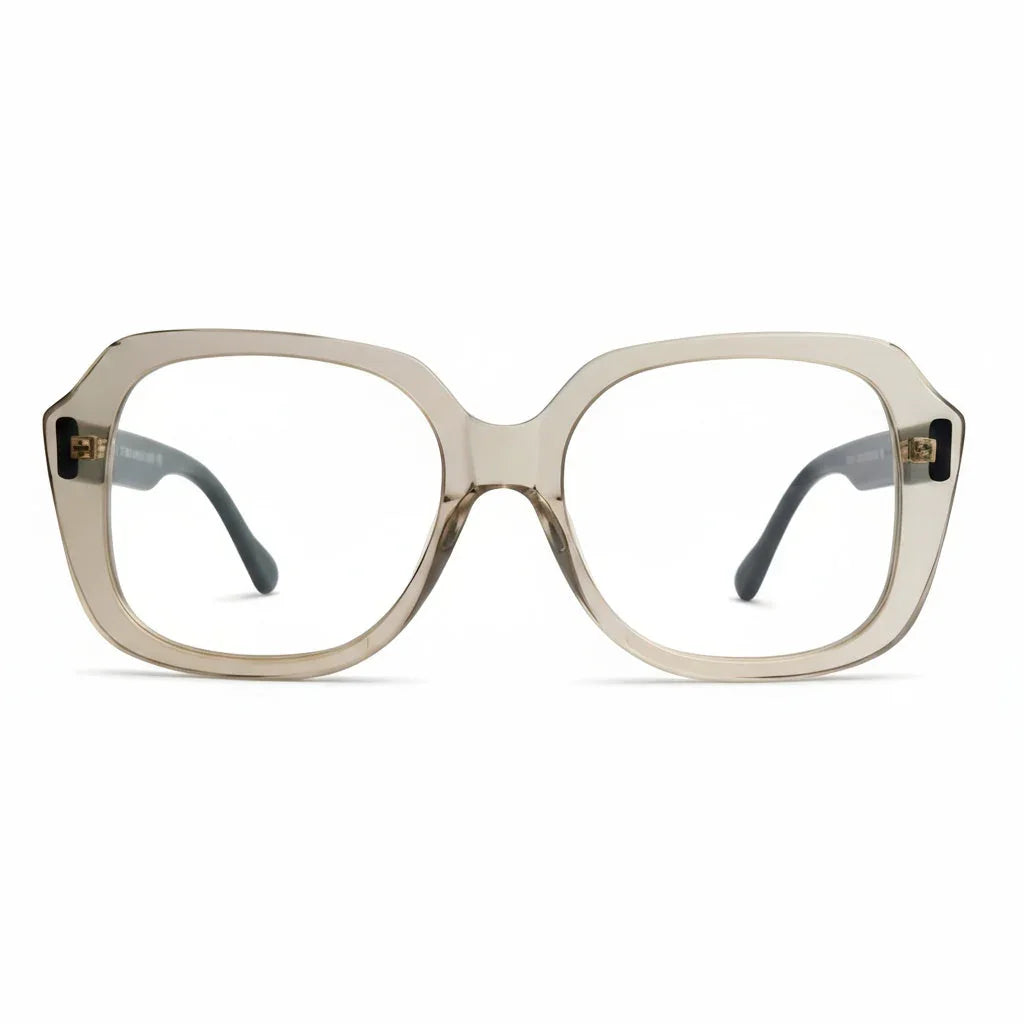
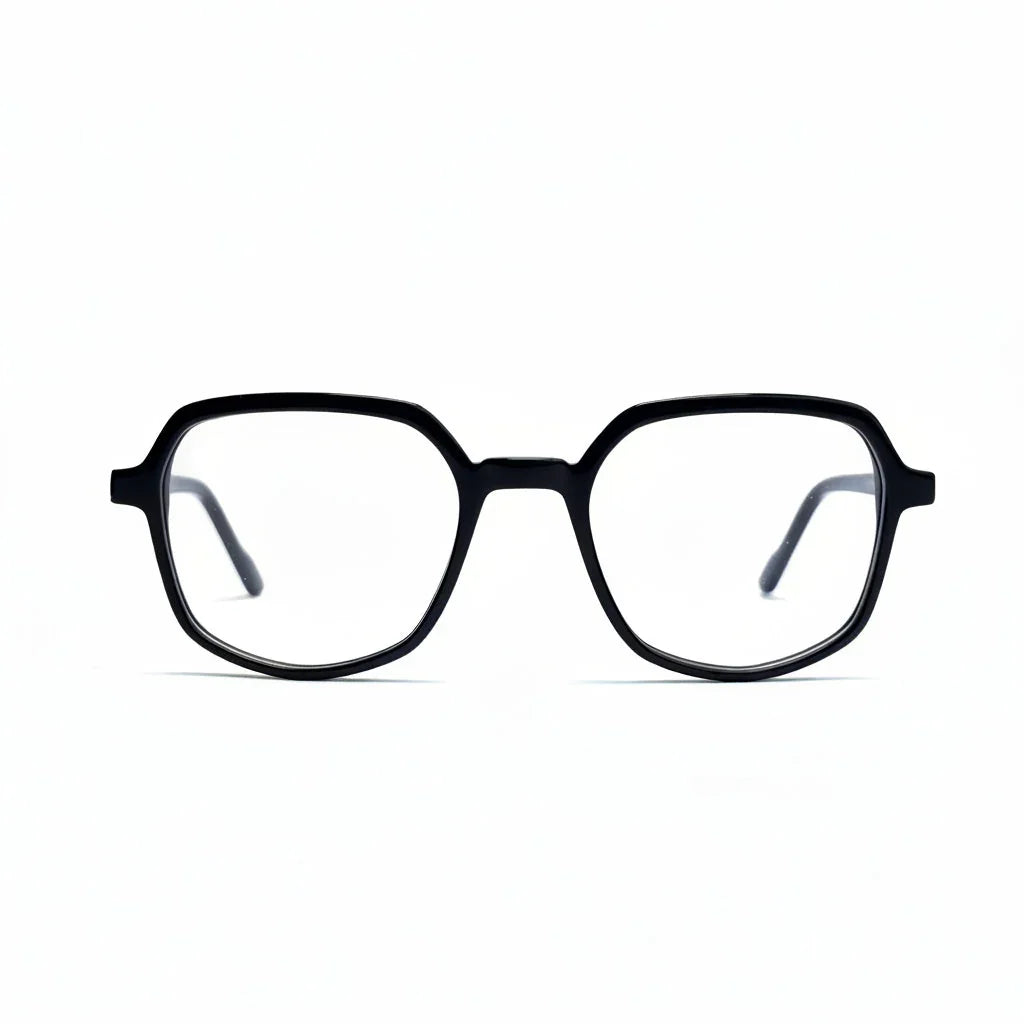
You spot a pair of glasses in a film still, a press photo, or on a stranger across the carriage, and you cannot describe them well enough to search for them. It is such a common frustration that r/glasses has a standing genre of post for it: one member asking “what frame is this called and where is it from?”, another hunting a pair they owned seven years ago using three grainy photographs, a third who lost a favourite pair and cannot replace it anywhere at home.
That is what most celebrity glasses 2026 searches are really about: naming a look so you can find your own version of it, not buying one specific brand. What follows is the method frame buyers use — five things to read off a photograph, and the vocabulary that turns a picture into a workable search.
Why a celebrity’s frame rarely looks the same on you
Start by separating the frame from the photograph. Three things inflate a look on camera:
- Scale against the face. A frame one size too wide reads as a deliberate statement on a narrow face and as an ordinary pair on a broad one. The same 52mm lens is bold on one person and quiet on the next.
- The lens. Studio shoots often use clear demo lenses that show the frame’s full inner shape. A tint hides the eye line and changes the perceived lens depth.
- Light and angle. A three-quarter view flatters every brow line. Straight-on, in daylight, is the honest test.
So the useful question is not “which frame is that?” but “which proportions do I want to keep?” Width, lens depth, brow line and corner shape are what you are actually shopping for.
Step one — name the shape
Nearly every frame in a campaign or on a red carpet belongs to five families. Learn the names and half the search problem disappears.
- Square and rectangle. A straight brow line with softened corners. The most legible shape in eyewear, and the easiest to wear with tailoring.
- Aviator. Teardrop or squared teardrop lens, low bridge, often a double bar. Reads relaxed and slightly retro.
- Cat-eye. An upswept outer corner. The lift can be subtle or pronounced — a 3mm lift is a completely different frame from a 10mm one.
- Round and panto. Perfectly circular, or round with a slightly flattened base. Reads bookish, archival, quietly confident.
- Geometric. Hexagons, octagons and softened polygons. The shape most often mistaken for “I don’t know what this is”.
If the frame you saved is a teardrop lens with a low bridge and a double bar, consider the Ben titanium aviator — the classic shape at its most legible.
The words that actually narrow a search
“Glasses like hers” returns nothing. Combine shape, material, colour and one hardware detail instead: thin gold square titanium glasses, tortoiseshell cat-eye acetate, black hexagon acetate. Four specific words will out-perform a paragraph of description, and they work on any shop, including this one.
Step two — read the material, then read its thickness
Material changes a look more than shape does, because it changes the weight of the line around your face. An acetate front is cut from a sheet roughly 6–8mm thick and carries colour in depth, so it reads as a solid graphic outline. Titanium is drawn as wire, typically 1.5–2mm, so the frame reads as a thin continuous stroke rather than a shape.
Consider the Cecilia square titanium wire frame — if the pair you saved is a thin, near-weightless square with a visible brow line, this is the version of that look: the same geometry, drawn in wire rather than carved in acetate.
One clarification, because it muddles a lot of searches: acetate is a frame material, polycarbonate is a lens material. Queries like “acetate vs polycarbonate frames” usually mean thick plastic front or thin metal front — a question of thickness and line weight, not of plastic versus plastic.
Step three — read the lens
Lens treatment is the fastest way to date a look. A clear lens is formal and lets the frame do all the work. A solid tint flattens the eye line and makes any shape read larger. A gradient tint — darker at the top, lighter at the bottom — keeps the brow defined while softening the lower edge. A mirror coating pushes a frame toward sport. A photochromic lens starts clear indoors and darkens outdoors, which suits anyone who does not want to swap pairs at the door.
Consider the Ebba cat-eye sunglasses if the look you saved was a lifted cat-eye with a tinted lens — the tint is what makes that shape read as eyewear-as-accessory rather than eyewear-as-default.
Step four — read the colour and the hardware
Colour works on contrast, not on taste. A frame two or three shades away from your hair colour reads as a considered choice; one that matches it exactly disappears, and one that clashes in value reads as an accident. Tortoiseshell, crystal, warm havana and matte black cover most of what you will see on camera.
Hardware is what makes a frame identifiable: exposed rivets at the front corners, a keyhole bridge, a visible core wire in the temple, a contrasting temple tip. Name one of those and you can usually find the frame.
What actually separates a designer frame from an accessible one
Shapes are not protected and cannot be owned — which is why the same silhouette appears at every price. What differs is what you cannot see at a glance: whether the front is cut from block acetate or injection moulded, whether the hinge is a five-barrel barrel-and-screw or a two-part friction fit, whether the temple carries a metal core wire, and how many hours went into polishing the edges.
Consider the Conrad premium acetate square and the Eivind geometric acetate — both are thick-front acetate frames where the corner radius and bevel do the styling — the kind of frame that photographs well because the material holds a clean edge.
Step five — try the look before you commit
Hold your current glasses beside the photograph at the same distance from your face and compare four things: total width at the temples, lens depth from brow to lower rim, where the brow line sits relative to your own, and how far the outer corner lifts. If two of the four match, the frame will read as the same look; if none match, the right colour will not save it.
Then check the size string inside your own temple — the three numbers in 52□18-145 form, meaning lens width, bridge width and temple length. That is the only reliable way to reorder a similar shape, and the reason so many “manhunt” searches fail: the shape was found, the measurements were not.
Celebrity glasses are useful as a vocabulary, not as a shopping list. Read the shape, material, lens, colour and hardware off the picture; keep the two proportions that suit your face; then buy the frame, not the photograph.