Acetate vs Titanium Glasses: A Part-by-Part Guide to Frame Anatomy
On r/glasses this month, someone asked what glue would hold the leg of their glasses back on. They had given up on folding them — they just wanted to keep wearing the frame. The honest answer is that no glue will do it, and the reason says a lot about how eyewear is built. A temple is not glued on. It is screwed into a hinge, and that hinge is riveted or pressed into the frame front. The joint is the design; the adhesive was never part of it.
That thread is a reminder that most of us can name the shape on our face but not the five parts that decide how a frame feels at hour eight. So before comparing acetate vs titanium glasses, it helps to know what each part is made of.
Start with the parts, then talk materials
Every frame is a small assembly: a front, a lens bevel, two temples, two hinges and a pair of nose pads, plus the hardware holding it together. Materials matter because of where they sit in that list.
1. The front: acetate, titanium, or both
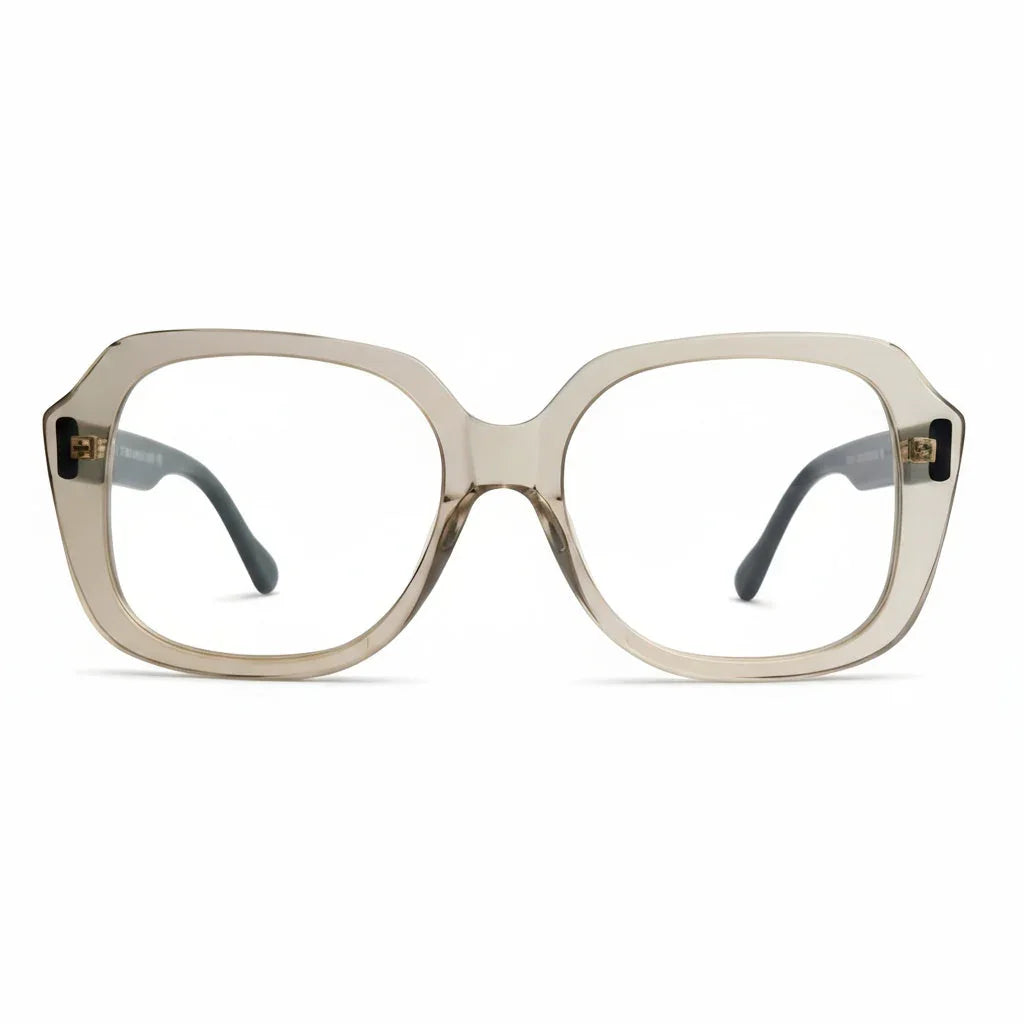
Acetate is cut and milled from sheet or block, then polished. The colour runs through the material rather than sitting on top of it, so a tortoiseshell front keeps its depth after years of handling and can be re-polished rather than replaced. It also allows thick, sculpted profiles.
Titanium is drawn into wire or pressed into sheet. It is corrosion-resistant and roughly 40% lighter than acetate at a comparable volume, which is why it can carry a thin rim without feeling fragile. Acetate gives you volume and colour; titanium gives you slim lines and a near-weightless front.
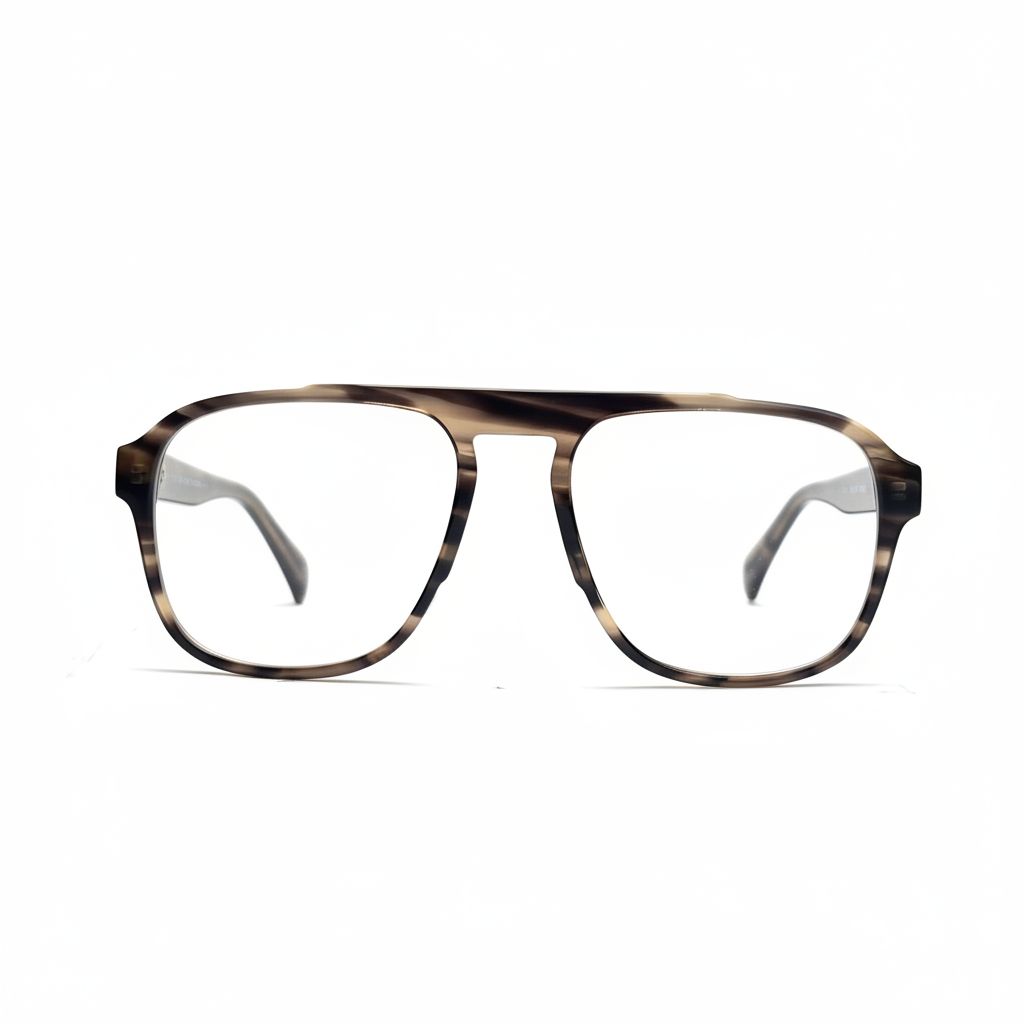
Most frames on our shelves sit between the two: an acetate front for presence, titanium temples for weight. That hybrid is the quiet workhorse of modern eyewear.
2. The bevel groove: where the lens meets the frame
Lenses are not glued in either. A full-rim frame has a V-shaped groove cut into the inner edge of the rim, and the lens is edged to a matching V and pressed into it. A semi-rimless frame keeps the top rim and holds the bottom of the lens with a nylon cord; a rimless frame drills two holes and bolts the lens to the bridge and temples.
This is where the classic acetate vs polycarbonate frames search gets tangled. Acetate is a frame material. Polycarbonate is a lens material — impact-resistant, available in thin high-index versions, and often paired with an acetate front. A polycarbonate lens in an acetate frame is not a contradiction; it is the most common pairing in the category.
3. The temple and its core wire
An acetate temple is not a solid stick. It is acetate moulded around a metal core wire, with the wire taking the load and the acetate providing colour, shape and the feel against your head. Titanium temples skip the wrapping and use a thinner wire with moulded tips at the ear.
This is where the glue question comes from. When a temple separates, the load lands on a joint never designed to be bonded, and adhesive creeps under that repeated stress. The fix is a hinge screw or a hinge replacement, not a tube of epoxy. If the hinge plate has pulled out of the front, that is a frame-level repair — worth knowing before you buy.
4. The hinge: the part that ends most frames
- Barrel hinge — two or three interlocking knuckles held by a screw. Serviceable: a jeweller's screwdriver and a spare screw keep it going for years.
- Riveted or pressed hinge — cleaner-looking, but the pin cannot be tightened or replaced, so it is a wear item rather than a repair item.
- Spring hinge — the temple flexes outward a few degrees before it stops, which suits anyone who pulls frames off one-handed.
A 60-second check in the shop: turn the frame over and look for a screw head at the hinge. If you can see one, the frame has a service life beyond its first loose joint.
5. Nose pads: moulded or adjustable
Acetate frames usually have pads moulded into the front — nothing to adjust, nothing to lose, and a sculpted saddle bridge that sits on the nose as one surface. Metal frames more often use two titanium arms with soft pads, which can be bent and re-angled over time. One asks for less attention; the other tolerates more fine-tuning.
Acetate vs titanium glasses: a working split
- Choose acetate for colour depth, a thicker profile, a bolder silhouette, or a frame that can be polished back to life.
- Choose titanium for the least weight on your face, a thin rim with a modern line, or a frame that will not discolour in humidity.
- Choose a hybrid for an acetate front with the lighter feel of metal behind the ears — the practical middle for all-day wear.
Hardware is a design decision, not a detail
Another recent r/glasses post was a one-line celebration of "the little copper highlights" on a new pair — a useful signal. Core wires, rivets and hinge tones are chosen, not incidental. A copper rivet against tortoiseshell reads vintage; the same rivet in matte black reads architectural; tone-on-tone hardware disappears and lets the acetate colour do the talking. Comparing two frames at the same price, the hardware is usually where the difference in finish lives.
A 60-second frame read before you commit
Is there a visible hinge screw? Does the temple flex, and return to true? Is the nose pad moulded or adjustable? Does the core wire match the hinge tone? And is the front matte, polished or crystal? Five answers tell you more about how a frame will age than the shape ever will.
Care that respects each material
Acetate dislikes heat: no dashboard, no hair dryer, no hot water. Store it in a case, wipe it with a microfibre cloth, and skip alcohol-based cleaners, which dull the polish. Titanium is less fussy — rinse and dry it, and check the hinge screws monthly. For both, use two hands to take the frame off; it is the single habit that keeps a hinge true the longest.
Where to start
If the part-by-part view has you leaning toward a hybrid, consider the Cody titanium-mix square — an acetate-led front with titanium temples, the lightest way to wear a square silhouette. For a semi-rimless construction where the nylon cord does the work along the bottom edge, the Andreau titanium semi-rimless shows the bevel principle cleanly. If you want pure titanium wire, the Bastian titanium round keeps a round shape at almost no weight, with adjustable pad arms. For a front that rewards polishing, the Dag round acetate has the sculpted bridge and moulded pads described above. And for both ideas in one frame, the Andre acetate-titanium round pairs an acetate front with titanium detailing.
None of this requires memorising a materials table. It only requires knowing that a frame is an assembly of parts with different jobs — and that the joint, not the shape, usually decides whether you are still wearing the same pair in five years.