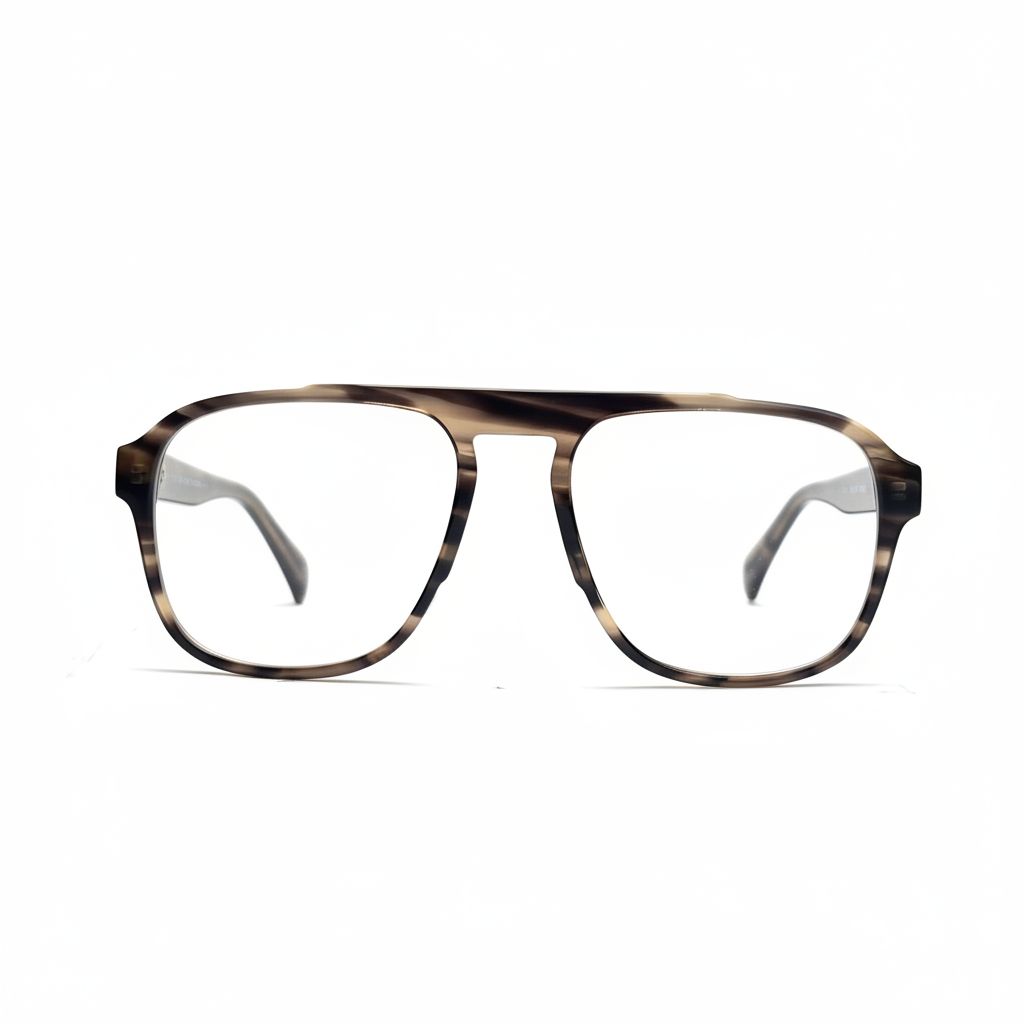
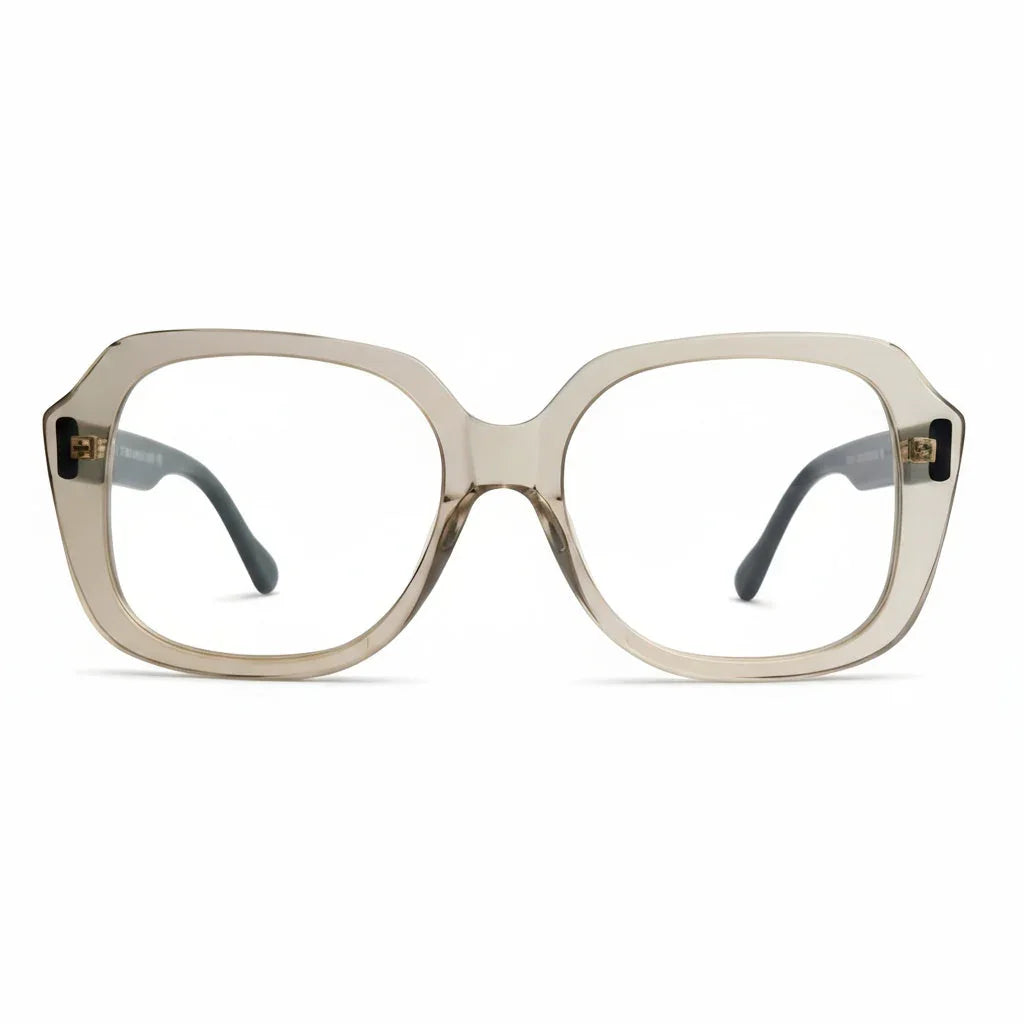
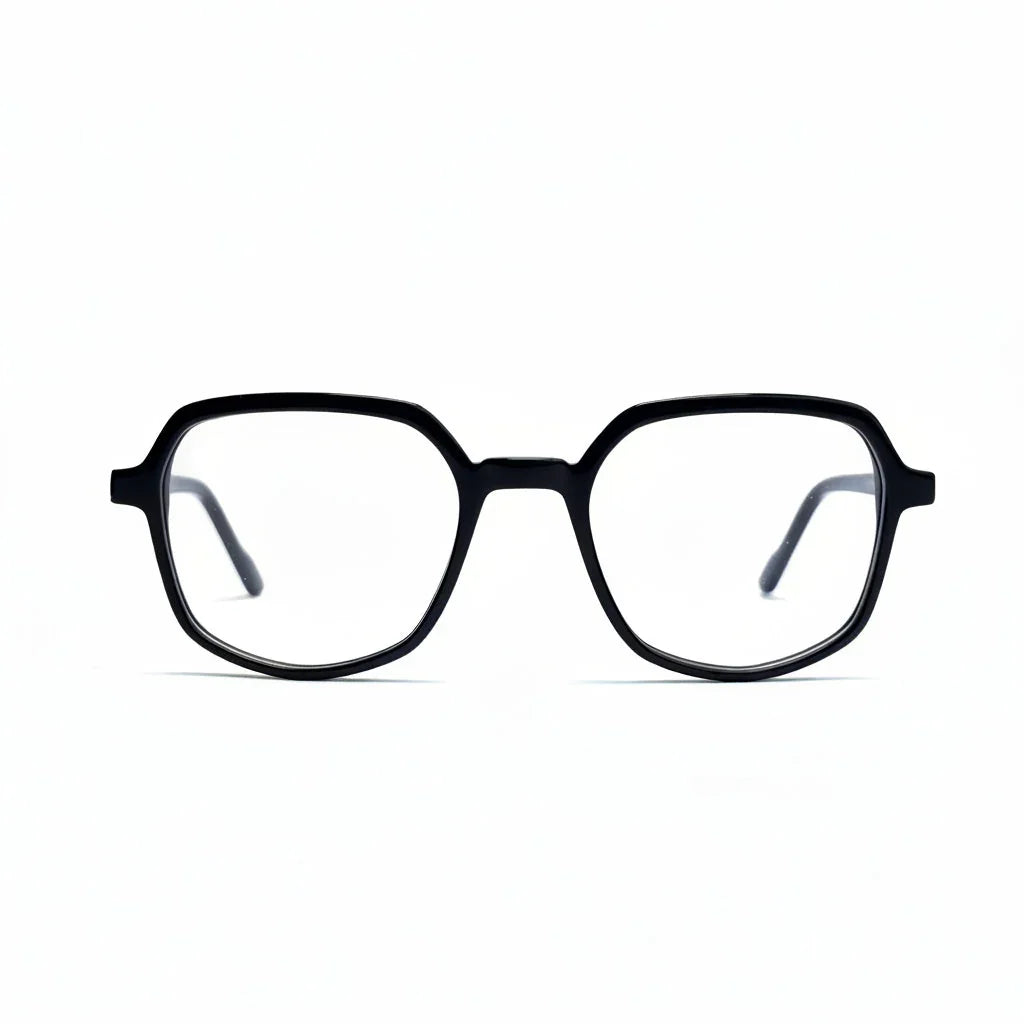
Buying glasses online stopped being a gamble years ago, but it still rewards people who know what they are reading. How do you compare a frame you can only see in photographs? Does a price cover lenses or just the front? And how do you describe the pair you loved so you can find something close to it? This guide covers the specs, materials and checkpoints that turn an online order into a considered purchase.
Start With the Spec Sheet
Every product page hides a short block of numbers and one-word labels. Learn to read it and frames stop looking interchangeable.
- Material — acetate, titanium, stainless steel, TR90 or a hybrid. This line decides weight, finish and how the colour behaves in daylight.
- Shape — round, square, rectangular, cat-eye, geometric, aviator. Shape does more for how a frame reads on a face than any other spec.
- Rim type — full-rim, semi-rimless or rimless, which changes how much of the lens edge you see from the side.
- Size numbers — the familiar 52□18-145 string: lens width, bridge width and temple length, all in millimetres.
Two frames can look identical in a photo and wear differently once those four lines change.
Titanium vs Acetate Glasses: Choosing a Material
Titanium is machined and welded rather than moulded, which is why it can be drawn into thin wire fronts and slim temples. It is roughly 40% lighter than an equivalent acetate front, it is corrosion-resistant, and its finish tends to stay put over years of daily handling. On the face it reads as cool, precise and almost architectural — the frame you notice second, after the person wearing it.
Acetate is a plant-based material cut from layered sheets, and that construction is why it holds tortoiseshell, crystal and marbled colourways so convincingly. The colour runs through the material rather than sitting on top of it, so a polish reveals more of the same tone instead of bare base. Acetate feels warmer in the hand, holds a sculpted shape well and can be re-polished when the surface dulls.
The practical rule: if you want the frame to quietly disappear, choose titanium. If you want the frame to be the feature, choose acetate. If you want both, a hybrid puts an acetate front on titanium temples — the Baptiste titanium square pairs a bold square front with a construction that keeps the weight down.
Acetate Frames: Pros and Cons
- Pros — depth of colour no painted finish matches; available in tortoiseshell, translucent crystal and layered marble; takes a sculpted shape and holds it; tolerates re-polishing; feels warm rather than cold against the skin.
- Cons — a large acetate front carries more weight than a metal one; acetate is softened with heat to be adjusted, so very wide or very narrow tweaks are more limited than on metal; a thick front that takes a hard knock can chip where a thin metal frame would simply flex.
Two shapes show the range well: the Ditlev round acetate, which leans into soft, literary curves, and the Eamon square acetate, which uses the same material for a much more graphic look.
Acetate vs Polycarbonate Frames — Two Different Parts of a Pair
This comparison shows up constantly, and it starts from a small mix-up: the two words describe different components. Acetate is a frame material — what the front and temples are made from. Polycarbonate is a lens material — the clear part you look through, prized for being light and impact-resistant. Reading "polycarbonate vs acetate frames" as one choice is a little like comparing a jacket with a window. What matters is whether the frame you like can take the lens you need.
How to Describe the Frame You Already Love
One of the most common posts in eyewear communities comes from someone hunting a frame they owned years ago, working from three blurry photos and a vague memory of "fully metal". Searching by feeling rarely works. Build a short factual description instead, and it becomes searchable:
- Shape and rim type — for example, "round, full-rim".
- Material — "thin metal" or "chunky acetate" is enough to halve the field.
- Colour and finish — matte black, polished gold, tortoiseshell, translucent crystal.
- The numbers — the three-figure string stamped inside the temple, which is the frame's actual identity and the fastest route to a match.
Light or Dark? Choosing a Colour You Will Still Wear Next Season
"Light or dark?" is the other question that stops people at checkout. Light, translucent frames sit lighter on the face and pair well with pale, low-contrast colouring and softer shapes. Dark frames draw a stronger boundary around the face and suit higher-contrast outfits and more angular shapes.
Test both against a photo of yourself in daylight, not in a shop mirror under warm light, then ask which you would still wear with your three most-worn outfits. Colour depth is also where acetate earns its keep — a marbled front reads as textured rather than flat, which keeps a statement frame looking considered instead of loud. The Arvid cat-eye sunglasses use exactly that trick: a bold silhouette softened by the way the colour shifts across the front.
Should You Buy a Second Pair?
Plenty of wearers keep a spare purely as insurance: a snapped temple or a lost frame then does not force a rushed replacement in an unfamiliar shape. The sensible second pair is usually the opposite of your everyday one — if your daily wear is a thin titanium square, a warmer acetate round makes a genuine alternative rather than a duplicate. Store it in a hard case away from direct sunlight.
A Six-Point Check Before You Click Buy
- Hinge and temple construction — a metal-on-metal hinge with visible screws can be tightened and serviced; an exposed glued joint is the first thing to fail.
- Rim type versus lens — a semi-rimless or rimless front needs a lens with enough edge thickness to be grooved safely.
- Weight balance — a heavier front with thin temples will slide; look for a frame whose weight is carried at the bridge and the top of the ear.
- Bridge type — an integrated acetate bridge and a metal bridge with adjustable nose pads sit very differently, and neither is "better".
- Returns window — confirm you can try the frame at home in daylight before committing.
- Spare parts — check whether nose pads and temple tips are replaceable, because those wear out first.
What Should Arrive in the Box
A good eyewear parcel contains the frame, a proper case, a cleaning cloth and the frame's size numbers written down somewhere you can find them later. Expect the temples of a new metal frame to need a small adjustment in the first week as they settle around your ears — that is normal, and it is why replaceable parts matter. The Bastian titanium round benefits most from that first adjustment: thin metal temples hold a set beautifully once shaped to you.
The Short Version
Read the spec sheet before the photographs, choose between titanium and acetate based on how much you want the frame to speak, keep a factual description of any frame you love, and check the hinge, the rim and the returns window before you commit. Neither material is the "right" answer — knowing which spec you are choosing for is.