When the Frame You Love Disappears for Good
There is a post that keeps resurfacing on r/glasses: a wearer loses their favourite pair, or a temple finally gives way, and they go hunting for the exact same frame only to discover it was discontinued years ago. One recent reader from Mongolia spent weeks hunting for a pair they bought years ago — and found nothing close.
That frustration points at what separates a frame you keep from one you replace every eighteen months. It is not the logo on the temple — it is how the frame was made. So let's open up the workshop: how acetate and titanium frames are built, and how to judge build quality with your own hands.
What Acetate Actually Is
Acetate is what most people picture when they hear "plastic glasses" — an unfair shorthand. Optical acetate is a cellulose-based material made from cotton fibre and wood pulp. It begins as a thick liquid that is poured, cured and sliced into sheets — hence the terms "sheet acetate" and "block acetate".
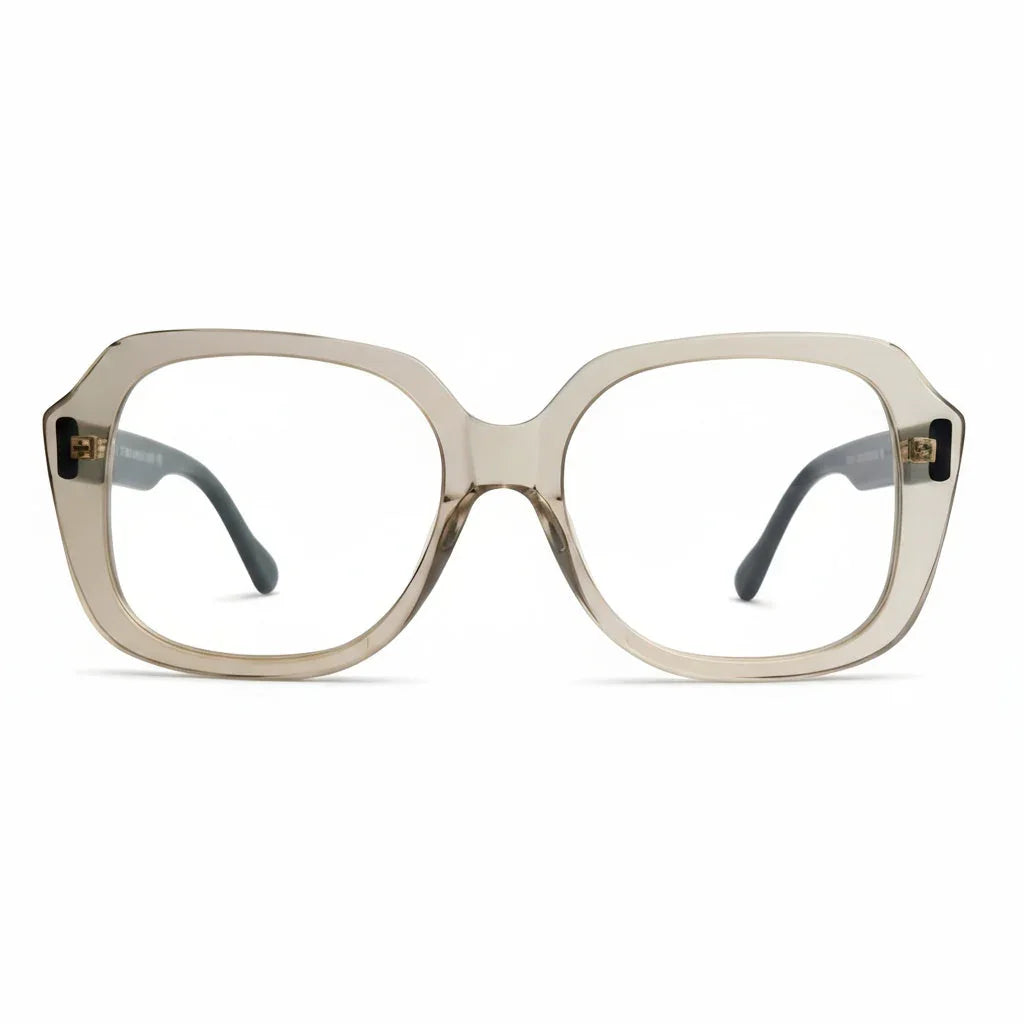
The useful consequence: acetate is a layered material, not a moulded one. Colour and pattern sit inside the sheet, not on top of it. A good acetate frame never wears through to a different colour underneath, because the tortoiseshell or crystal pattern runs all the way through. The Caspar is a classic square in acetate, built for everyday wear, with the depth and smooth finish only sheet material delivers.
From Sheet to Shape: How an Acetate Frame Is Made
An acetate frame has more in common with a piece of furniture than with a moulded plastic part:
- Cutting. The front and temples are cut from flat sheets along a digital outline, using a blade or a CNC mill.
- Milling. Excess material is removed, the lens groove is cut, and the front is tumbled to soften its edges.
- Barrel polishing. Frames tumble for hours — sometimes days — with wood chips and polishing compounds, producing the deep, glass-like shine acetate is known for.
- Assembly. Hinges, nose pads and temples are fitted, the frame is polished by hand, and the temple tips are set.
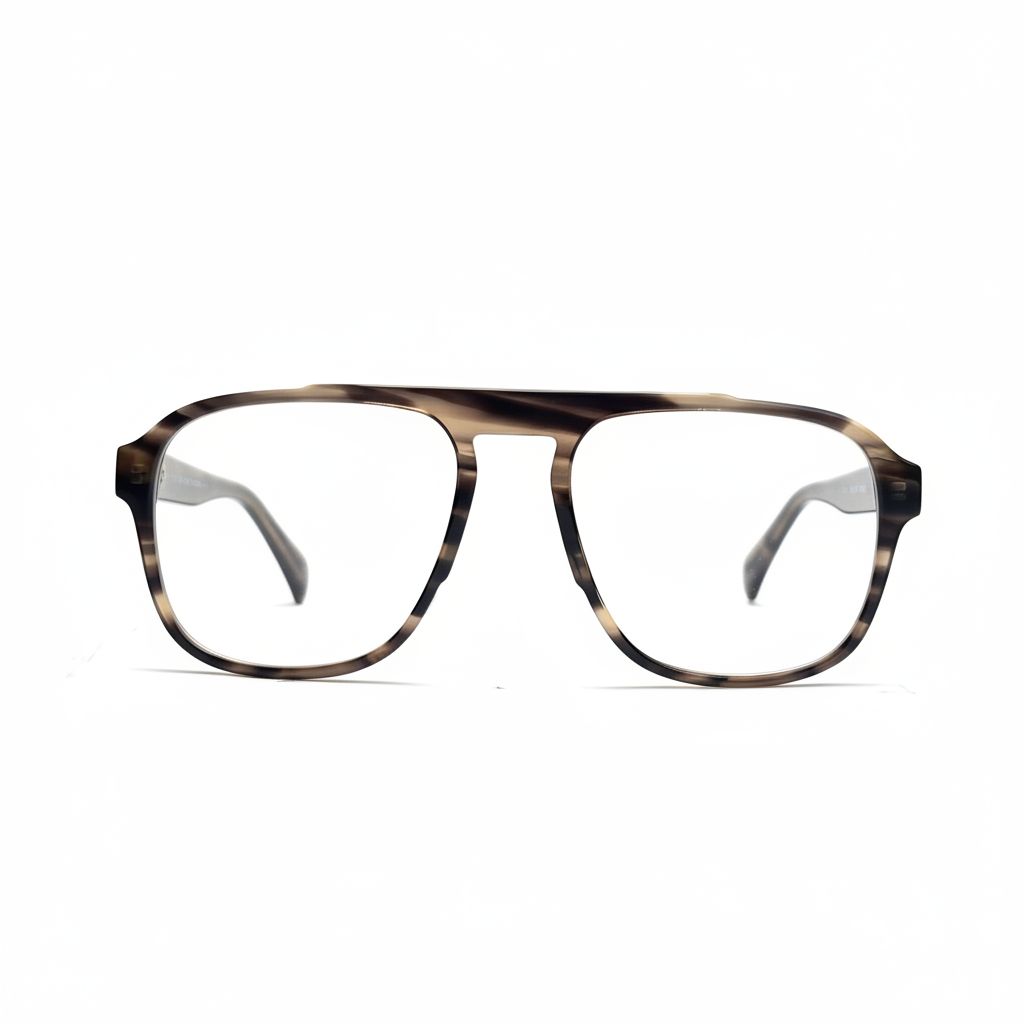
Because colour is layered into the sheet, a tortoiseshell or two-tone pattern only reveals its full depth after polishing — so good acetate has a warmth paint cannot imitate. The Dagfinn shows how far that layering goes: a square silhouette whose colour shifts as light moves across it.
How Titanium Frames Are Built
Titanium works the opposite way. Instead of being cut from a sheet, a titanium frame is machined, bent and welded from thin bar and wire stock. There is no layering and no colour sheet; the finish comes from the metal itself — matte, brushed or anodised.
What titanium brings is a strength-to-weight ratio acetate cannot match. A titanium frame typically weighs around 40% less than a comparable acetate one, and because titanium is naturally corrosion-resistant, it holds its finish through sweat and humidity without pitting. It is also springier, so titanium temples flex rather than bend permanently when knocked. The Anton shows the material in a titanium-mix square: precision construction, an exceptionally light feel, and a clean, understated profile.
Acetate vs Titanium Frames: Which Suits You?
Neither material is better — they solve different problems. Here is a quick look at acetate frames' pros and cons against titanium's.
Acetate frames
- Strengths: more colour, pattern and shape variety; a thicker, more expressive silhouette; a warm, hand-finished look.
- Trade-offs: heavier than titanium; adjusted with heat but needs more care; can dry out over many years if untreated.
- Best for: statement shapes and frames meant to be the focal point of a look.
Titanium frames
- Strengths: the lightest option; corrosion-resistant; holds its shape; ideal for a thin, strong frame that stays put.
- Trade-offs: a narrower palette of metals rather than patterns; thinner profiles mean less coverage.
- Best for: all-day wear and minimalist styling.
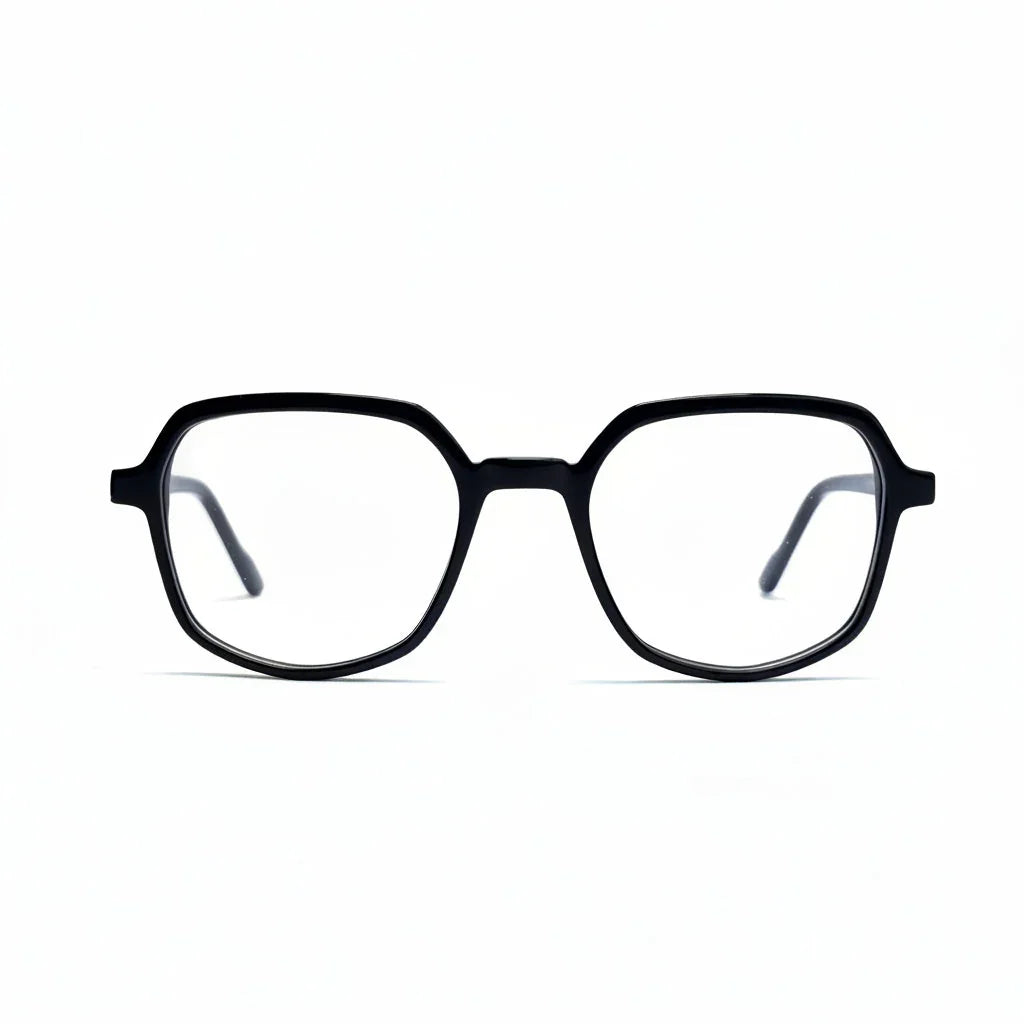
There is also a third path: the acetate-titanium hybrid, which pairs an acetate front with titanium temples. The Andre keeps the colour and presence of acetate across the front while staying light over the ears — one of our favourite round eyeglasses.
How to Judge a Frame in Your Hands
You can learn a lot about construction in thirty seconds:
- The hinge. Open and close the temple slowly. It should feel damped and consistent — not loose, not gritty.
- The temple flex. Press a titanium temple outward; it should spring back cleanly.
- The weight balance. A well-made frame feels balanced front-to-back, not nose-heavy.
- The colour depth. Look at the edge of an acetate frame. Layers mean solid material; a thin skin over a dull core does not.
- The finish. Run a fingertip along the inner edge. Good frames are polished inside as carefully as outside.
The Two Stress Points: Hinges and Temples
If you have ever looked for glue to reattach a temple — as one recent r/glasses poster did after their glasses' "legs" snapped off — you have met the frame's weakest joint. Nearly every structural failure happens at the hinge, where the temple meets the front, or the temple tip, where the arm meets the ear.
This is where construction decisions pay off. A five-barrel hinge spreads stress across more contact points than a cheap two-barrel design; a spring hinge absorbs knocks instead of transferring them. The Colin, a titanium-mix square, is built with this in mind — light enough to stay comfortable all day, but engineered so the parts under the most load are the parts that last. It also explains why a discontinued frame is so hard to replace: good frames are built around a specific front-and-temple geometry, so a "similar" shape from another brand rarely sits the same way.
Fit You Can Adjust, Fit You Cannot
Not every part of a frame can be adjusted. A recent r/glasses reader with a wider nose was told there was "no way" to adjust the bridge of their frame — and for that frame, they were probably right.
As a rule, acetate frames are the most adjustable, because the material can be warmed and reshaped. Frames with separate adjustable nose pads offer the most fine-tuning. A fixed, moulded bridge is set at the factory and can only be tweaked slightly. And a titanium frame built as a single-piece front gives the least adjustment but the most consistency: what fits on day one fits on day five hundred.
Why We Build Frames to Be Kept
Every decision above comes back to one idea: a frame should be something you keep, not something you cycle through. Acetate begins as cotton fibre and wood pulp rather than petroleum, and titanium is one of the most recyclable metals on earth — but the stronger sustainability argument is simply durability. A frame that holds its shape, resists corrosion and can be adjusted and repaired does not need replacing every season.
That is the standard we aim for across the collection, from acetate squares to titanium-mix frames to the hybrids in between. Choose the material that matches how you actually wear your glasses and buy the frame you would be happy to still be wearing in five years.