Sustainability is everywhere in eyewear marketing right now — "eco frames," "green lenses," "planet-friendly packaging." But as eyewear trends 2026 continue to push toward conscious consumption, the honest question isn't which brand has the nicest sustainability page. It's simpler and more practical: what are your glasses actually made of, and how many years will they last? The most sustainable pair of glasses is almost always the one you don't have to replace.
Why Most "Eco" Eyewear Claims Deserve a Second Look
Plenty of brands now lead with recycled packaging or a tree planted per order. Those things are fine, but they distract from the real environmental math. A pair of injection-molded plastic frames that cracks at the hinge in eighteen months — and can't be repaired — ends up costing more resources than one durable frame worn for a decade, no matter how many trees were planted along the way.
Eyewear communities online have noticed this too. On Reddit, a user recently ran a survey asking simply, "Do you ever lose your glasses?" — and the responses reveal how much of eyewear consumption is really a replacement cycle: lost pairs, broken hinges, warped temples, and frames that were never built to be fixed. Every replacement is a new purchase, a new shipment, and another pair in a drawer or a landfill. Longevity isn't a feel-good bonus. It's the whole strategy.
Acetate vs Polycarbonate: The Material Decision That Matters Most
When it comes to frames, one comparison matters more than any marketing label: acetate vs polycarbonate. They may look similar on a screen, but they're built from completely different worlds.
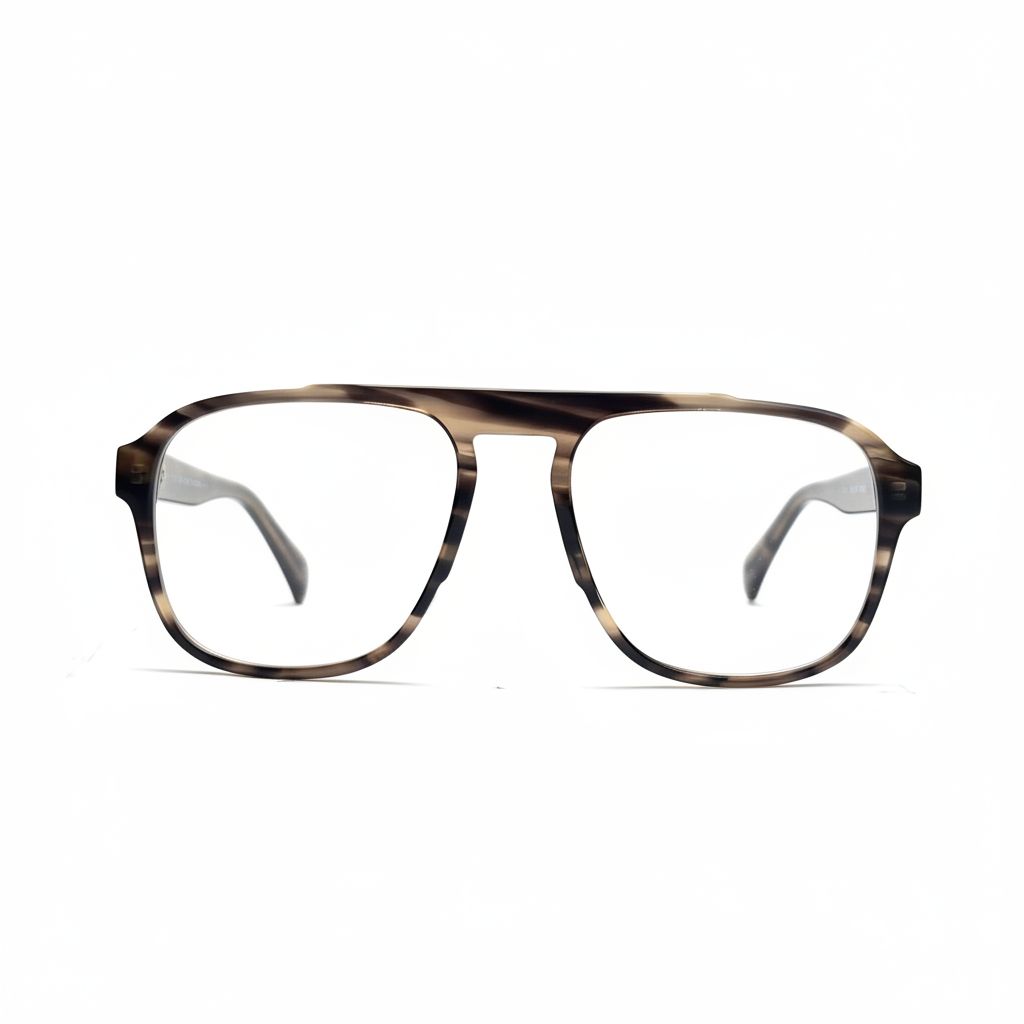
- Acetate is made from cellulose — typically derived from cotton fibers and wood pulp — a renewable plant-based material. It's produced in blocks, cut, shaped, and hand-polished. High-quality acetate frames hold deep, layered color, can be adjusted with heat, and can be repaired when hinges or temples loosen.
- Polycarbonate frames are injection-molded from petroleum-based plastic. They're cheap and lightweight, but they tend to become brittle over time, rarely survive a serious stress fracture, and are effectively unrepairable once cracked.
That's why acetate frames age so gracefully. The material has depth — literally. Craftsmen layer sheets of tinted acetate and carve patterns from the stack, which is why tortoiseshell, two-tone, and marbled finishes look dimensional rather than printed on. Eyewear enthusiasts have been showing off exactly this: one r/eyewear post recently asked, "Have you seen these two fused acetates?" — showing frames where two different acetate colors melt into each other. That kind of detail is only possible with block acetate, and it's a good shorthand for quality: if a frame's color looks like it lives inside the material rather than on top of it, you're likely looking at real acetate.
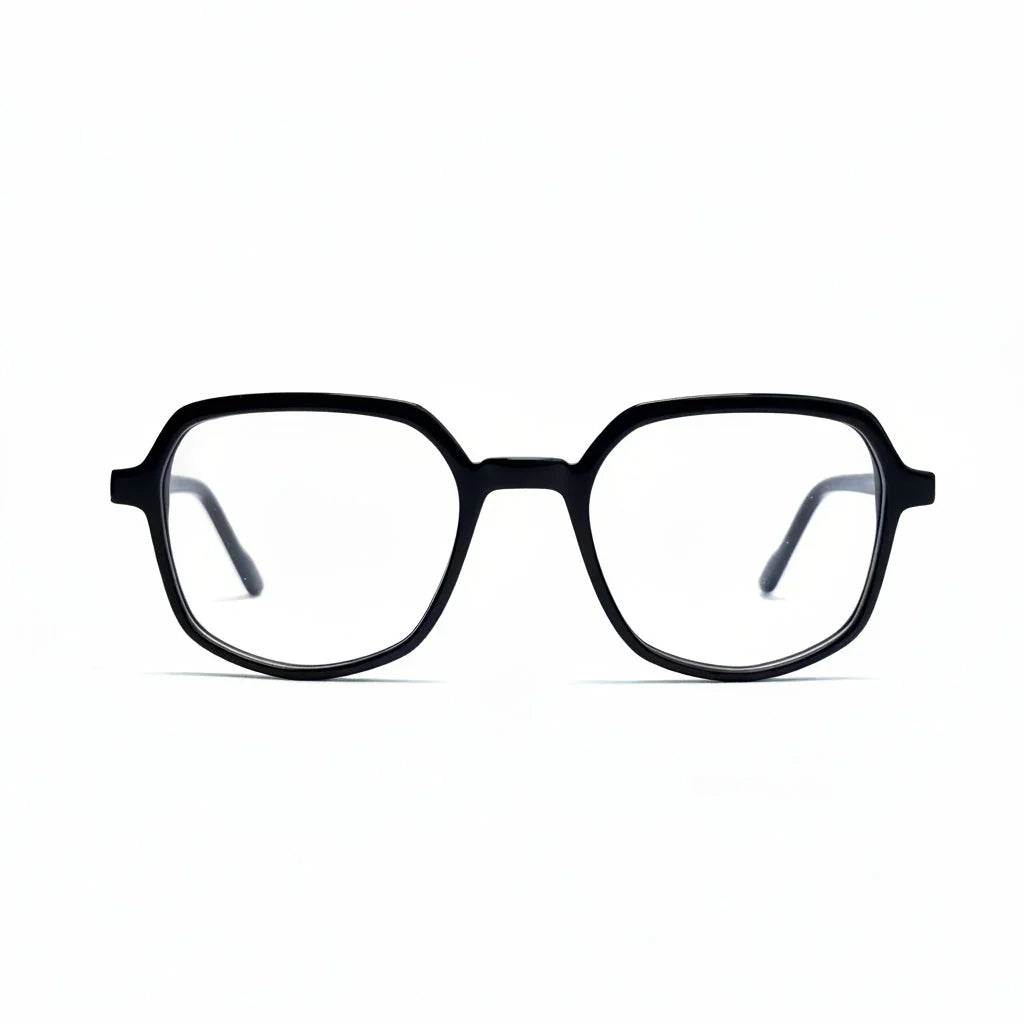
Consider the Egon Premium Acetate — a round silhouette in full block acetate, the kind of frame whose color and depth hold up year after year instead of fading with the trend cycle.
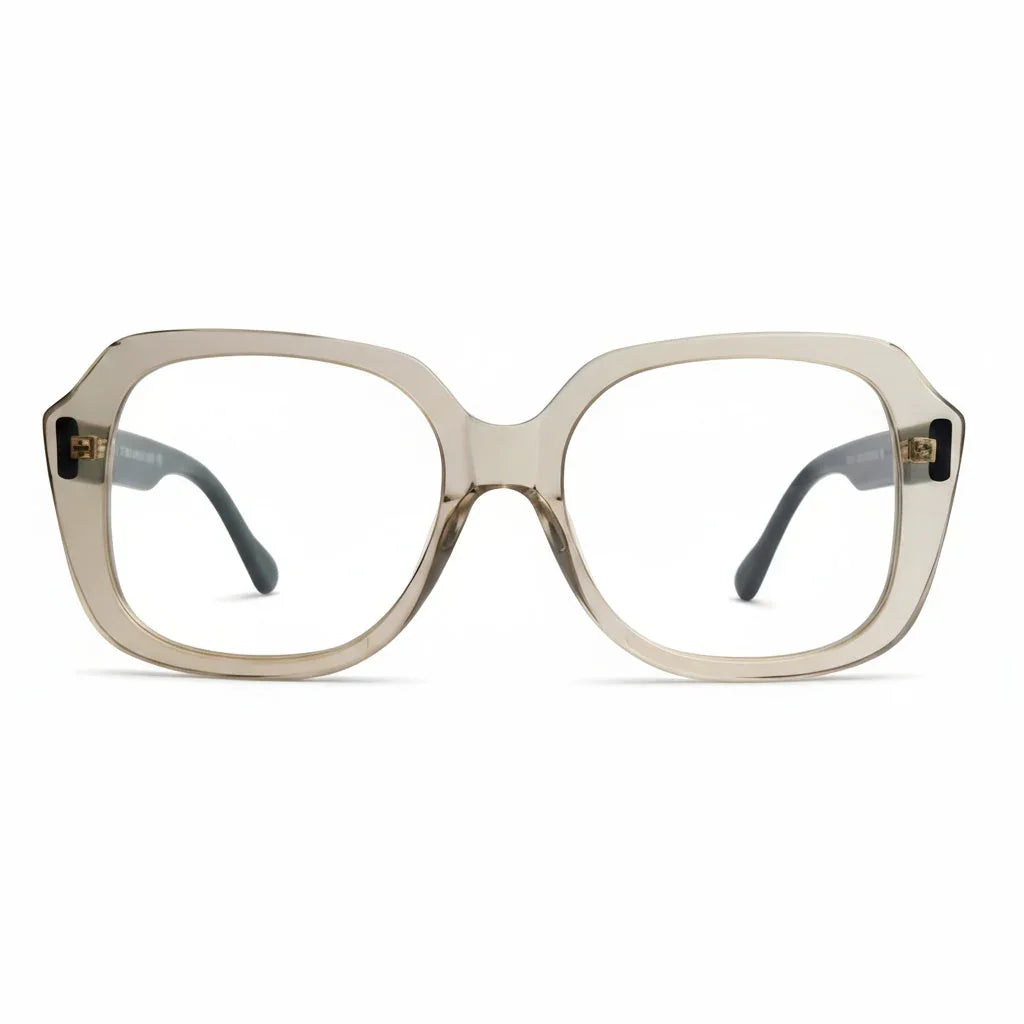
The same logic applies to shapes. A square frame like the Caspar Acetate Square works precisely because acetate can be tumbled, polished, and heat-adjusted — so it can be refitted to your face years later instead of being thrown away when it drifts out of alignment.
Titanium: The Buy-It-For-Life Option
If acetate is the renewable choice, titanium is the durability champion. It's corrosion-resistant, hypoallergenic, roughly twice as strong as steel by weight, and it doesn't fatigue the way cheaper metals do. A well-made titanium frame can genuinely last decades — which is why it's a favorite among people tired of replacing glasses every two years.
Take the Anders Square Titanium Glasses — precision titanium construction that balances strength with an exceptionally light feel. You can drop them, sit on them (we've all done it), and bend the temples back into shape. They're built for the long haul, and that's the most eco-friendly spec sheet a frame can have.
For the best of both worlds, hybrid designs pair an expressive acetate front with titanium temples and hardware — like the Andre Acetate-Titanium Round. The acetate gives you the depth and character; the titanium reinforces the exact stress points where ordinary frames fail first. Fewer broken pairs, fewer replacements.
The Hidden Sustainability Cost of Losing Your Glasses
Here's the angle nobody puts on a product page: the greenest glasses in the world can't help you if you lose them. One r/glasses post that stuck with us came from a wearer in Mongolia who lost their favorite frames — bought years earlier — and couldn't find the same pair anywhere in the country. They turned to the internet hoping a stranger could identify the frame. It's a small story, but it captures a big truth: a frame you genuinely love is a frame you keep, maintain, and try desperately to recover. That emotional durability is as sustainable as any material.
Practically, that means:
- Choose a frame you love, not one that's merely cheap. Discount frames get lost and abandoned; favorites get repaired.
- Use a hard case. Most "broken glasses" stories online start with glasses tossed loose into a bag.
- Get adjustments instead of replacements. Acetate and titanium frames can be re-shaped and re-fitted at low cost.
- Consider one great pair over three mediocre ones. A versatile frame like the Breezy Round Sunglasses in durable acetate does the work of multiple seasonal pairs — and polarized lenses mean you'll actually reach for it.
The Takeaway: Material First, Marketing Second
Sustainable eyewear in 2026 isn't a certificate or a hashtag. It's cellulose-based acetate that can be adjusted and repaired. It's titanium that shrugs off a decade of daily wear. It's hybrid construction that reinforces the joints where frames usually die. And it's choosing a shape you'll still want on your face in five years — not just this season.
Look at your current glasses. Are they something you'd try to hunt down on the internet if you lost them, like the Reddit wearer from Mongolia? If not, the most sustainable upgrade you can make isn't a greener brand — it's a better-built frame. Start with Egon, Anders, or the Andre, and buy the pair you won't need to replace.