Why Eye Health Matters More Than Ever in 2026
The average adult now spends more than seven hours a day looking at screens — phones, laptops, TVs, tablets. That single fact has reshaped what "good eyewear" means. The 2026 eyewear trends Google searchers are exploring aren't just about what frames look good on Instagram. They're about lens technology, comfort, and protection. Eye health is the new style statement.
If you've noticed your eyes feeling tired, gritty, or dry after a long workday, you're not alone. Eyewear enthusiasts on Reddit have been actively discussing these symptoms in communities like r/glasses and r/optometry. One recent post — "What's the best eye drops for dry eyes?" — captured exactly what millions of people feel: persistent dryness, confusion about whether it's allergies, sticker shock at the optician's drops, and a desperate search for something affordable.
This guide breaks down what actually works for everyday eye health, what to look for in blue light glasses, and how to navigate the classic polycarbonate vs acetate lens conversation — all without needing a clinic appointment.
The Big Three Modern Eye Health Concerns
- Digital eye strain — the umbrella term for tired, sore eyes after screen use. Includes blurred vision, headaches, and neck pain.
- Dry eye syndrome — caused by reduced blink rate (we blink about 60% less when staring at screens), air-conditioned offices, and contact lens wear.
- Cumulative UV and high-energy visible (HEV) light exposure — even on cloudy days, UV reaches your eyes. Long-term, this contributes to cataracts and macular degeneration.
Blue Light Glasses: Do They Actually Work?
Let's settle this. Blue light glasses filter a portion of high-energy visible (HEV) light, primarily in the 400–455 nm range. The science is more nuanced than "blue light = bad." HEV light does contribute to digital eye strain and may affect circadian rhythm, especially when you scroll right before bed. But blue light is not the only cause of tired eyes.
What blue light glasses really do well:
- Reduce glare and visual noise from screens
- Ease the "tired but wired" feeling before sleep
- Help with focus during long sessions of detailed work
- Add a useful reminder to take breaks ("I'm wearing the blue blockers — it's time to wind down")
For everyday digital work, a pair with a subtle warm tint and 30–50% blue light filtration is plenty. Strong amber tints are great for evening screen use but distort colors too much for daytime office work.
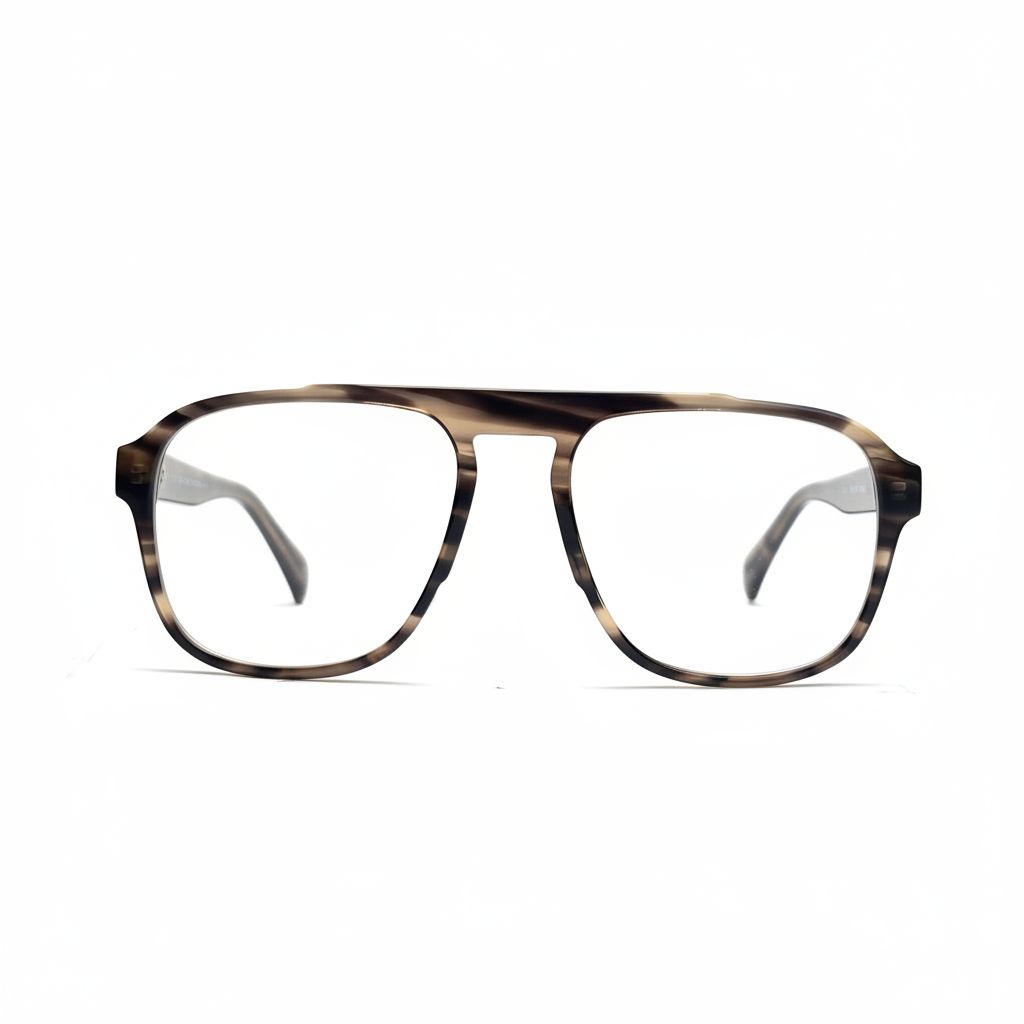
Consider the Conrad — a premium square acetate frame with built-in blue-light protection. Its minimalist silhouette fits the 2026 eyewear trends toward quiet, professional style while its lenses do the heavy lifting for your eyes. The lightweight acetate means zero pressure on the bridge of your nose, even after a 10-hour workday.
The 20-20-20 Rule (Still the Best Free Habit)
No glasses replace this habit. Every 20 minutes, look at something 20 feet away for 20 seconds. It relaxes the ciliary muscles inside your eye that contract when you focus on screens. Combine it with conscious blinking — set a phone reminder if you have to. The Reddit user in our dry-eye example mentioned getting allergy tests before realizing the cause was staring at screens all day. Most of the time, the cause is environmental, not medical.
Polycarbonate vs Acetate: Choosing the Right Lens Material
If you've searched polycarbonate vs acetate, you've probably seen conflicting advice. Here's the honest breakdown:
Acetate lenses (the more common choice in fashion-forward eyewear):
- Made from plant-based plastic, lightweight and hypoallergenic
- Better optical clarity for everyday reading and screen work
- Easy to tint and customize for blue light or sun protection
- Preferred for stylish frames — that's why most of WEISS OPTIX's prescription lineup uses acetate
Polycarbonate lenses:
- Impact-resistant — the standard for kids' glasses, safety glasses, and sports eyewear
- Thinner and lighter than traditional plastic, but slightly less crisp optically
- Built-in UV protection
- A great choice if you're hard on your glasses or need them for active use
For most office and lifestyle wear, acetate wins on clarity and aesthetics. For sports, kids, or anyone who sits on their glasses (no judgment), polycarbonate is the smarter pick.
UV Protection: The Sunglasses Conversation You Should Be Having
Sunglasses aren't a summer accessory — they're daily eye health equipment. UV damage accumulates. Wearing proper sunglasses every time you step outside, even on cloudy days, makes a measurable difference over decades.
What to look for in a healthy pair of sunglasses:
- 100% UVA/UVB protection — non-negotiable. Polarized is a bonus, not a substitute.
- Coverage — bigger lenses and wraparound shapes protect the delicate skin around your eyes and block peripheral light
- Lens material — polarized polycarbonate or glass gives the clearest optics
The Breezy polarized round-frame sunglasses are a strong everyday pick — they filter glare from water, roads, and screens, while the lightweight acetate keeps them comfortable for long wear.
If you prefer a more architectural shape, the Alpine round sunglasses offer a slightly bolder silhouette with the same UV-blocking foundation. Both pairs are designed to be worn daily, not just on beach days.
The Quiet Power of Frame Fit on Eye Comfort
Poorly fitted frames cause headaches, blurred vision, and that nagging "something's off" feeling that makes you rub your eyes all day. When choosing frames for eye health, fit matters as much as lens choice.
Three fit checkpoints:
- Pupillary distance (PD) — the optical centers of your lenses should align with your pupils. Even a 3mm misalignment causes eye strain.
- Bridge fit — frames should rest on your nose without pinching or sliding. The Acker classic tortoiseshell rectangle is engineered with a zero-pressure bridge for all-day wear.
- Temple length — temples should run straight back without pressing behind your ears. Adjustable titanium temples on the Dag round acetate frame offer the most forgiving fit.
Building Your Daily Eye Health Routine
Putting it all together:
- Morning — put on your prescription or blue-light glasses before opening your phone. Twenty minutes of unprotected screen time sets the tone for the day.
- Workday — 20-20-20 every hour, conscious blinking, hydrate.
- Outside — sunglasses on, every time. UV is cumulative.
- Evening — switch to stronger blue-light lenses or dim your screens an hour before bed.
- Yearly — see an optometrist. Not because eyewear trends say so, but because early detection of issues like glaucoma, macular changes, or binocular vision problems can save your sight.
The Bottom Line
Eye health in 2026 isn't about buying a single miracle pair of glasses. It's about layering small habits: a good pair of blue light glasses for screens, properly fitted frames with quality acetate or polycarbonate lenses, daily sunglasses, and the discipline to blink and look away from your screens. The eyewear trends shaping 2026 are quietly about this — protection, comfort, and longevity. Choose glasses that work as hard as your eyes do.