Why Lens Technology Matters More Than Ever in 2026
If you're reading this on a screen — and you almost certainly are — your eyes are working harder than nature ever intended. The average adult spends over 10 hours a day in front of digital devices, and opticians are seeing a direct correlation between screen exposure and a surge in complaints about dry eyes, headaches, and blurred vision. As eyewear trends 2026 shift toward function-first design, lens technology has become the real conversation — not just frame shapes and colors.
On Reddit's r/glasses community, a user recently posted about struggling with chronic dry eyes that worsened during long work sessions. After ruling out allergies, their optician confirmed that prolonged screen time was a major contributor. This isn't an isolated case — it's the new normal for digital workers, students, and anyone whose life orbits a screen. The right lens technology can make a measurable difference, and understanding your options is the first step.
Blue Light Filtering Lenses: What They Actually Do
Blue light glasses have gone from niche wellness accessory to mainstream essential. But what do they actually do? Digital screens emit high-energy visible (HEV) blue light in the 380–500nm range. While not all blue light is harmful — natural daylight contains plenty of it and helps regulate our circadian rhythm — the concentrated, prolonged exposure from screens is what causes problems.
Blue light filtering lenses use a specialized coating that selectively absorbs or reflects a portion of HEV blue light. The result? Reduced visual fatigue, less eye strain during marathon screen sessions, and potentially better sleep quality when you're working late. The key is that these lenses don't block all blue light — they filter the excess, letting your eyes function naturally without the digital overload.
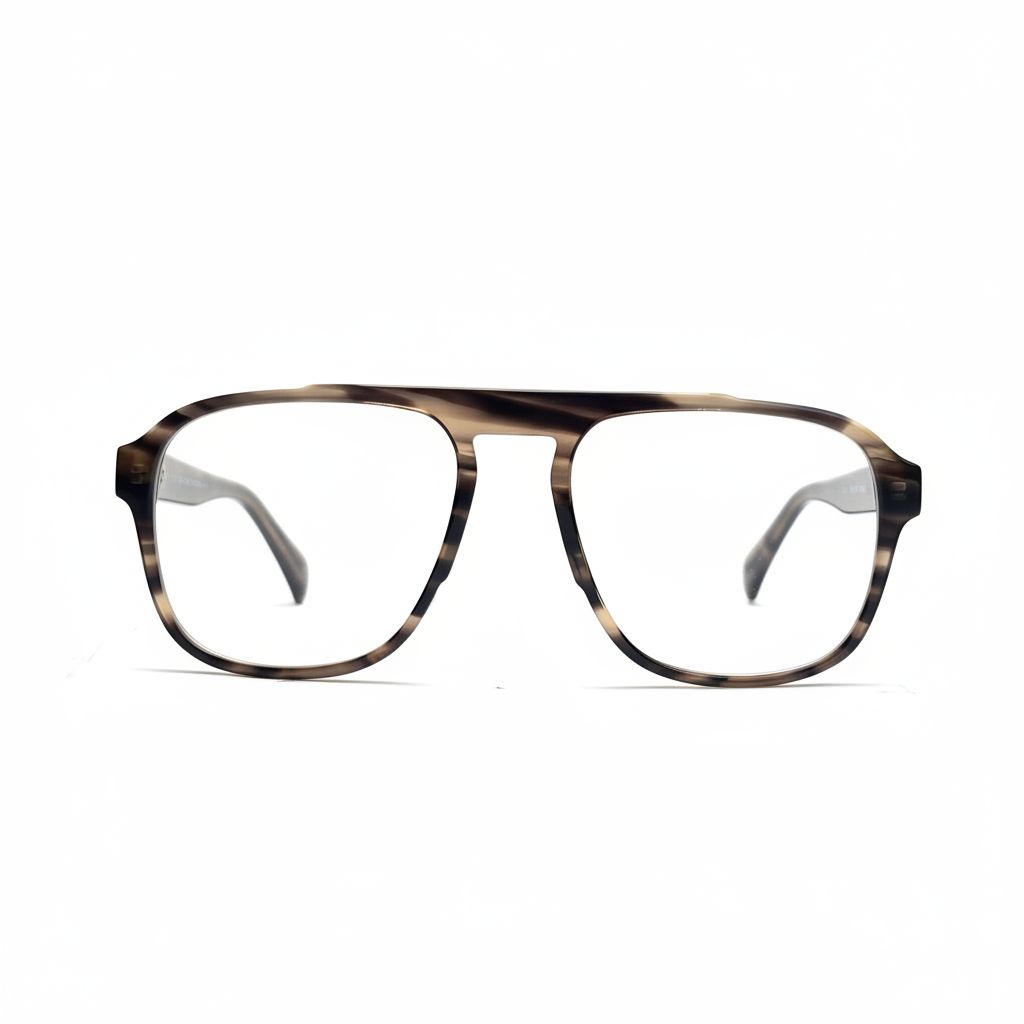
Consider the Conrad Premium Acetate Frames — they come with built-in blue-light protection, making them an ideal choice for anyone who works at a screen all day. The modern geometric square design pairs professional style with functional lens technology, so you don't have to choose between looking good and seeing comfortably.
Polarized Lenses: Clarity Beyond Glare
While blue light glasses solve the indoor screen problem, polarized lenses tackle the outdoor equivalent: glare. Whether you're driving, walking on a sunny day, or hitting the beach, reflected light from surfaces like water, roads, and snow creates intense glare that strains your eyes and reduces visibility.
Polarized lenses contain a chemical filter laminated into the lens material. The filter molecules are aligned vertically, which blocks horizontally polarized light — the glare bouncing off flat surfaces. The result is dramatically improved contrast, richer colors, and reduced eye fatigue in bright conditions. For anyone who spends time outdoors, polarized lenses aren't a luxury — they're a safety feature.
Consider the Breezy Polarized Round Sunglasses — designed to filter glare, block UV rays, and deliver crisp visual clarity in a lightweight acetate frame. They're proof that glasses frames 2026 can be both stylish and seriously functional.
Photochromic Lenses: One Pair, Two Modes
What if you don't want to carry two pairs of glasses — one for indoors, one for outdoors? That's where photochromic lenses come in. Also known as transition lenses, these ingenious coatings react to UV light. Indoors, they're clear (or nearly clear). Step outside into sunlight, and within seconds they darken to a sunglass tint. Step back inside, and they clear up again.
The technology relies on photochromic molecules embedded in or coated onto the lens surface. When UV rays hit these molecules, they change shape and absorb more visible light, darkening the lens. When the UV source is removed, the molecules revert and the lens clears. Modern photochromic lenses are faster, darker, and clearer than ever before — previous generations were notorious for not darkening enough in cars (windshields block UV), but newer formulations address this limitation.
Photochromic vs. Separate Pairs: Which Is Right for You?
- Photochromic pros: Convenience (one pair for everything), no need to carry a second pair, continuous UV protection
- Photochromic cons: Slight delay in transition, may not fully darken behind windshields, typically more expensive
- Separate pairs pros: Optimal performance in each environment, more frame/style options, polarized option for driving
- Separate pairs cons: Need to carry two pairs, higher total cost if buying premium frames both times
For the separate-pairs approach, consider pairing the Anders Titanium Square Glasses for your indoor prescription needs with the Alpine Round Sunglasses for outdoor protection. The feather-light titanium frames offer all-day comfort for screen work, while the Alpine's round acetate design delivers UV-blocking coverage when you step outside.
Half-Rim vs. Full-Rim: Does Frame Type Affect Lens Performance?
One question that came up in search data — and that glasses buyers frequently ask — is about half-rim vs. full-rim glasses. The frame style you choose doesn't change the lens technology itself, but it does affect how lenses are mounted and perceived:
- Full-rim frames fully enclose the lens, offering maximum protection and structural integrity. They're ideal for thicker prescriptions and active lifestyles.
- Half-rim (semi-rimless) frames leave the bottom edge of the lens exposed, creating a lighter, more modern aesthetic. They work best with thinner lenses and project a sleeker, professional look.
Consider the Cody Titanium Mix Square Frames — their rimless design showcases the lens itself, making them an excellent choice if you want your blue light coating or photochromic technology to be the visual focal point rather than the frame.
Buying Glasses Online: What Reddit Users Want to Know
Another trending topic on Reddit was whether to buy glasses online or from an optician. A first-time glasses wearer asked the community about their experiences, wondering if online ordering actually delivers the right fit and prescription accuracy. This is a valid concern — and it's one that modern direct-to-consumer eyewear brands have worked hard to address.
The reality in 2026: buying glasses online is not only viable, it's often the smarter choice. Here's why:
- Prescription accuracy: Reputable online retailers use the same lab equipment as brick-and-mortar opticians. Your prescription is entered digitally and verified.
- Fit guides and virtual try-ons: Most online eyewear shops now offer AR-powered try-on tools and detailed measurements (lens width, bridge width, temple length) so you can compare against your current frames.
- Price transparency: Without the overhead of a retail storefront, online brands pass savings directly to consumers — often 40–60% less than traditional optician pricing.
- Selection: Online catalogs are virtually unlimited, while a physical store can only stock what fits on its display wall.
The key is knowing your prescription numbers (sphere, cylinder, axis, and pupillary distance) and choosing a retailer that offers clear return policies. At WEISS OPTIX, every frame page includes detailed measurements and material information so you can shop with confidence.
The Bottom Line: Your Lenses Are an Investment
Frames get the glory, but lenses do the work. Whether you're combating digital eye strain with blue light filtering, seeking glare-free clarity with polarization, or wanting the convenience of photochromic adaptability, the right lens technology transforms how you experience the world — both on-screen and off.
As we look at glasses frames 2026 trends, the convergence of style and lens technology is clearer than ever. You no longer have to choose between looking sharp and seeing comfortably. Explore the full WEISS OPTIX collection to find frames that pair cutting-edge lens technology with the design language you love.