Why Lens Technology Matters More Than Ever in 2026
If you have ever stood at an optician's counter wondering whether polycarbonate or high-index lenses were worth the upgrade, you are not alone. Lens technology has become one of the most discussed topics in eyewear communities — and for good reason. As screens dominate our daily lives and eyewear trends 2026 push frames into bolder territory, the lenses inside them deserve just as much attention.
On Reddit's r/glasses, one recent thread dove deep into ABBE scores and index scores for lenses, breaking down how materials like CR-39, polycarbonate, and high-index plastics affect clarity, thickness, and cost. The takeaway? There is no single "best" lens — only the best lens for your prescription and lifestyle.
Understanding Lens Materials: A Quick Breakdown
When choosing prescription lenses, most people focus on price and thickness. But lens material affects optical quality, durability, and weight in ways that are not immediately obvious.
CR-39 (Standard Plastic)
CR-39 remains the optical gold standard for clarity. With an Abbe value of 58 — second only to crown glass — it produces minimal chromatic aberration, meaning less color fringing and sharper peripheral vision. The trade-off? It is the thickest plastic option, which can look bulky in stronger prescriptions.
Polycarbonate
Polycarbonate is thinner, lighter, and significantly more impact-resistant than CR-39. It is the go-to material for safety eyewear and children's glasses. However, its Abbe value of 30 is the lowest among common lens materials, which can cause slight blurriness or distortion at the edges — something wearers with sensitive eyes sometimes notice.
High-Index Plastics (1.60, 1.67, 1.74)
High-index lenses are the cosmetic choice. The higher the index, the thinner and flatter the lens appears — ideal for strong prescriptions where thickness would otherwise be distracting. The catch: higher index means lower Abbe values (36 for 1.60, down to 30–32 for 1.67+), so you are trading some optical purity for aesthetics.
As one Reddit user summarized in the ABBE discussion: "Most may see just as well with a low ABBE value lens as compared to a high ABBE value lens." The difference is subtle, but if you prioritize edge-to-edge clarity — especially for detailed screen work — it is worth considering.
The Blue Light Debate: What Actually Works?
Blue light glasses have exploded in popularity, but not all are created equal. A widely cited Reddit thread from the eyewear community cut through the marketing hype with a sobering TL;DR: clear blue light blockers filter roughly 1% of the blue light spectrum, making them functionally equivalent to slightly gray-tinted lenses or simply turning down your screen brightness.
Yellow-tinted blue light lenses perform better — blocking closer to 10% — but even then, peer-reviewed evidence linking them to improved sleep, reduced fatigue, or less eye strain remains thin. The consensus among independent optometrists? The 20-20-20 rule (look at something 20 feet away for 20 seconds every 20 minutes) and proper ambient lighting do more for digital eye strain than most off-the-shelf blue light coatings.
That said, if you spend 10+ hours daily in front of screens and want every possible advantage, a quality blue light coating on a well-fitted frame is not harmful — just manage your expectations.
Polarized Lenses: The Outdoor Essential
While prescription lens debates rage online, one technology has near-universal approval: polarization. Polarized sunglass lenses cut glare from reflective surfaces — water, snow, car hoods, glass buildings — by filtering horizontal light waves. The result is crisper contrast, reduced eye fatigue, and safer driving.
For anyone who splits time between digital workspaces and outdoor environments, pairing a prescription daily wearer with a dedicated polarized sunglass is one of the smartest investments you can make.
Frames That Complement Modern Lens Tech
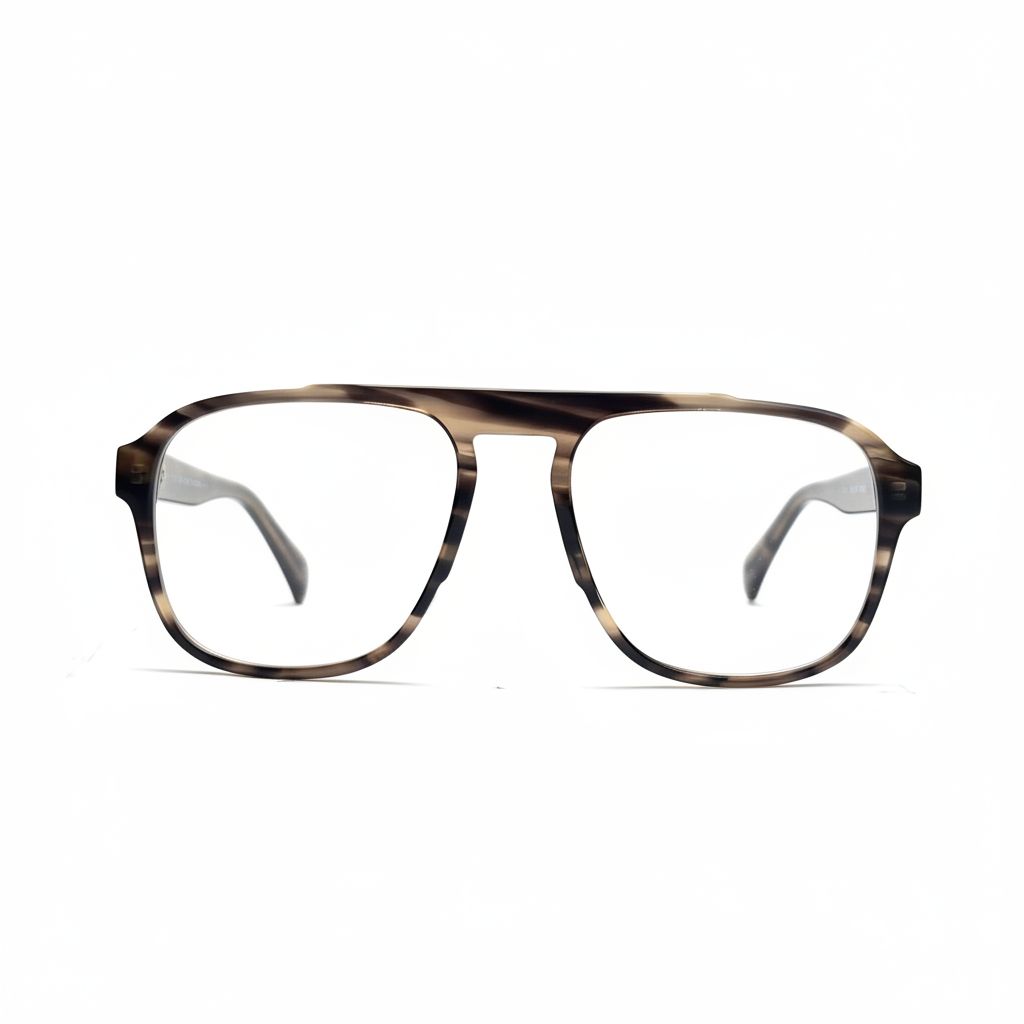
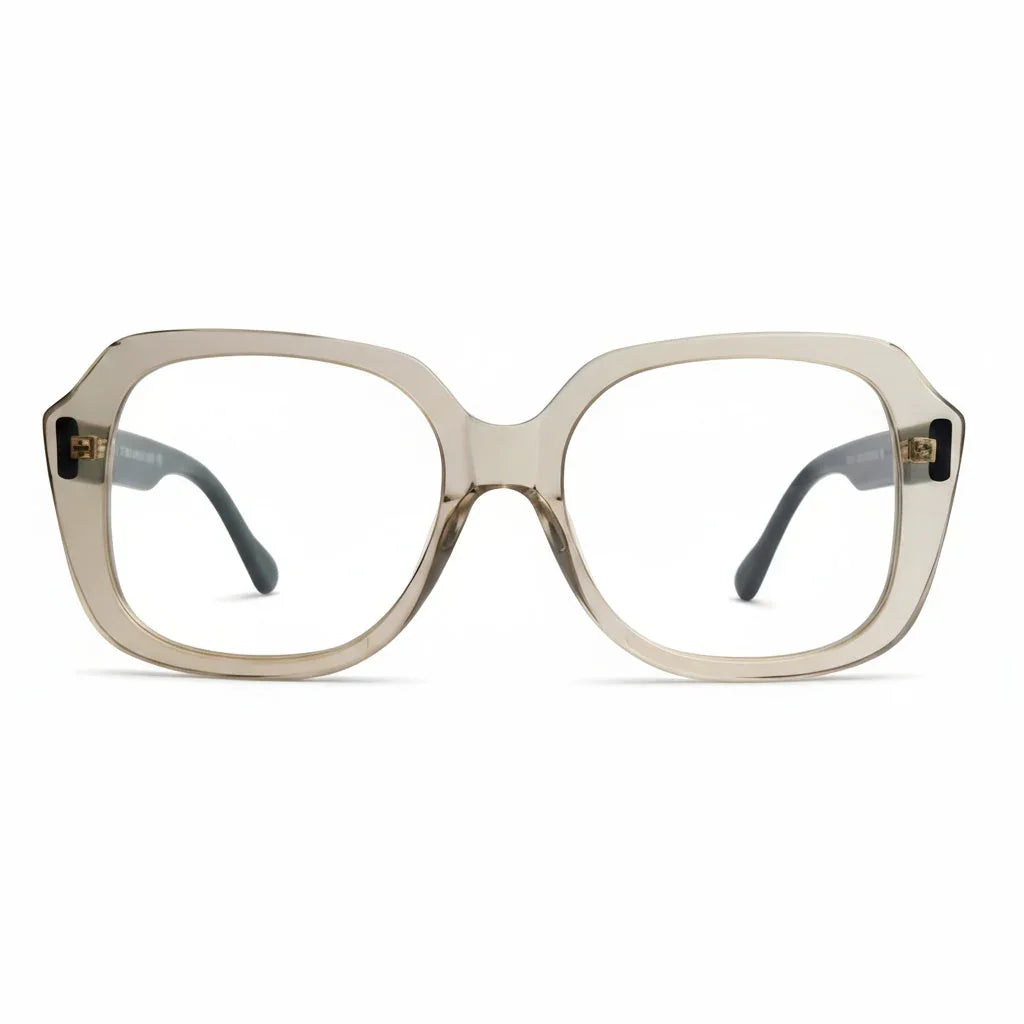
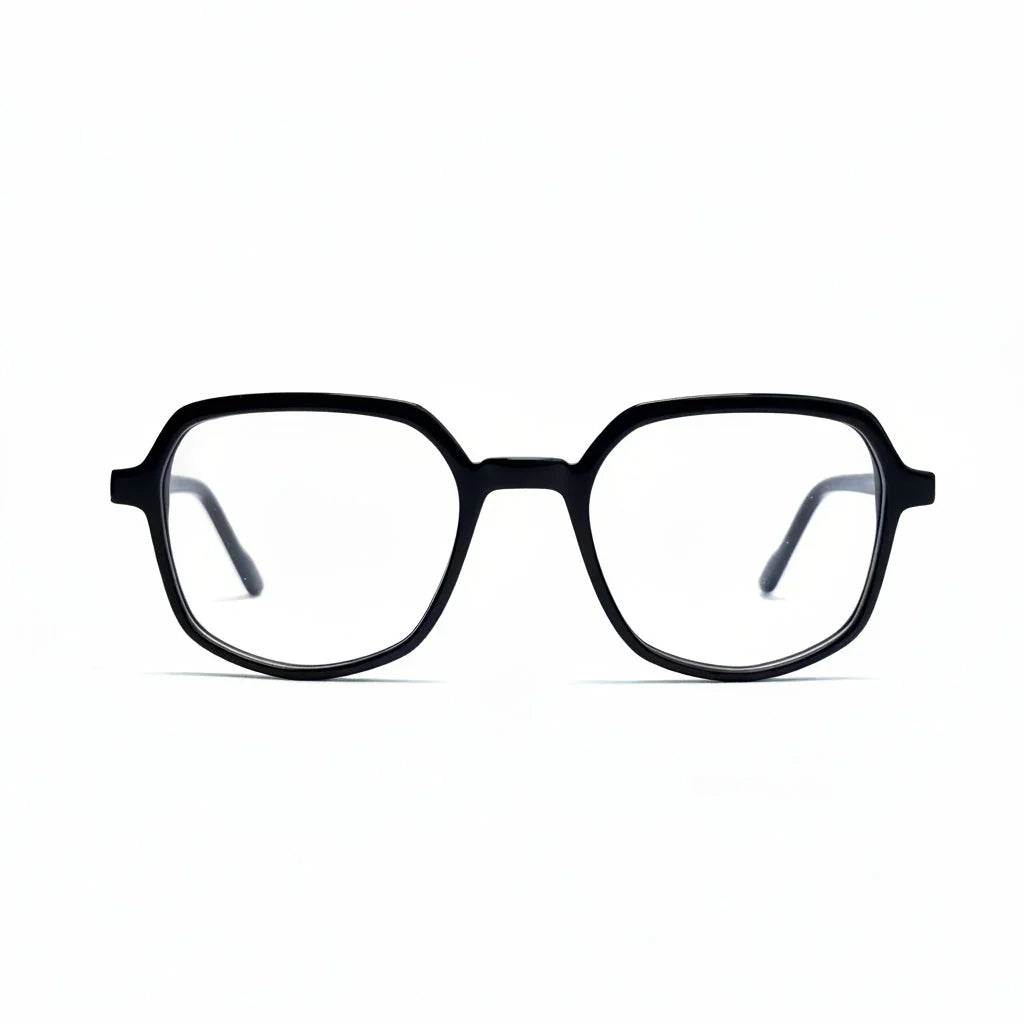
The best lens technology in the world still needs a frame that fits your face, your prescription, and your routine. Here are four WEISS OPTIX styles that pair beautifully with today's lens options:
Consider the Conrad — a premium acetate square frame with substantial rim depth that accommodates everything from standard CR-39 to high-index lenses without compromising style. Its clean architecture makes it a versatile daily wearer.
Consider the Anders — precision titanium construction delivers an exceptionally light feel. For all-day screen workers who notice pressure points from heavier frames, titanium's weight advantage compounds the comfort of well-chosen lenses.
Consider the Alpine — a round acetate sunglass that pairs effortlessly with polarized lenses. The classic silhouette works across face shapes, and the frame depth provides full coverage against peripheral glare.
Consider the Breezy — another round sunglass option with a lighter, more casual profile. Ideal for weekend outdoor use with polarized or photochromic lens upgrades.
Consider the Bastian — a titanium round frame that combines minimal weight with timeless design. Its thin rims work especially well with high-index lenses, where a lighter frame prevents the "heavy glasses" sensation even with thinner, denser lens materials.
How to Choose: A Simple Decision Framework
Still unsure? Here is a quick framework:
- Light prescription (< +/- 2.00): CR-39 or polycarbonate. Prioritize optical clarity or impact resistance based on your lifestyle.
- Moderate prescription (+/- 2.00 to 4.00): 1.60 high-index strikes a good balance of thinness and Abbe value.
- Strong prescription (> +/- 4.00): 1.67 or 1.74 high-index for cosmetic thinness. Expect slight optical trade-offs.
- Daily screen use 8+ hours: Focus on frame fit and ergonomics. Blue light coating is optional — the frame weight and lens centration matter more.
- Outdoor exposure or driving: Dedicated polarized sunglasses are non-negotiable. Do not rely on photochromic lenses for driving — car windshields block the UV that activates them.
Final Thoughts
Eyewear trends 2026 have brought us bolder frames, smarter materials, and more lens options than ever before. But the fundamentals have not changed: a well-fitted frame with appropriately chosen lenses will always outperform the latest marketing buzzword. Use the Abbe value as a guide, not a gospel. Question blue light claims that sound too good to be true. And never underestimate the value of a great pair of polarized sunglasses.
Your eyes process every moment of your day. The technology you put in front of them — and on them — is worth a few extra minutes of consideration.